

Table of Contents:
- Why Commercial Sauna Sizing Is a Different Decision Than Residential Sizing
- 6-Person vs. 2-Person vs. 8-Person: The Commercial Sauna Size Guide
- ROI Math: How a 6-Person Infrared Sauna Pays for Itself in Commercial Settings
- What to Look for in a Commercial-Grade Infrared Sauna: Specs That Actually Matter
- Space Planning and Installation Reality Check for Commercial Infrared Sauna Buyers
- Frequently Asked Questions
- The Right Commercial Sauna Size Is a Business Decision, Not a Headcount Decision
The global wellness economy hit $6.8 trillion in 2024, growing 7.9% from the year prior and projected to reach $9.8 trillion by 2029 — a pace nearly double global GDP growth, according to the Global Wellness Institute's 2025 monitor. Sauna is no longer a luxury amenity tucked into the corner of a high-end resort. For commercial facility operators, it's a member retention tool, a revenue line, and an increasingly expected differentiator that members benchmark facilities against before signing up.
Here's where the math gets uncomfortable: gyms that add a premium sauna tier see 20–35% of active members upgrade within one quarter of full marketing, according to My Fitness Outlet's Commercial Sauna ROI Calculator. And with the fitness industry's annual member attrition rate sitting around 29%, Haven of Heat's 2026 research notes that replacing one lost loyal member costs approximately nine times more than retaining one. The sauna question for most commercial operators isn't if — it's which size, which spec, and which electrical circuit.
Most operators approach that sizing question by counting heads. How many people do I want in there at once? That's the wrong framework entirely.
The right framework is throughput × footprint × electrical reality × commercial-grade spec. Run it through that lens and a 6 person infrared sauna hits the commercial sweet spot for most mid-size facilities in ways a 2-person unit almost never does — and ways an 8-person unit often overserves, unless you're running a high-volume resort spa or a large chain gym.
This guide gives commercial facility managers, hospitality buyers, corporate wellness directors, and PT/rehab clinic operators the exact sizing framework to make that call with confidence: dimensions, electrical requirements, revenue math, and a spec checklist you can take into any vendor conversation. If you haven't yet decided between infrared and traditional sauna technology, read our Complete Guide to Home Saunas: Benefits, Types, and How to Choose first — then come back here for the sizing decision.
Why Commercial Sauna Sizing Is a Different Decision Than Residential Sizing
Residential sizing logic — how many people sit in it at once — breaks down fast in commercial settings. A home sauna runs maybe 3–5 sessions a week. A commercial unit in a mid-size gym might run 8–12 sessions daily, six or seven days a week. Those aren't the same machine by any operational definition, even if they look identical in a product photo.
Commercial sizing is a function of four variables: daily session throughput, peak-hour demand, footprint constraints, and electrical infrastructure. Get any one of those wrong and you've either bought a unit that can't serve your member volume, one that trips your breaker during morning rush, or one that fails before its second year.
According to SaunaCloud's Commercial Infrared Sauna Guide, commercial saunas face 10–30x the usage intensity of residential units. That gap demands heaters rated for 50,000+ hours of operation and power supplies designed for 14+ hour daily duty cycles — not because those specs sound impressive, but because residential-grade components running under commercial load overheat, warp, and fail. SaunaCloud's research documents that residential infrared saunas mislabeled as commercial-grade typically fail within 12–18 months under 8–12 daily sessions, with the most common failure modes being overheating power supplies, heater element burnout, and wood panel warping.
Three specs separate genuine commercial units from rebranded residential products. First: heaters rated for 50,000+ operating hours. Second: power supplies rated for 14+ hour daily duty cycles. Third: controls built for untrained staff operation — intuitive enough that a front desk employee on their second shift can run a session reset without a manual. Every other spec conversation starts after you've confirmed these three.
At Blue Sky, the most common mistake we see commercial buyers make is sourcing a unit that specs well on paper but carries only a residential warranty. Always request written documentation of commercial warranty terms before purchasing — verbal assurances from a vendor are not protection when a heater fails at month 14 under daily commercial load.
The commercial sauna size guide question also looks different depending on who's buying. Gym and studio managers prioritize throughput and ROI per square foot — they're running utilization math, not interior design. Hotel and resort buyers care about guest experience capacity and aesthetic integration into an amenity space. Corporate wellness directors are working within office floor plans and need to justify the investment through employee utilization and wellbeing metrics. PT and rehab clinics are thinking about per-session patient throughput, group versus individual protocol options, and sanitation compliance.
Infrared saunas have a structural operational advantage in commercial settings over traditional saunas that's worth naming directly. According to Haven of Heat's 2026 commercial buyer research, infrared units require no special ventilation, no drain, and no moisture barrier. They operate at 120–150°F versus the 30–40°F hotter temperatures of traditional saunas, and they reach operating temperature in 10–20 minutes. For a facility manager, that means faster session turnover, a lighter prep burden for staff, and a faster path from installation to revenue. For a PT clinic, it means no complex construction — the unit goes into an existing room with a dedicated electrical circuit and starts serving patients.
If you need the full technology comparison before committing to infrared, our Sauna Installation Cost Guide covers that decision in detail, including what to budget for infrastructure work across different facility types. For everyone who's already landed on infrared — the infrared sauna sizing question comes next.
6-Person vs. 2-Person vs. 8-Person: The Commercial Sauna Size Guide
Size choice in a commercial context is an operational decision with real financial consequences. Here's how each tier actually performs under commercial conditions.
2-Person Units
Footprint runs roughly 36"–48" wide × 36"–48" deep. Many 2-person infrared models run on a standard 120V outlet, though some require a dedicated 240V circuit — confirm with the manufacturer before site planning. These units reach operating temperature quickly and are easy to place in small rooms.
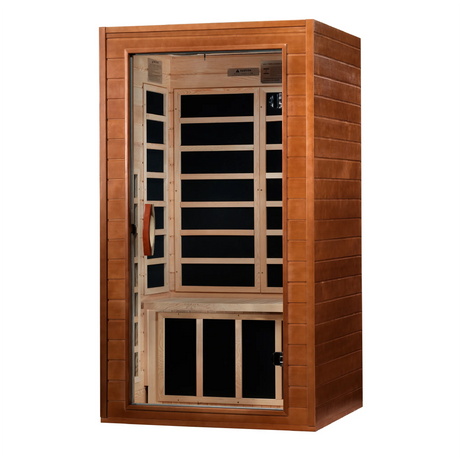
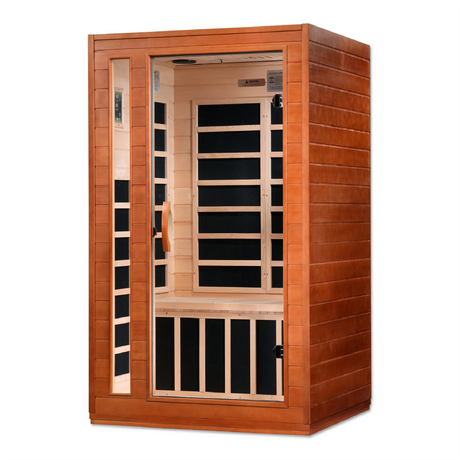
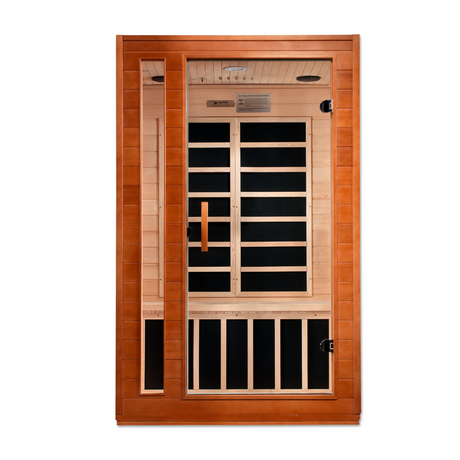
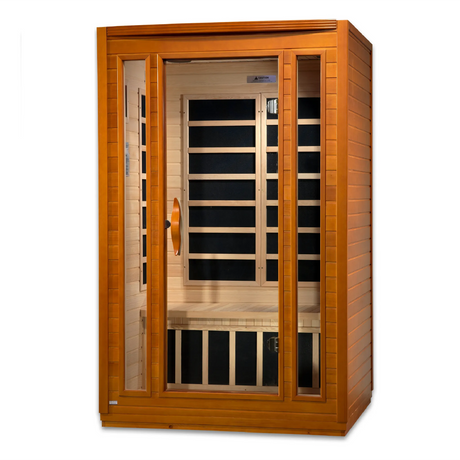
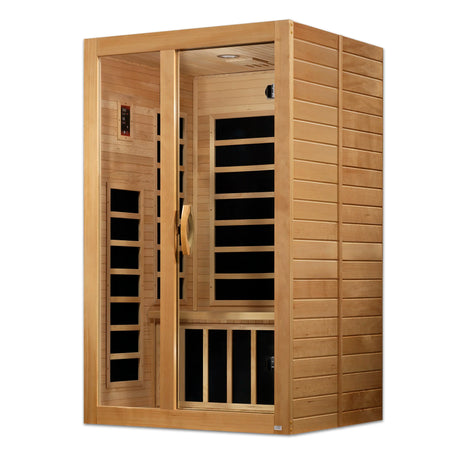
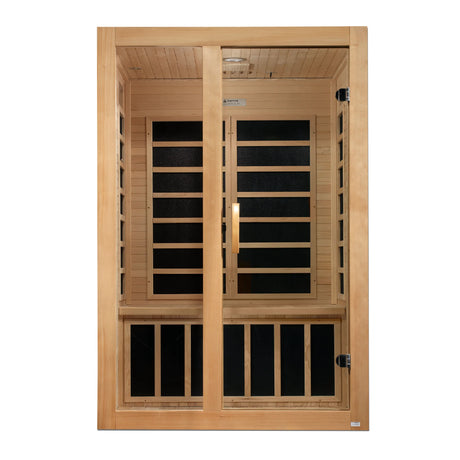
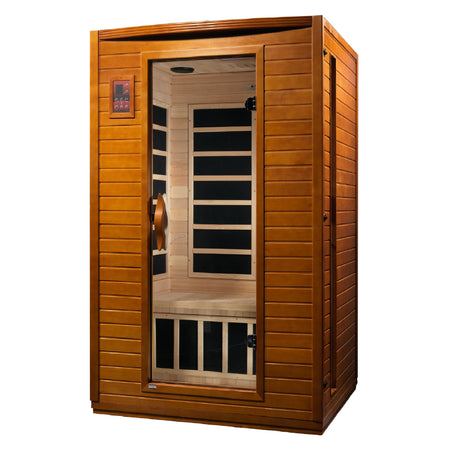
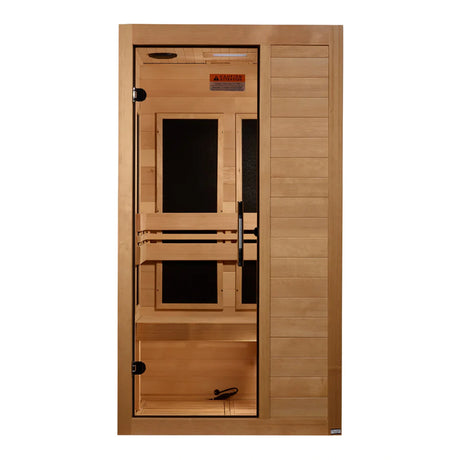
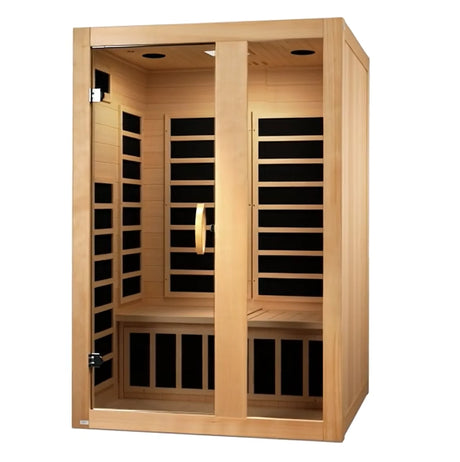
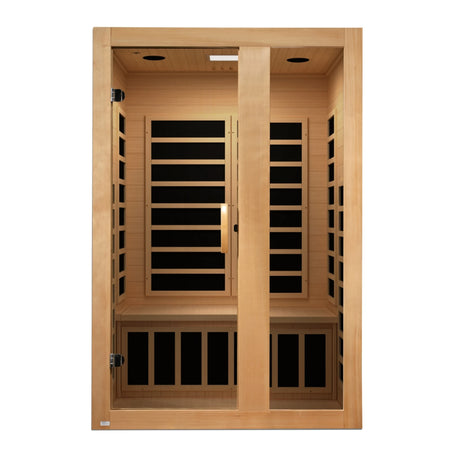
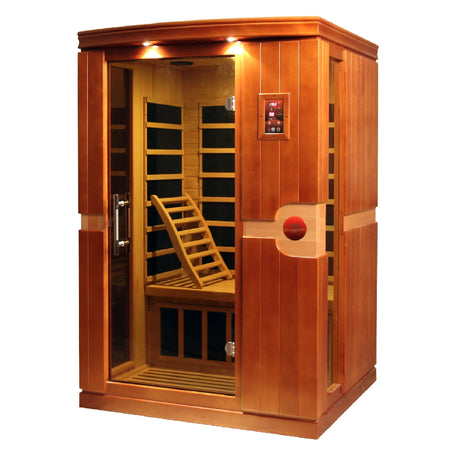
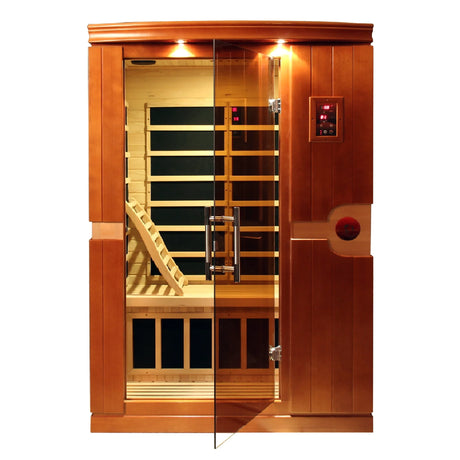
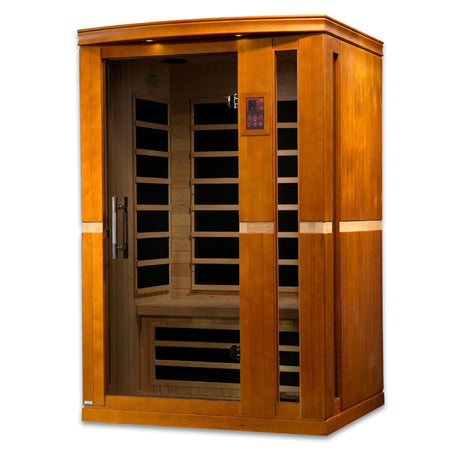
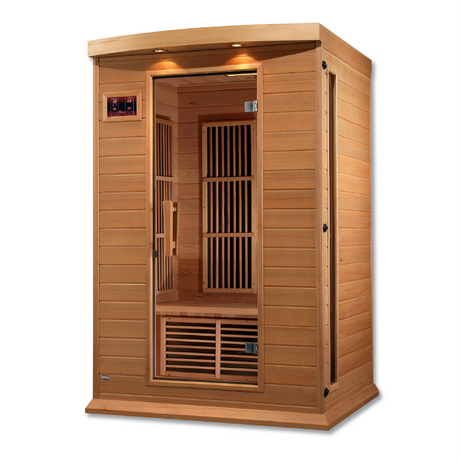
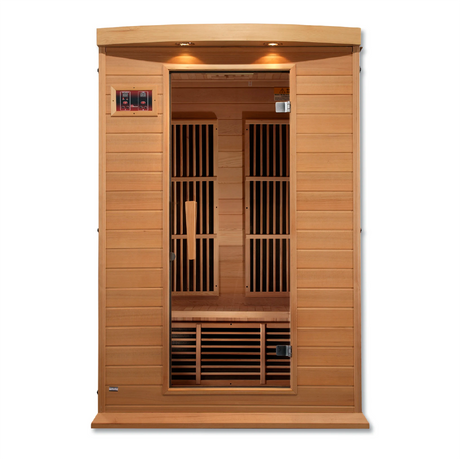
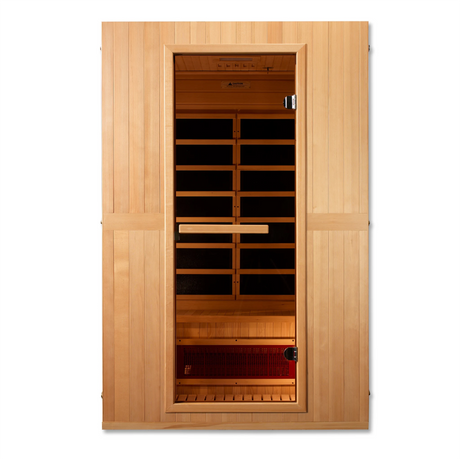
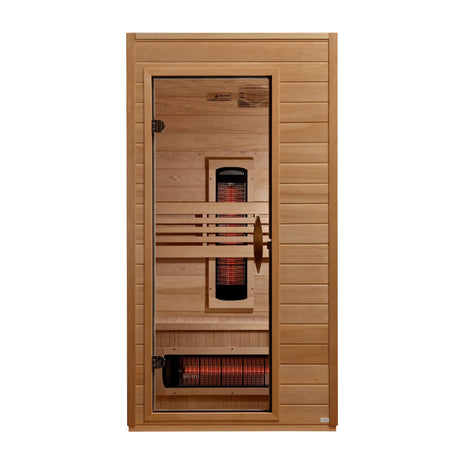
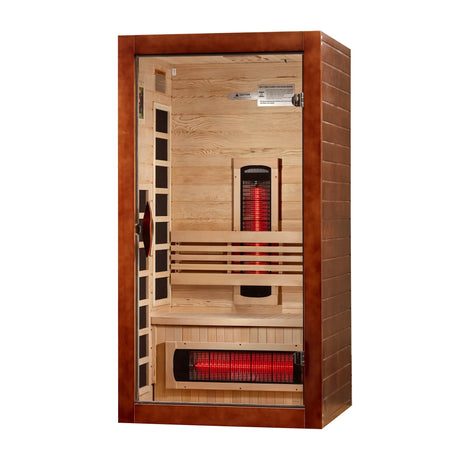
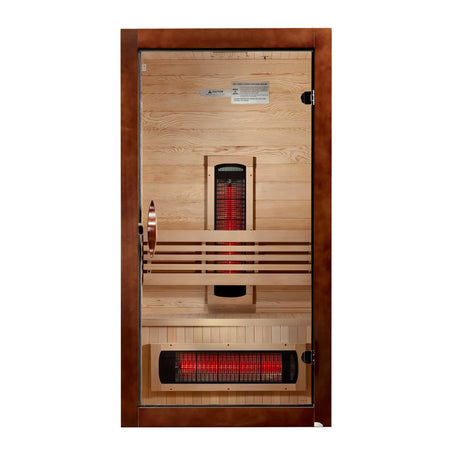
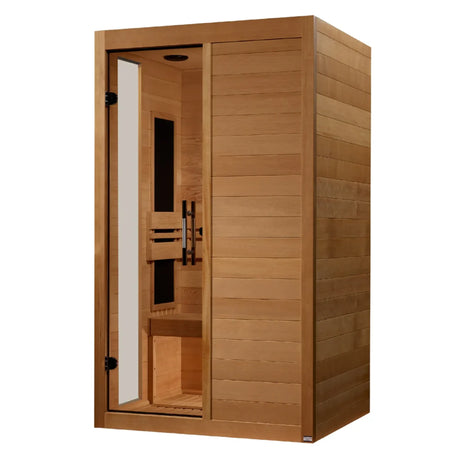
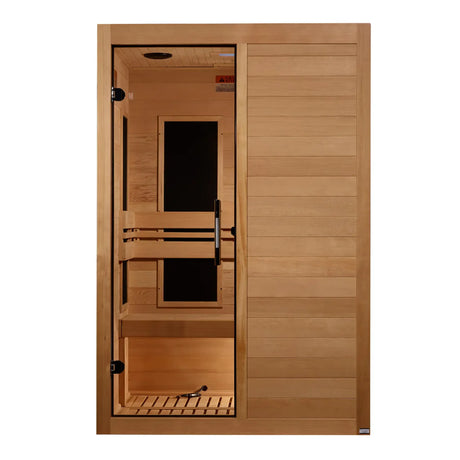
The commercial use case is narrow but real: corporate wellness in small offices with limited square footage, PT and chiropractic single-treatment rooms where individual patient protocols are the clinical model, or hotel suite in-room installs where the unit is a premium room amenity rather than a shared facility feature. Operators evaluating this format should review the Maxxus S-Line FAR Infrared Sauna 2-Person Indoor Model as a benchmark for what a well-specced residential-grade unit looks like before comparing it against genuine commercial configurations.
What 2-person units cannot do is generate meaningful ROI in any high-throughput commercial setting. Daily session capacity is simply too low. Even running 10 sessions a day at $50 per session, you're capped at $500 daily revenue — and that's an aggressive schedule for a 2-person unit in a busy facility. For gym and studio managers evaluating a membership-upsell model, a 2-person unit won't move the retention needle in a way that justifies the operational attention it requires.
6-Person Units: The Commercial Sweet Spot
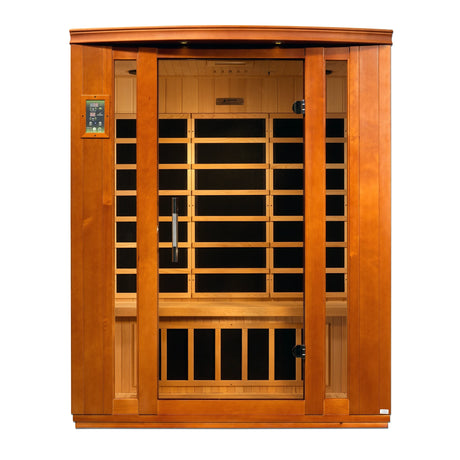
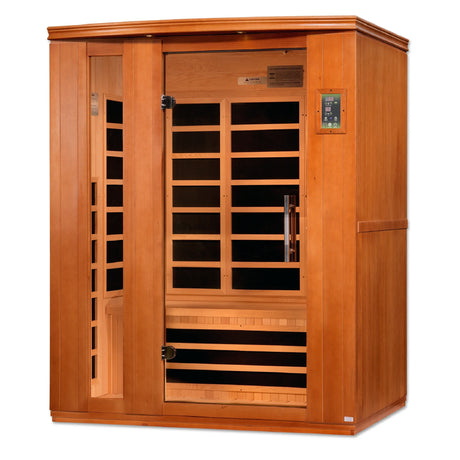
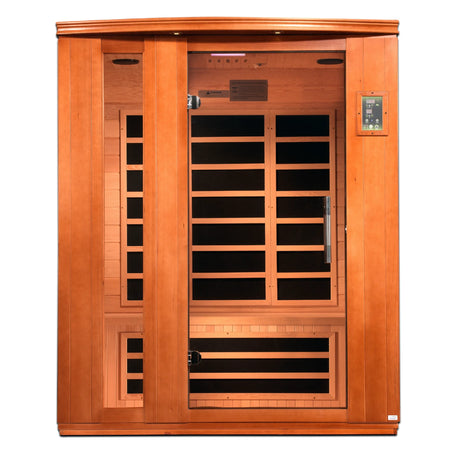
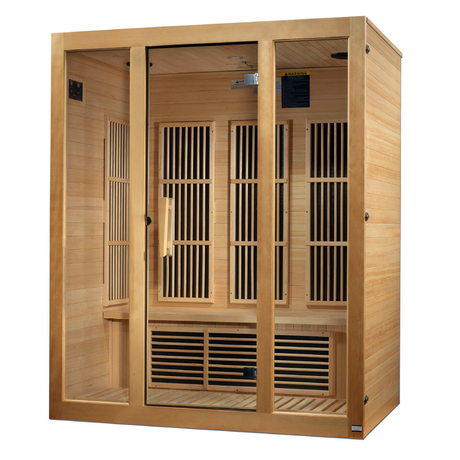
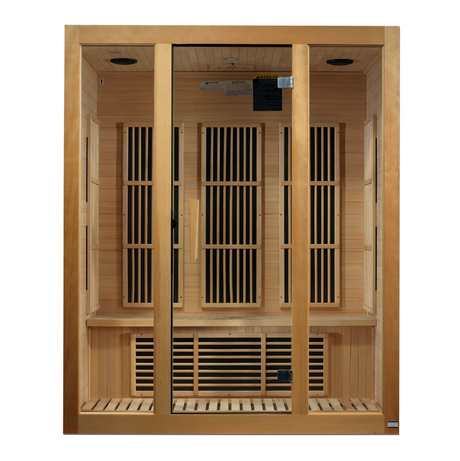
According to Peak Primal Wellness's sauna space requirements planning guide, 6-person infrared saunas typically measure 75"–96" wide × 53"–60" deep and require approximately 80–100 square feet of total dedicated room space including clearances. Electrical requirement is a dedicated 240V/30A–40A circuit installed by a licensed electrician. Ceiling height minimum is 6.5–7 feet for adequate heat distribution from wall-mounted infrared panels.
This is the format that works for boutique fitness studios, mid-size gym wellness suites, hotel amenity rooms serving 20–100 daily guests, corporate wellness centers serving 50–200 employees, and PT/rehab group treatment protocols. Two-tier bench arrangements are standard, which matters for clinical buyers designing group infrared sessions for pain or circulation protocols.
For gym managers: a 6-person unit running 8–10 sessions per day generates the throughput math that makes a premium membership tier financially logical. For hotel buyers: it enables small group guest experiences — couples, families, corporate travel groups — that a 2-person unit structurally cannot serve. For corporate wellness: it fits a converted conference room or dedicated wellness room and serves team programming. For PT clinics: one session slot serves multiple patients simultaneously, which directly improves clinical throughput without proportionally increasing staff time.
One electrical note that gets skipped more than it should: in leased commercial facilities, electrical circuit work almost always requires landlord approval, and inspectors will require documentation that the unit is operated per manufacturer guidelines. Build 4–8 weeks of electrical permitting time into your project timeline — this is the step that most commonly delays a commercial sauna opening.
8-Person (and Larger) Units
Per Peak Primal Wellness's sauna dimensions guide, commercial-grade large-facility saunas generally start at 6 ft × 9 ft interior and often reach 8 ft × 10 ft for premium installations, with two-tier bench arrangements along two walls. Total room requirement is typically 120–150+ square feet. Electrical requirement is a 240V/40A+ dedicated circuit, and high-traffic door-opening scenarios require 20–25% more heating capacity than standard calculations to maintain stable operating temperature, according to Finnish Sauna Builders' 2025 commercial installation guide.
8-person units are the right call for large gym chains with dedicated wellness suites, resort spas running 4+ simultaneous sessions, and high-volume wellness centers where the 6-person format creates a bottleneck at peak hours. They are not the right call for most mid-size facilities — the additional square footage requirement and electrical infrastructure cost rarely produce proportional ROI gains unless your facility is genuinely running at the utilization ceiling of a 6-person unit.
Commercial Infrared Sauna Size Comparison at a Glance
Use this table as a quick-reference before working through the details of each size category. Dimensions and electrical requirements should always be confirmed with your specific unit's manufacturer and a licensed electrician before installation.
| Feature | 2-Person Unit | 6-Person Infrared Sauna | 8-Person Unit |
|---|---|---|---|
| Typical interior dimensions | ~36"–48" W × 36"–48" D | 75"–96" W × 53"–60" D | 6 ft × 9 ft min; often 8 ft × 10 ft |
| Total room space required (with clearances) | ~30–50 sq ft | ~80–100 sq ft | ~120–150+ sq ft |
| Electrical requirement | 120V (some 240V/20A) | 240V / 30A–40A dedicated circuit | 240V / 40A+ dedicated circuit |
| Ceiling height minimum | 6.5 ft | 6.5–7 ft | 7 ft |
| Sessions per day (commercial estimate) | 4–6 | 8–12 | 10–14 |
| Ideal commercial use case | Small office wellness, PT treatment rooms, hotel suite | Boutique gyms, hotel amenity rooms, corporate wellness, PT group protocols | Large gym chains, resort spas, high-volume wellness centers |
| Annual revenue potential (est.) | ~$30,000–$45,000 | ~$120,000 | ~$150,000+ |
| Unit cost range | $3,000–$7,000 | $12,000–$20,000 | $18,000–$30,000+ |
| Commercial warranty — critical? | Yes — if used commercially | Yes — non-negotiable | Yes — non-negotiable |
| Best buyer persona | PT clinic, small corporate office, hotel suite | Boutique gym/studio, mid-size hotel, corporate wellness, PT group room | Large gym, resort spa, high-volume wellness center |

ROI Math: How a 6-Person Infrared Sauna Pays for Itself in Commercial Settings
Start with the number operators actually care about. A commercial infrared sauna running 8 sessions per day at a $50 average across 300 operating days generates approximately $120,000 in annual revenue per unit, per SaunaCloud's commercial sauna ROI analysis. Against a unit investment of $12,000–$20,000, the math on payback period is aggressive — under three months in high-utilization scenarios, before you account for the retention value of the amenity itself.
There are three primary ways commercial operators monetize a sauna installation, and they're not mutually exclusive.
The first is tiered membership upcharges. Most gyms structure sauna access as a $10–$25 monthly add-on to a wellness or premium membership tier, according to My Fitness Outlet's June 2026 ROI Calculator research. Once the tier is actively marketed — not just listed on the website, but promoted at the front desk and in member communications — 20–35% of active members typically upgrade within one quarter. On a 500-member gym, that's 100–175 members paying an extra $10–$25 per month, or $12,000–$52,500 in additional annual recurring revenue from a single sauna install.
The second is per-session retail pricing. Urban wellness studios charge $25–$75 per 30–45 minute infrared session depending on market, according to Peak Saunas' 2026 Commercial Buyer's Guide. In high-demand markets, the per-session model generates the highest revenue per session but requires managing booking systems and walk-in availability.
The third is bundled recovery programs and corporate wellness partnerships. A PT clinic bundling infrared sessions into a post-surgical recovery protocol or an athletic performance package adds revenue per patient visit without proportionally increasing clinician time. A corporate wellness program negotiating a monthly access agreement with a nearby gym or wellness studio creates a recurring business-to-business revenue line for the facility.
Operators frequently underestimate the revenue delta between a 2-person and a 6-person unit. Doubling occupancy per session more than doubles commercial ROI because operating costs don't scale proportionally — the same staff, same electrical duty cycle, same cleaning time. The 6-person format is where the unit economics inflect for most mid-size commercial facilities.
The retention angle is equally significant for gym and studio operators. With fitness industry annual member attrition running around 29% and the cost of replacing a loyal member sitting at roughly nine times the cost of retaining one, a premium sauna amenity is one of the highest-ROI retention investments per square foot available. Members who use a facility's sauna regularly are stickier — the sauna creates a behavioral anchor that a treadmill alone doesn't.
For PT and rehab clinic buyers, the evidence base deserves an honest framing. A 2021 study published in Complementary Therapies in Medicine found that infrared sauna sessions raise heart rate 30–50 beats per minute, comparable to brisk walking, and users produce 1–2 pounds of sweat per 30–45 minute session. A 2024 study in the Journal of Applied Physiology found that heat acclimation through infrared sauna use increased plasma volume by 7.1% after 10 sessions over two weeks — a meaningful finding for recovery and cardiovascular conditioning applications. Northwestern Medicine's Dr. Anna B. Shannahan, MD, cautions that "many health claims used in marketing for infrared saunas take information from traditional sauna data and may overstate expected benefits" — a fair warning that clinical buyers should take seriously when communicating with patients. Position infrared sauna as a clinically-adjacent, patient-valued adjunct rather than a standalone medical treatment.
Dr. Shannahan's protocol note carries a useful commercial implication: she advises shorter sessions more frequently rather than longer sessions less often. For operators, that means more daily session slots, higher throughput, and more revenue per day from the same unit.
For hospitality buyers, the ROI framing is amenity differentiation. The global sauna and spa market was valued at approximately $136 billion in 2024 and is forecast to reach $233 billion by 2031 at an 8% compound annual growth rate, according to Cognitive Market Research. Guests increasingly expect wellness amenities, and a 6-person unit serves small groups — couples, families, corporate travel parties — in ways a 2-person suite amenity never could. That group capacity translates directly into average daily rate lift justification and guest satisfaction differentiation in a competitive market.

What to Look for in a Commercial-Grade Infrared Sauna: Specs That Actually Matter
This isn't a Blue Sky product pitch — it's a spec checklist you can take into any vendor conversation. Ask these questions regardless of who you're buying from.
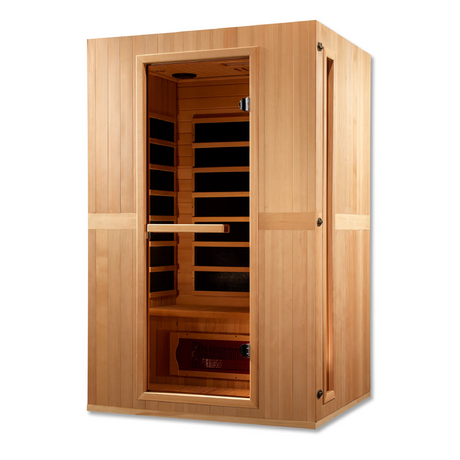
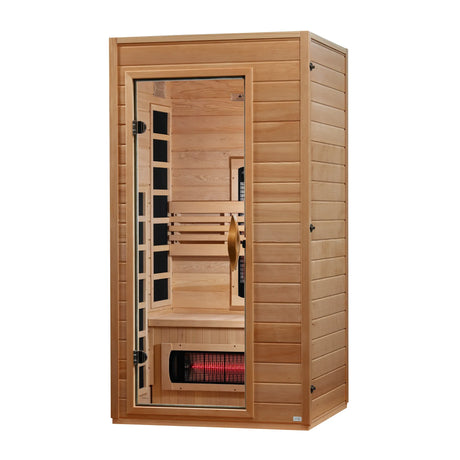
Heater technology and rating. Commercial infrared sauna heaters should use carbon fiber or ceramic heating panels rated for continuous cycling, per Haven of Heat's commercial buyer research. Full-spectrum infrared — covering near, mid, and far wavelengths — is the stronger commercial selling point. Near infrared (0.7–1.4 µm) is associated with skin and wound healing. Mid infrared (1.4–3 µm) targets circulation and pain. Far infrared (5–15 µm) produces the deep tissue warming most users recognize as the core sauna effect. Covering all three wavelengths gives your staff science-backed talking points for membership upsells, and gives clinical buyers the broadest treatment positioning. The Maxxus S-Line Full Spectrum Infrared Sauna illustrates what full-spectrum heater configuration looks like in practice, and is a useful benchmark when evaluating commercial-scale alternatives.
Heater hour rating is non-negotiable: 50,000+ operating hours minimum. Power supply duty cycle rating is equally non-negotiable: must support 14+ hour daily operation. These two specs are the clearest dividing line between genuine commercial units and residential products wearing commercial marketing. SaunaCloud's research confirms that residential units under commercial load fail within 12–18 months — often at month 14, after any residential warranty has expired.
Electrical requirements. For 6-person units, a dedicated 240V/30A–40A circuit is required. For 8-person units, plan for 240V/40A+. Confirm the exact spec with the manufacturer and a licensed electrician before any site preparation work begins. Infrared sauna electrical requirements are not negotiable on installation day.
Wood construction. Look for kiln-dried, non-toxic, splinter-free woods — Canadian hemlock, basswood, and cedar are the standard options for quality commercial units. Hemlock is particularly strong for commercial applications: it's hypoallergenic, resists warping through repeated heat cycling, and doesn't off-gas at operating temperatures. Warped or separating panels are the most visible and embarrassing failure mode of underspec'd units in commercial environments. If a unit's product page doesn't specify wood type and drying treatment, ask before purchasing.
Controls. Should be operable by untrained staff without a manual in hand. Intuitive digital control panels with pre-set programs are standard on genuine commercial units. Timer lockouts and temperature caps are operationally useful for managing session length in high-throughput settings — they reduce the chance of a session running long and backing up your schedule.
Sanitation. PT/rehab and clinical buyers especially — look for smooth, wipeable bench surfaces and non-porous materials wherever possible. Request the manufacturer's approved sanitation protocol in writing. Infrared saunas produce no steam and no standing water, which eliminates the mold and mildew risk associated with traditional sauna and steam room environments. That's a meaningful sanitation and liability advantage for clinical operators.
Warranty. Must explicitly cover commercial business use. A residential warranty is not a commercial warranty, regardless of how the unit is marketed. Request documentation in writing. When evaluating any commercial infrared sauna, Blue Sky recommends asking any vendor three non-negotiable questions: (1) Is the warranty explicitly rated for commercial business use? (2) What is the heater hour rating? (3) What duty cycle is the power supply rated for? If a vendor hesitates or redirects on any of these, treat it as a disqualifying signal.
Assembly and lead time. Commercial-grade 6-person and 8-person units typically arrive in modular panel form and can be assembled in hours rather than days, unlike traditional sauna builds that require construction crews, drainage work, and moisture barrier installation. That faster path to a revenue-generating amenity is a real operational advantage — but note that popular commercial lines can carry 8–12 week lead times, especially for custom configurations. Build procurement timing into your project schedule early.
For facilities planning a combined sauna and cold plunge recovery suite — an increasingly standard pairing in high-end gyms and PT clinics — our Cold Plunge Benefits for Athletic Recovery post covers what you need to know on the cold side of that equation.

Space Planning and Installation Reality Check for Commercial Infrared Sauna Buyers
Spec sheets show interior dimensions. What operators actually need to plan for is total room footprint, electrical access, ceiling constraints, and the workflow logistics around the unit once it's running daily.
6-Person: Real-World Room Requirements
The unit itself measures 75"–96" wide × 53"–60" deep, but total room space including clearances runs approximately 80–100 square feet, per Peak Primal Wellness's space requirements guide. Ceiling minimum is 6.5–7 feet — infrared panels are wall-mounted and heat distribution suffers in rooms with lower ceilings. A dedicated 240V/30A–40A electrical circuit is required; this is not a circuit that can share load with other equipment.
If the room layout allows, a small entry vestibule or anteroom between the sauna and the main facility space meaningfully reduces heat loss per door opening — each door cycle in a busy facility bleeds operating temperature, and at 8–12 sessions per day, that adds up on your heating duty cycle. It also improves the member experience by creating a decompression threshold between the locker room and the sauna environment.
8-Person: Larger Footprint, More Infrastructure Planning
According to Peak Primal Wellness's sauna dimensions guide, commercial large-facility units start at 6 ft × 9 ft interior and often reach 8 ft × 10 ft for premium installations, with two-tier bench arrangements along two walls. Total room requirement is 120–150+ square feet. High-traffic facilities need to plan for 20–25% more heating capacity than standard calculations to maintain stable temperature with frequent door openings, per Finnish Sauna Builders' September 2025 commercial installation research. That heating buffer should be built into your electrical circuit planning from the start, not retrofitted after the unit is already installed.
Leased Facilities: The Permitting Reality
This is the step that most commonly delays a commercial sauna opening, and it almost never makes the vendor's installation checklist. Electrical circuit work in a leased commercial facility almost always requires landlord approval before an electrician can begin. Inspectors then require documentation that the unit is operated per manufacturer guidelines — not just installed correctly, but operated correctly. Build 4–8 weeks of electrical permitting time into your project timeline. If your lease prohibits electrical modifications without landlord consent, surface that conversation before you've signed a purchase agreement.
Placement and Workflow Considerations
For gym and hotel contexts: proximity to locker rooms and showers is the primary placement driver. Members shouldn't have to walk through high-traffic areas in a towel. For PT and clinical contexts: proximity to treatment rooms and visual sightlines for staff supervision matter more than aesthetics. Acoustic separation is worth planning for in corporate wellness installations where the sauna room is adjacent to open office or meeting space.
For corporate wellness buyers working within an office floor plan: most 6-person units fit a converted conference room or dedicated wellness room at 80–100 square feet. The constraining factor is almost always the 240V dedicated circuit, which requires an electrician to assess panel capacity before you commit to a specific room. That assessment takes a day; skipping it can cost weeks of project time if the panel can't support the draw.
Bench ergonomics are worth a specific note for PT and clinical buyers. Bench depth minimum is 18–20 inches for seated sessions and 24–30 inches for supine protocols, per Peak Primal Wellness's dimensions research. For group infrared sessions where patients may be using the sauna for pain or circulation protocols in a lying position, a 6-person unit with 24"+ bench depth supports the clinical use case that a standard 18" bench does not.
For operators in institutional or publicly-funded contexts — fire stations, municipal recreation centers, VA facilities — our guide on fire station saunas and firefighter cancer outcomes covers the electrical and permitting considerations specific to those environments, including relevant funding mechanisms for 2025 and beyond.

Frequently Asked Questions
1. How much space does a 6-person infrared sauna require for a commercial installation?
A 6-person infrared sauna requires approximately 80–100 square feet of total room space including clearances, based on a unit footprint of 75"–96" wide × 53"–60" deep. Ceiling height should be a minimum of 6.5–7 feet for adequate heat distribution from wall-mounted infrared panels. A dedicated 240V/30A–40A electrical circuit is required and cannot be shared with other equipment. Confirm exact dimensions and electrical requirements with your specific unit manufacturer and a licensed electrician before beginning site preparation.
2. What electrical requirements should a commercial gym or spa plan for when installing a 6-person or 8-person infrared sauna?
6-person commercial infrared saunas require a dedicated 240V/30A–40A circuit; 8-person units typically require 240V/40A or higher. These are operating minimums, not suggestions — sharing the circuit with other equipment is not an option. Always hire a licensed electrician to assess your existing panel capacity before purchasing, and in leased facilities, confirm landlord approval is secured before any electrical work begins, as skipping this step is the most common cause of delayed commercial sauna openings.
3. How many sessions per day can a commercial 6-person infrared sauna realistically handle?
A well-managed 6-person commercial infrared sauna can handle 8–12 sessions per day under typical commercial scheduling. With a 10–20 minute heat-up time and 30–45 minute sessions, build in 10–15 minutes of turnover and cleaning time between slots to protect throughput. Following shorter-session protocols more frequently — as Northwestern Medicine's Dr. Shannahan recommends — can increase daily slot capacity while keeping each session within the optimal therapeutic window.
4. What is the difference between a residential and a commercial-grade infrared sauna?
Commercial-grade infrared saunas have heaters rated for 50,000+ operating hours, power supplies rated for 14+ hour daily duty cycles, controls designed for untrained staff operation, and explicit commercial-use warranties — residential units lack all four. According to SaunaCloud's research, residential infrared saunas running 8–12 daily commercial sessions typically fail within 12–18 months, most commonly through overheating power supplies, heater burnout, or wood panel warping. Commercial saunas face 10–30x the usage intensity of residential units, and the specs must match that reality before purchase.
5. Is a 6-person infrared sauna the right size for a boutique gym or fitness studio?
For most boutique gyms in the 500–5,000 square foot range operating a wellness premium tier, the 6-person format is the recommended commercial sweet spot. A 2-person unit generates insufficient throughput and revenue at commercial pricing, while an 8-person unit typically requires more square footage than a boutique facility can dedicate to a single amenity. The 6-person size hits the inflection point where occupancy-per-session, operating cost, and ROI per square foot all align for mid-size commercial operators.
6. Can a 2-person infrared sauna generate meaningful ROI in a commercial setting?
Rarely — a 2-person unit's session capacity is structurally too low to produce meaningful ROI at commercial pricing compared to a 6-person unit. The 6-person format generates substantially more revenue per day without proportionally increasing operating costs, since staff time, cleaning cycles, and electrical duty cost per session remain essentially the same. For any commercial operator modeling a membership-upsell or per-session revenue structure, this occupancy-to-cost ratio is the most important unit economics distinction in the commercial sauna size decision.
7. What does a commercial infrared sauna cost, and what is the typical payback period?
Commercial-grade 6-person infrared sauna units typically range from $12,000–$20,000, with 8-person units running $18,000–$30,000 or more. At 8 sessions per day at a $50 average across 300 operating days, a single 6-person unit can generate approximately $120,000 in annual revenue, with payback occurring in under three months in high-utilization scenarios. Adding membership-tier recurring revenue and the retention value of the amenity strengthens the investment case further.
8. Which wood types are best for a commercial infrared sauna, and why does it matter?
Canadian hemlock, basswood, and cedar are the standard wood options for quality commercial infrared saunas, with hemlock generally considered the strongest commercial choice. Hemlock is hypoallergenic, resists warping through repeated heat cycling, and does not off-gas at infrared operating temperatures — all critical properties when a unit runs 8–12 sessions daily. Warped or separating panels are the most visible failure mode of underspecified commercial units, so always confirm wood type and drying treatment in writing before purchasing.
The Right Commercial Sauna Size Is a Business Decision, Not a Headcount Decision
The question has never been how many people fit inside. The question is which size maximizes throughput per square foot, generates the strongest ROI per session, and operates reliably under the duty cycle your facility actually runs.
For gym and studio managers, the 6-person format is the throughput sweet spot for a membership-upsell ROI model — the occupancy-to-operating-cost ratio inflects at this size in ways that a 2-person unit never achieves. For hospitality buyers, a 6-person unit enables small-group guest experiences — the kind that generate social media posts and repeat bookings — that a 2-person in-room amenity structurally cannot. For corporate wellness directors, a 6-person unit fits most wellness rooms and supports team programming that builds culture around the amenity. For PT and rehab clinics, the 6-person format serves group recovery protocols efficiently, while a 2-person unit in individual treatment rooms handles one-on-one clinical sessions.
Two specs are non-negotiable regardless of size: an explicit commercial-use warranty and heaters rated for 50,000+ operating hours. Everything else is secondary to confirming those two in writing before a purchase is made.
The macro tailwind is real and durable. According to the Global Wellness Institute's 2025 monitor, the global wellness economy is projected to reach $9.8 trillion by 2029 at 7.6% annual growth — nearly double global GDP growth. A commercial infrared sauna is infrastructure investment in a category that's growing faster than the broader economy, not a trend bet on a moment in time.
Ready to spec the right commercial infrared sauna for your facility? Browse Blue Sky Fitness Supply's commercial sauna collection — or contact our team for volume pricing and specification support. And if you're building a full recovery suite, Blue Sky also carries commercial cold plunge units; our Cold Plunge Benefits for Athletic Recovery post is a useful starting point for planning that side of the investment.