

Table of Contents:
- The 5 Types of Dumbbell Stands: What Each One Is Actually Built For
- Dumbbell Stand Comparison: Capacity, Steel Gauge, and Compatibility Side-by-Side
- Dumbbell Zone Layout: How to Plan Your Stand Placement for Flow, Safety, and ADA Compliance
- PowerBlock Stands for Commercial Facilities: When Adjustable Dumbbell Storage Changes the Equation
- Total Cost of Ownership: What Commercial Gym Operators Actually Pay Over 5 Years
- Frequently Asked Questions
- The Right Dumbbell Stand Is a Long-Term Facility Decision — Make It Count
Commercial facility managers are spending real money on free-weight zones right now — and the dumbbell rack market reflects that. According to Spherical Insights' 2026 analysis, the global weight and dumbbell racks market was valued at $673.64 million in 2025 and is projected to reach $1.68 billion by 2035 — a 9.54% compound annual growth rate that reflects sustained institutional investment, not a passing trend. The National Safety Council reported 409,224 exercise equipment injuries in 2021 alone, which means every rack selection decision carries safety and liability weight alongside the budget conversation. Getting this wrong costs more than the rack.
Most gyms pick a dumbbell stand based on price or aesthetics — and then discover mid-year that their "500 lb-rated" rack is dangerously overloaded by a 10–60 lb set that actually weighs 840 lbs. Or that their vertical A-frame can't accommodate any dumbbell over 50 lbs. Or that their saddle-style rack cups don't work with hex-head rubber dumbbells, so pairs end up scattered across the floor instead of re-racked properly.
The best dumbbell stand for your facility isn't the one with the highest capacity number on the spec sheet. It's the one that matches your specific dumbbell head shape, your weight range, your floor footprint, your member throughput, and your ADA clearance requirements. Miss any one of those five variables and you've built a bottleneck into your free-weight zone on day one.
This post breaks down all five dumbbell stand types used in commercial settings, walks through the steel gauge and capacity math that separates adequate from dangerous, covers layout planning and ADA compliance, and examines PowerBlock-compatible stand options for facilities already running — or seriously evaluating — adjustable dumbbell systems. A side-by-side comparison table is included to make the spec decision faster. By 2026 standards, there's no excuse for spec-guessing on a rack purchase this consequential.
The 5 Types of Dumbbell Stands: What Each One Is Actually Built For
Not all dumbbell stands serve the same purpose, and the commercial market has produced five distinct rack configurations for good reason. Each one solves a specific storage problem — and creates different constraints. Here's how they actually differ in practice.
1. Vertical A-Frame / Upright Rack
The vertical A-frame is the most compact option in the dumbbell stand category. Pairs sit vertically in angled pegs, which keeps the footprint small — useful for boutique studios or secondary training zones where floor space is genuinely scarce. According to Freedom Fitness Equipment, vertical A-frame racks typically max out at 50 lbs per dumbbell pair, making them unsuitable as the primary rack in any full-service commercial gym running a complete weight range. If your members are pulling 70s, 80s, or 100s on a regular basis, this rack isn't in the conversation.
Use it as a secondary display unit for a light range — say, 5–30 lbs near a stretching or functional training zone — not as your main dumbbell storage solution.
2. Horizontal 3-Tier Flat Rack
Flat-tier horizontal racks store more dumbbells in a shorter wall run than vertical A-frames, and they handle a broader weight range — generally 5–75 lbs without issue. The tradeoff, as IronCompany notes in their storage buying guide, is hand clearance on the upper tiers. Members pulling a heavy pair off the top shelf of a flat rack have to clear the tier above with the dumbbell head, which creates awkward angles and real re-racking problems at heavier weights. Shelf height and aisle depth both matter here. For mid-range sets in moderate-traffic environments, this works. For peak-hour commercial throughput, the ergonomics create friction.
3. Horizontal 3-Tier Angled Rack
This is the commercial gym workhorse. Angled tiers improve sightlines — members can read weight labels without crouching — and the forward-facing presentation makes retrieval and re-racking more intuitive, which matters when you have 40 members cycling through the free-weight zone during a peak hour. According to Garage Gym Lab's dumbbell rack testing, commercial-grade 3-tier racks built with 11-gauge steel achieve weight capacities of 1,000–1,200 lbs, comfortably handling a full 5–100 lb set. For high-traffic environments, this is the default recommendation.
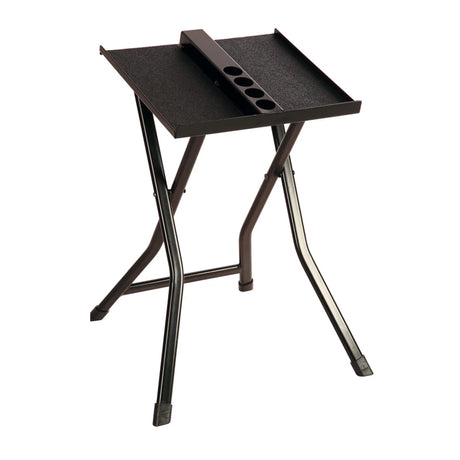
Blue Sky distributes the full PowerBlock stand lineup, ranging from the Large Compact Stand at $109 for boutique or secondary zones up to the Commercial Pro Max Stand at $419 for heavy-use commercial environments — facility managers can match stand tier directly to their dumbbell system and traffic volume.
4. Saddle-Style Rack
Saddle racks use contoured cups — one per dumbbell head — that cradle each weight in a fixed position. As Garage Gym Lab explains, saddle-style racks are best suited for round-head dumbbells specifically, because the rounded cups prevent rolling. Each pair has a designated home, which meaningfully improves re-racking behavior in high-end commercial environments. These racks are typically large enough to store a full 5–100 lb set in 5 lb increments. You'll find them in pro training facilities, high-end health clubs, and collegiate strength programs where equipment presentation is as important as function. They're a premium choice, priced accordingly.
5. PowerBlock Column Stand / Compact Stand
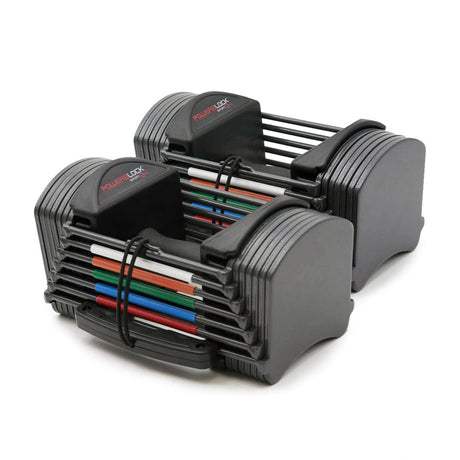
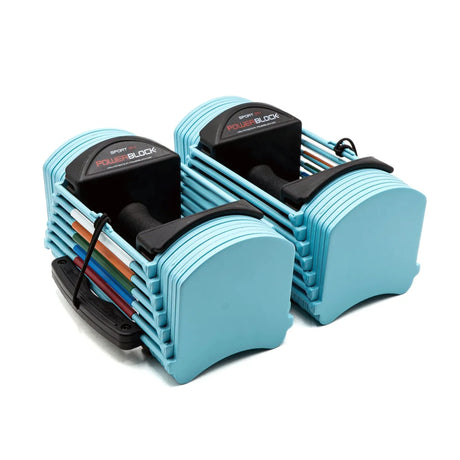
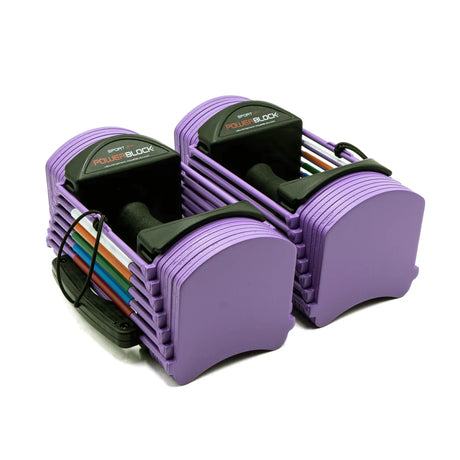
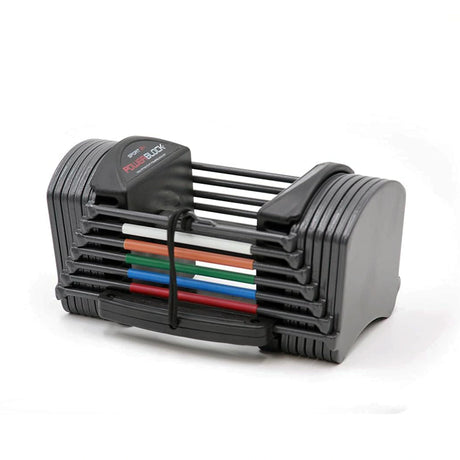
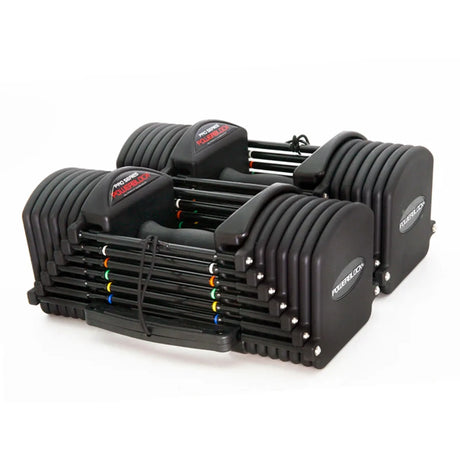
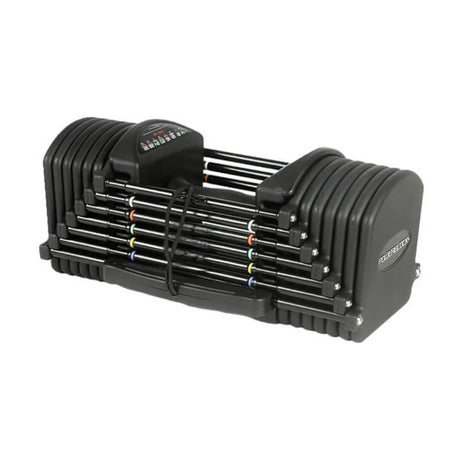
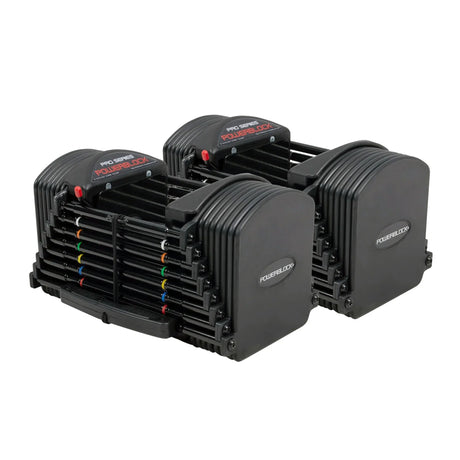
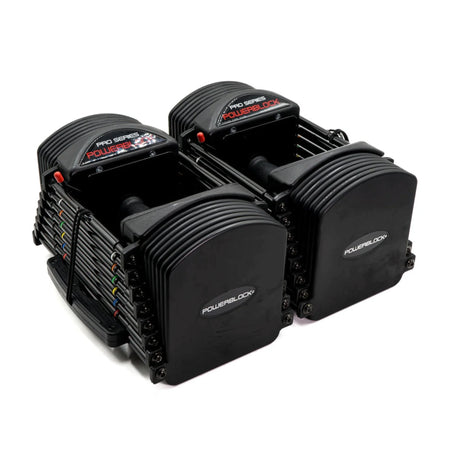
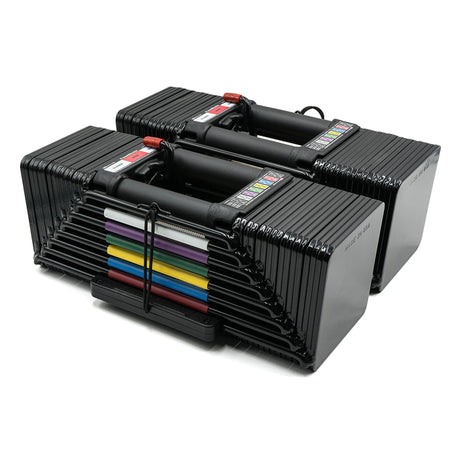
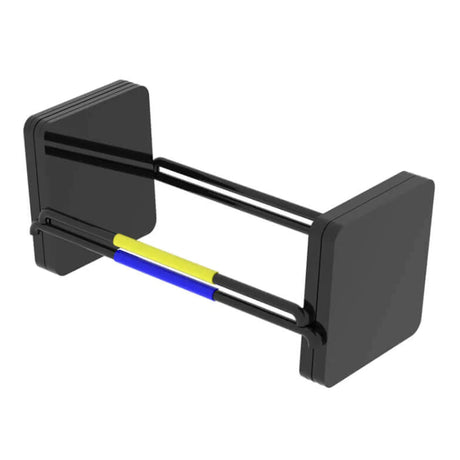
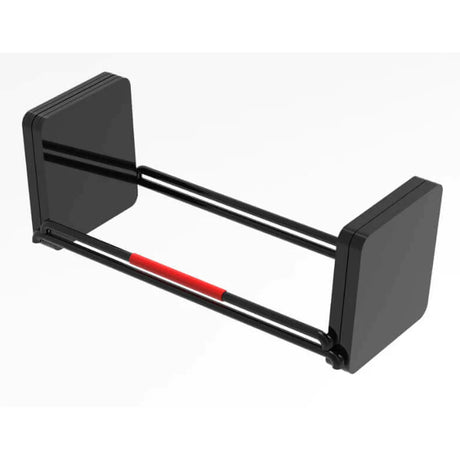
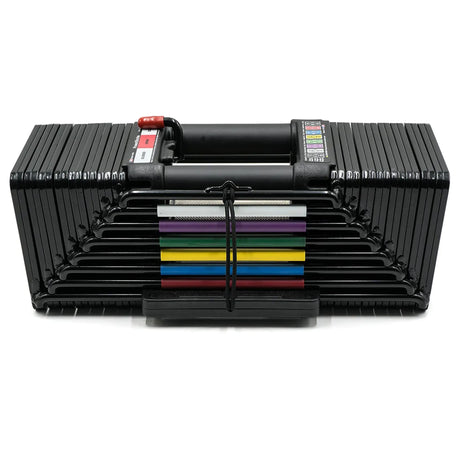
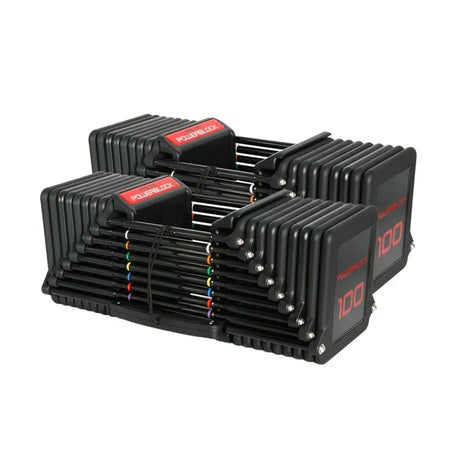
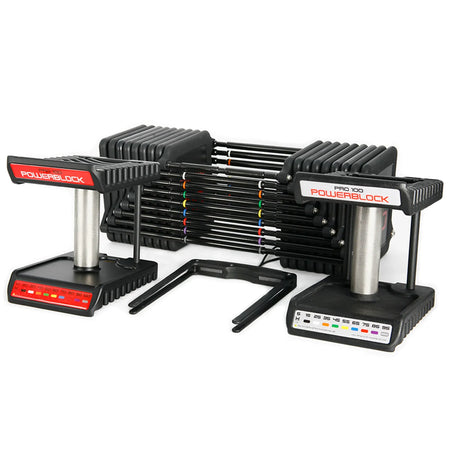
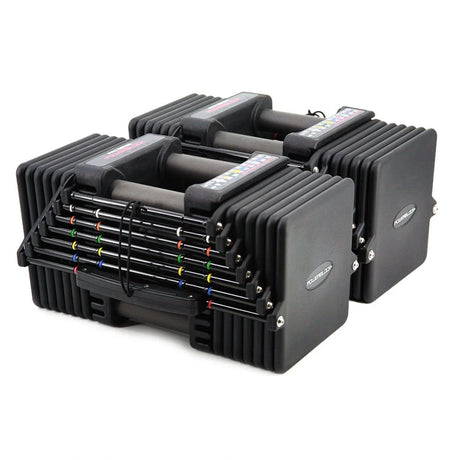
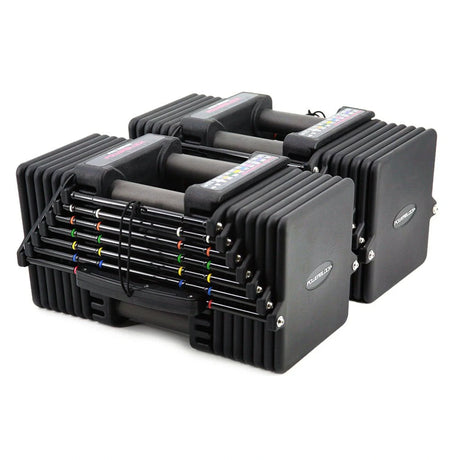
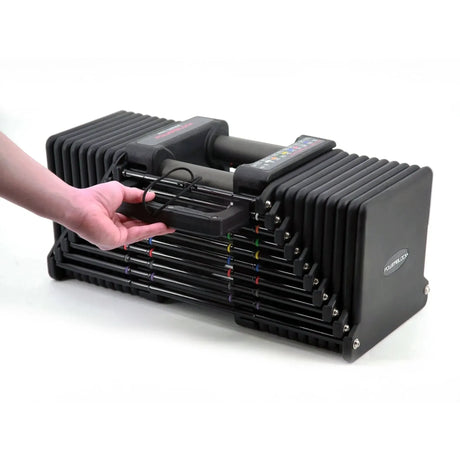
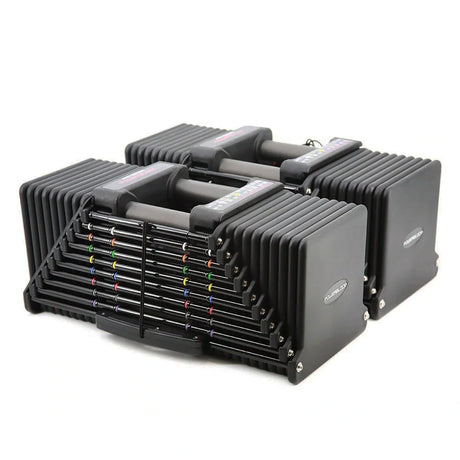
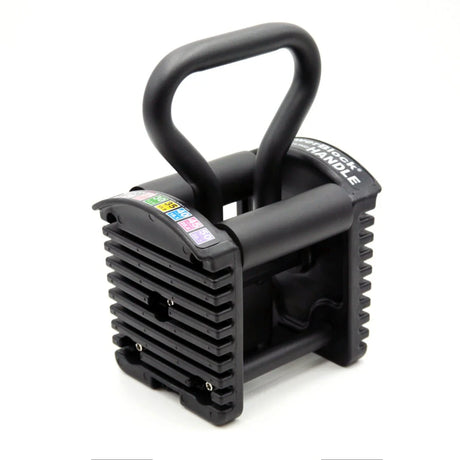
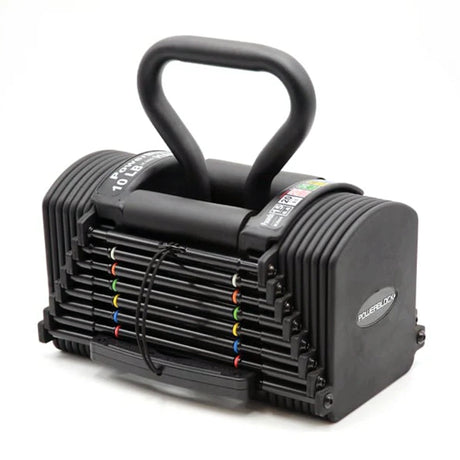
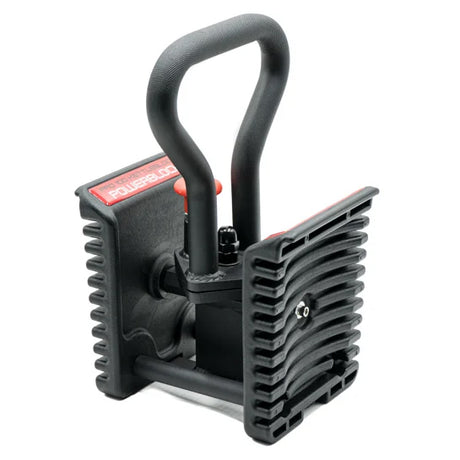
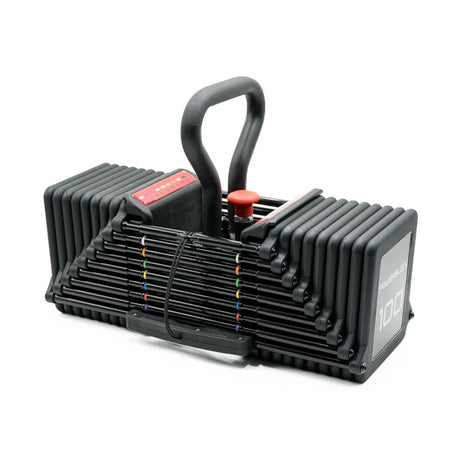
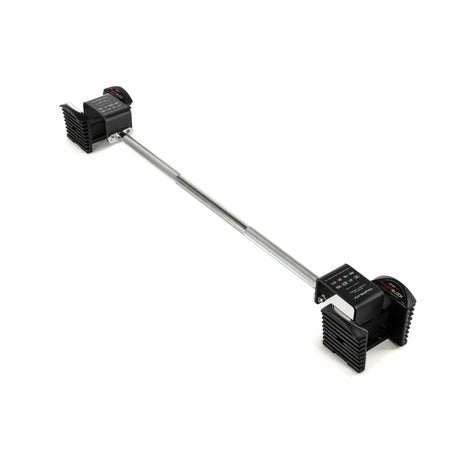
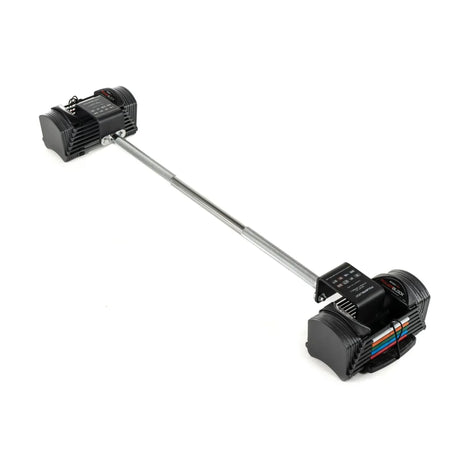
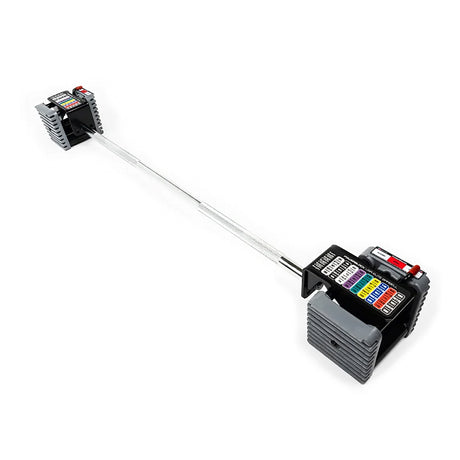
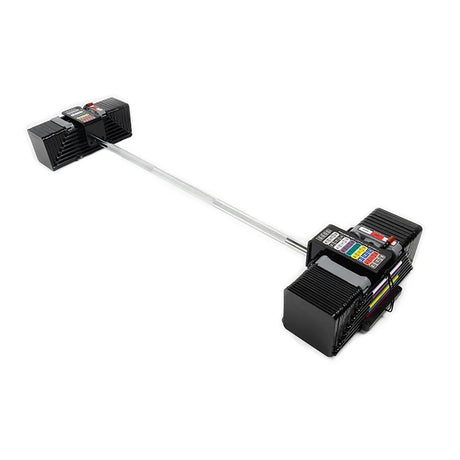
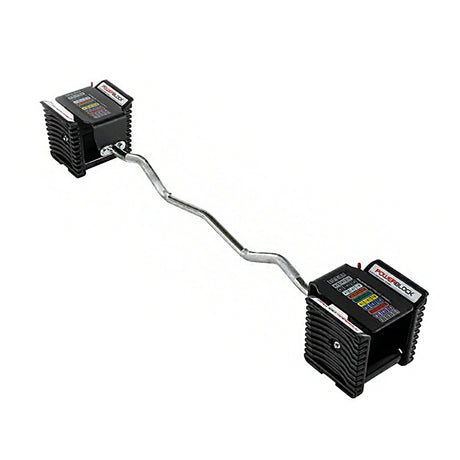
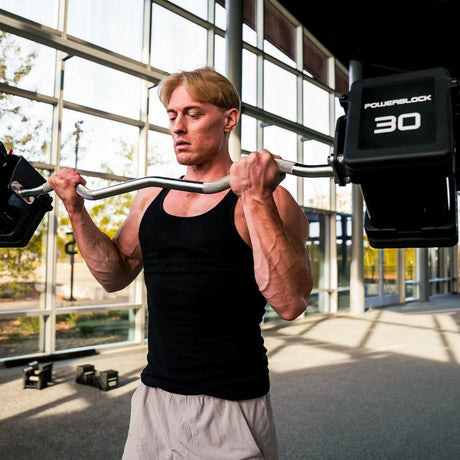
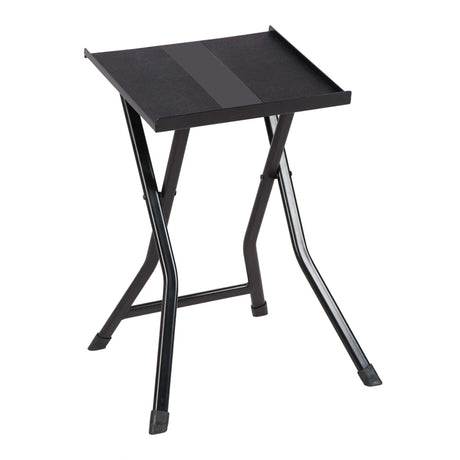
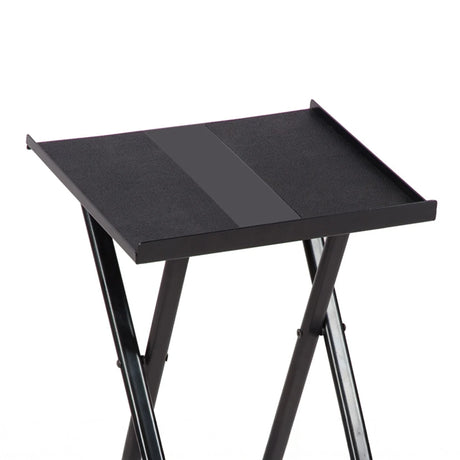
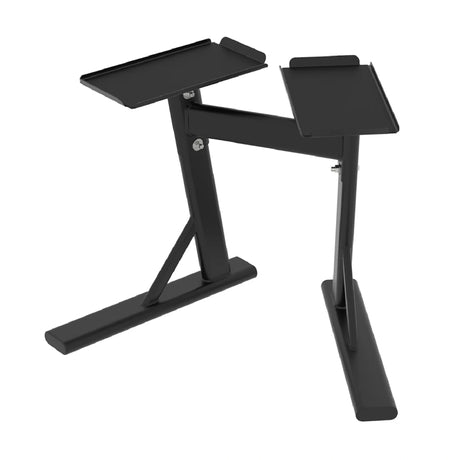
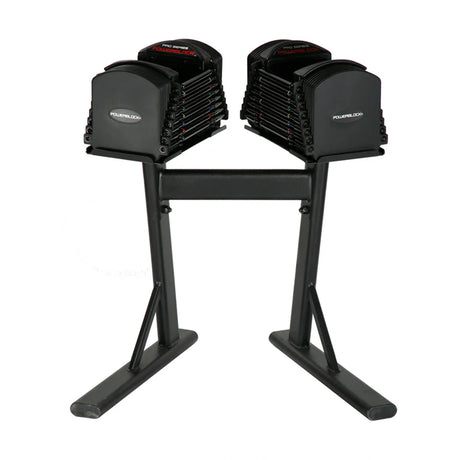
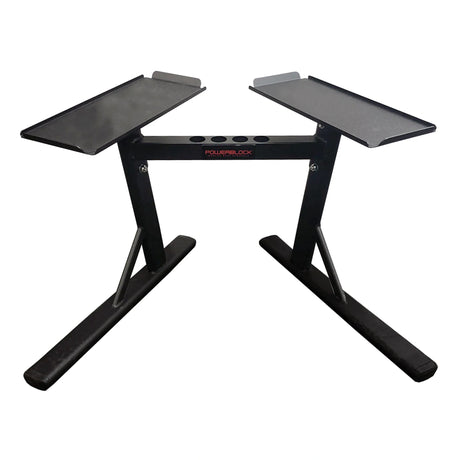
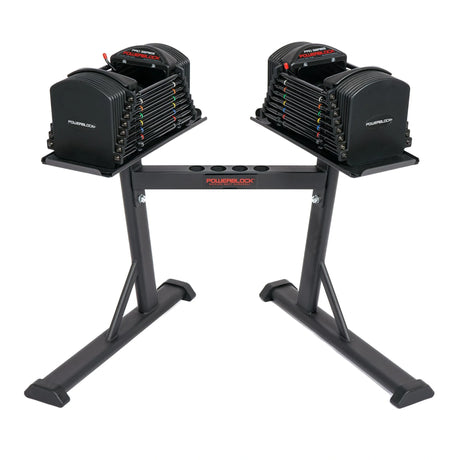
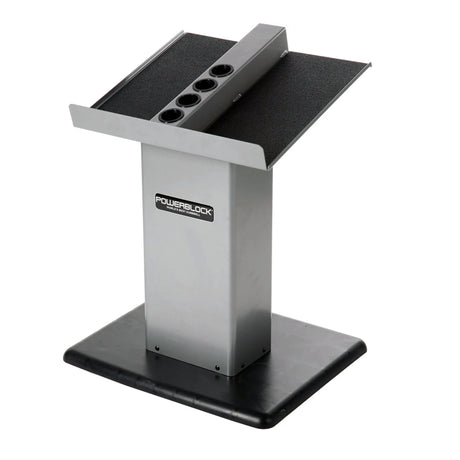
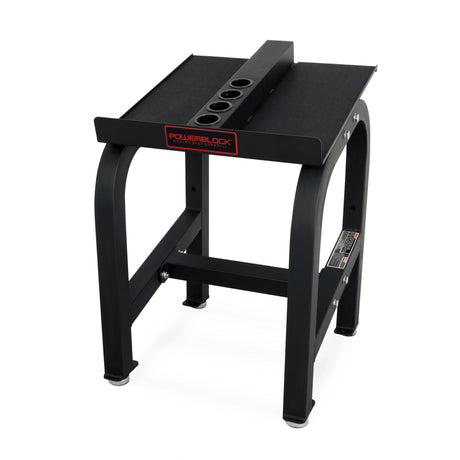
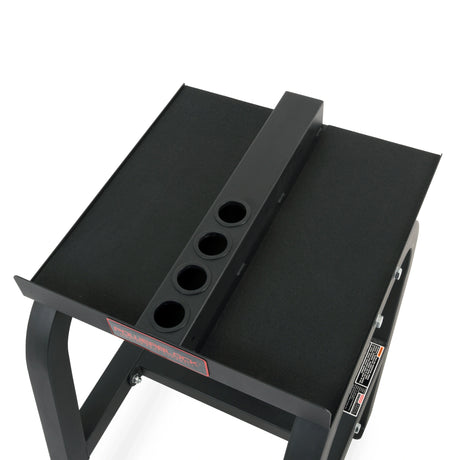
The PowerBlock stand category is purpose-built for adjustable dumbbell systems. Instead of a full wall-run rack, a column stand or compact stand holds one or two PowerBlock units in a stable, accessible format. The footprint is minimal — relevant when floor space is a genuine constraint. PowerBlock offers multiple stand SKUs at different price points: the Column Stand at $199, the PowerMax Stand at $199, and the Commercial Pro Max Stand at $419 for heavy-use commercial environments. These are not universal racks — they're engineered specifically for PowerBlock dumbbell geometry and handle dimensions. Using the wrong stand with the wrong dumbbell system creates instability and defeats the purpose of the compact format.
Dumbbell Stand Comparison: Capacity, Steel Gauge, and Compatibility Side-by-Side
Three variables determine whether a dumbbell stand belongs in a commercial facility: steel gauge and structural integrity, rated weight capacity versus the actual weight of the loaded dumbbell set, and dumbbell head compatibility. Get all three right, and the rack works. Miss one, and you're either replacing it in 18 months or managing a liability incident.
Start with the weight math, because this is where most purchasing mistakes happen. A mid-range commercial set from 5–100 lbs in 5 lb increments means 20 pairs. The average pair weight across that range is roughly 52.5 lbs. Total set weight: approximately 1,050 lbs. A rack rated to 800 lbs is already insufficient — not marginally, not debatably, but structurally inadequate from day one. As Peak Primal Wellness calculates, even a partial set of just 12 pairs ranging from 10–60 lbs totals roughly 840 lbs — exceeding most 500 lb-rated budget racks before you've finished stocking the floor.
When sourcing commercial dumbbell racks, Blue Sky recommends that operators always verify both the rack's rated weight capacity and the actual combined weight of their planned dumbbell set before purchase — the math is non-negotiable, and rack underspecification is one of the most common and most preventable commercial gym equipment mistakes.
Steel gauge is the next variable. Lower gauge number equals thicker steel. 11-gauge is the commercial benchmark — racks built to this standard achieve the 1,000–1,200 lb capacities that a full commercial set requires. Budget racks at 12-gauge or thinner are often rated at 800 lbs or less, and that rating degrades faster under repeated dynamic loading. For a facility running 200+ member visits per day, the structural difference between 11-gauge and 12-gauge shows up within the first year.
Fully welded frames outperform bolt-only assemblies in high-traffic environments. Bolted joints loosen under repeated dynamic loading and require periodic maintenance tightening — which most busy facilities don't consistently schedule. Welded frames distribute forces continuously across the structure without fastener creep. It's a one-time manufacturing decision that pays off over the rack's full service life.
ASTM F3105 is the relevant compliance standard for commercial dumbbell storage procurement — it covers externally loaded strength training gear, including benches and free-weight stations, specifying design and manufacturing parameters that reduce injury risk. According to Skelcore's analysis of fitness equipment safety standards, this is the most directly applicable standard for facility managers making rack purchase decisions and documenting their liability defense. It's not just a technical footnote — it's a procurement reference point.
Dumbbell head compatibility is the third variable and the one most frequently skipped during purchasing. As IronCompany notes in their storage rack buying guide, rubber hex dumbbells, urethane hex dumbbells, round urethane dumbbells, pro-style dumbbells, and adjustable dumbbells do not all fit the same rack style. Saddle racks work for round-head dumbbells. Flat-tier and angled-tier racks work for hex-head dumbbells. PowerBlock column stands are PowerBlock-specific. Buying a saddle rack for a facility running rubber hex dumbbells means pairs won't sit stably in the cups — a floor hazard and a re-racking nightmare.
Comparison Table: Dumbbell Stand Types at a Glance
Use this reference to quickly match rack type to your facility's dumbbell range, floor space, and membership traffic level.
| Rack Type | Best For | Typical Capacity | Steel Gauge | Dumbbell Compatibility | Footprint | Commercial Grade? |
|---|---|---|---|---|---|---|
| Vertical A-Frame / Upright Rack | Boutique studios, secondary zones, light ranges (5–50 lbs) | 300–500 lbs | 12–14 gauge (varies) | Hex dumbbells up to ~50 lbs | Small — compact triangular base | Limited — secondary use only |
| Horizontal 3-Tier Flat Rack | Mid-range sets (5–75 lbs), moderate traffic | 600–800 lbs | 11–12 gauge | Hex dumbbells — flat shelf | Moderate — shorter wall run than angled | Conditional — depends on gauge and capacity |
| Horizontal 3-Tier Angled Rack | Full-service commercial gyms, high traffic, 5–100 lbs | 1,000–1,200 lbs | 11 gauge | Rubber hex, urethane hex dumbbells | Moderate — longer wall run for full set | Yes — primary commercial recommendation |
| Saddle-Style Rack | High-end commercial, round-head dumbbells, premium facilities | 1,000–1,500+ lbs | 11 gauge | Round-head urethane, pro-style only | Large — full 5–100 lb set footprint | Yes — premium commercial option |
| 4-Tier Wide Commercial Rack | Heavy ranges (100 lbs+), high-capacity pro facilities | 2,100+ lbs | 11 gauge or heavier | Hex and pro-style dumbbells | Large — up to 97 inches in length | Yes — maximum commercial capacity |
| PowerBlock Column / Compact Stand | Adjustable dumbbell systems, space-constrained facilities | Per-unit rated (PowerBlock-specific) | Commercial-grade steel | PowerBlock adjustable dumbbells only | Minimal — 2 sq ft per unit | Yes — with correct SKU for commercial use |
For most full-service commercial gyms, the horizontal 3-tier angled rack in 11-gauge steel is the default recommendation — it handles throughput, sightlines, and the full 5–100 lb weight range without compromise. Choose a saddle-style rack when your facility runs round-head urethane or pro-style dumbbells and presentation matters as much as function. Choose a PowerBlock column stand when your facility has committed to an adjustable dumbbell system and floor space is the primary constraint.

Dumbbell Zone Layout: How to Plan Your Stand Placement for Flow, Safety, and ADA Compliance
The rack is only half the decision. Where you put it — and how much space surrounds it — determines whether your dumbbell zone works efficiently or becomes the most congested 200 square feet in the building.
Dumbbell racks are the most common bottleneck in any health club floor plan, according to GymPros' Commercial Gym Layout Planning Guide. The rack draws members in, members pull weights and move laterally to grab a bench, and within minutes you have people reaching across each other, benches dragged up against the rack face, and a congestion knot that frustrates everyone who walks into the zone during peak hours.
The 3-foot rule exists for exactly this reason. Maintain at least 3 feet of open floor space between the dumbbell rack face and the adjustable bench lineup. That clearance prevents bench-hogging behavior, keeps a traffic corridor open between the rack and the training area, and meaningfully reduces slip and trip incidents when members are carrying heavy pairs under load. GymPros identifies this clearance standard as one of the most consistently overlooked layout specifications in commercial gym planning.
Free-weight zone sizing should represent 30–40% of your total gym floor space, according to AnkaForce's commercial gym setup guide. Industry standards suggest allocating 25–35 square feet per active member on the training floor, per GymPros. When you're planning dumbbell zone density, calculate peak-hour simultaneous user count — not average daily members — and design the zone to handle that number without forcing members into each other's working space.
ADA compliance in 2026 is not optional, and it affects rack placement directly. Commercial gym layouts must provide at least one of each equipment type with a 30-inch by 48-inch clear floor space for wheelchair access. That clearance standard affects aisle width planning alongside your rack lineup and bench configuration — you need to build it into the original layout, not retrofit it after the equipment is installed.
Heaviest dumbbells go on the lowest tier. This is both an ergonomic and a structural standard. Placing heavy pairs on lower shelves lowers the rack's center of gravity, reduces tipping risk, and eliminates the real injury risk of members pulling a 100 lb pair off a top shelf at shoulder height. No debate here — it's the correct configuration.
Surface matters more than most operators account for during planning. Blue Sky carries commercial rubber flooring specifically suited for free-weight zones — placing dumbbell racks on proper rubber flooring is not just about noise reduction, it protects the subfloor from concentrated point loads and keeps the rack level over time, both critical in high-traffic commercial environments. A fully loaded dumbbell rack creates concentrated static loads at its base contact points. On bare concrete, those loads create micro-leveling shifts over time; on thin matting, the mat compresses unevenly and the rack develops a subtle lean. Quality rubber flooring — the same thickness and density specified for Olympic lifting platforms — solves all three problems simultaneously.
For facilities planning dumbbell zones in upper-level spaces, older buildings, or rooms with wood-joist floors, IronCompany's storage rack buying guide is direct: get a structural review before installation. A fully loaded 5–100 lb set can exceed 1,000 lbs of static load concentrated into a small floor footprint. That load needs to be verified against your floor rating before the rack goes in.
Reserve 10% of your free-weight zone floor space as a modular buffer — unoccupied area that accommodates future equipment additions without forcing a full redesign. Fitness trends shift. If your facility decides to add a sled track, a functional rig extension, or additional adjustable dumbbell stations in 18 months, that buffer space absorbs the change cleanly.
If you're working through a full facility layout from scratch, the commercial weight room layout planning guide for schools and universities is a detailed companion resource covering zone sequencing, traffic flow, and equipment placement sequencing across different building types. Budget-constrained operators should also review the guide to building a school weight room on a budget — the prioritization framework there applies to any commercial environment where capital is phased.

PowerBlock Stands for Commercial Facilities: When Adjustable Dumbbell Storage Changes the Equation
There's a specific situation where the traditional fixed dumbbell rack wall becomes the wrong answer — and that's when a facility has committed to adjustable dumbbell systems. The economics and the floor math shift completely.
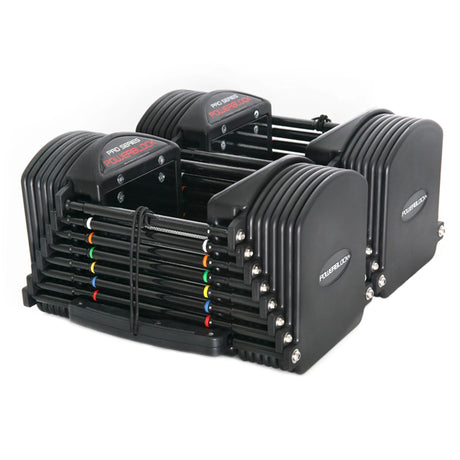
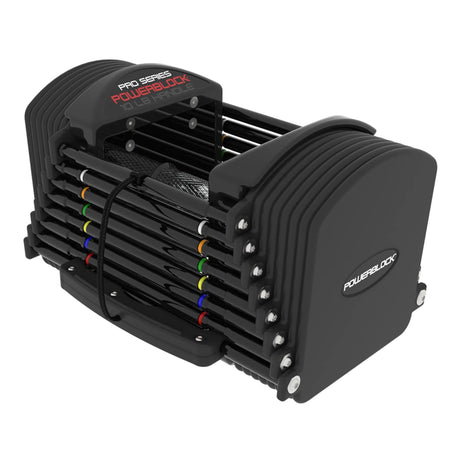
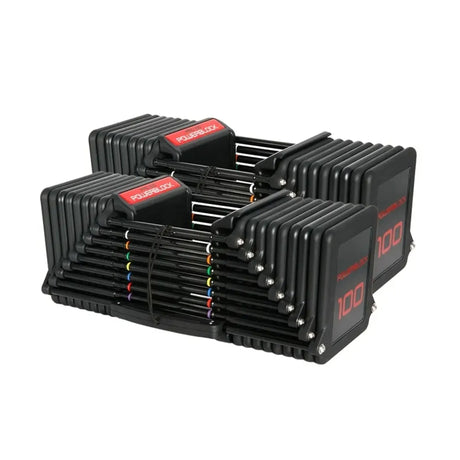
A traditional fixed set from 5–100 lbs in 5 lb increments requires a 3-tier angled rack that runs 8–12 feet of wall space and weighs over 1,000 lbs fully loaded. A pair of PowerBlock Commercial Pro 90s covers the same functional weight range in roughly 2 square feet of floor space per unit. The stand that holds them takes up even less. For space-constrained facilities — boutique studios, hotel fitness centers, corporate wellness rooms, or secondary training zones — that difference is not marginal. It's the difference between fitting the free-weight zone in the room or not.
The adjustable dumbbell market reflects this shift. According to DataIntelo's market research, the global adjustable dumbbell market was valued at $1.8 billion in 2025 and is projected to reach $3.4 billion by 2034 at a 7.3% compound annual growth rate. Selectorized product types hold the largest share at 38.4%. Commercial-use adjustable dumbbell models represent 32.8% of that global market — and these are engineered for high-frequency daily use by multiple users, with reinforced steel mechanisms and commercially backed warranties. This is not a niche product category anymore.
Selecting the right PowerBlock stand depends on which dumbbell series the facility is running and what the daily usage volume looks like. Here's how the lineup breaks down:
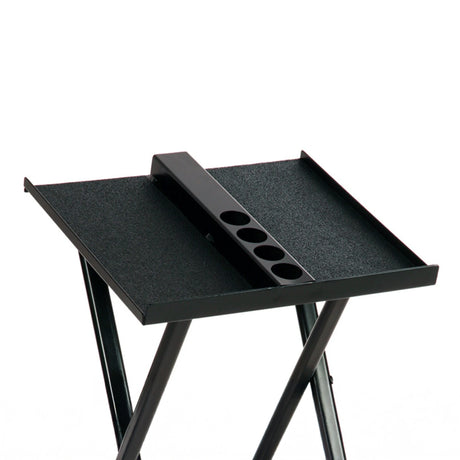
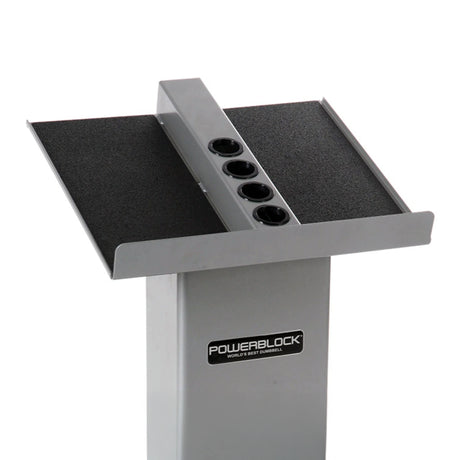
- PowerBlock Large Compact Stand ($109) — entry-level storage, appropriate for lighter boutique use or a secondary training zone where the dumbbell system sees intermittent use
- PowerBlock PowerStand ($169) — mid-tier, designed for single-unit display with stable platform support
- PowerBlock Home Rack Stand ($279) — transitional option well-suited for studio or boutique environments moving toward semi-commercial configuration
- PowerBlock Commercial Pro Rack Stand ($289) — purpose-built for the Commercial Pro series in high-traffic commercial environments with multiple daily users
- PowerBlock Commercial Pro Max Stand ($419) — designed for the Commercial Pro Max series, maximum stability for the heaviest commercial use cases
- PowerBlock Column Stand ($199) / PowerBlock PowerMax Stand ($199) — column-format options for organized multi-unit display when running multiple adjustable dumbbell stations
Facilities transitioning from fixed dumbbell sets to PowerBlock adjustable systems should pair Commercial Pro or Pro Max dumbbells with the corresponding Commercial Pro Rack Stand ($289) or Commercial Pro Max Stand ($419) — not the home or compact variants, which are not engineered for multi-user commercial throughput. Blue Sky can advise on the right configuration for your specific facility footprint.
The compatibility point deserves direct emphasis: PowerBlock stands are engineered for PowerBlock dumbbell geometry. They are not universal adjustable dumbbell racks. The handle dimensions, block width, and weight stack geometry of the PowerBlock system are specific — a stand designed for a different adjustable dumbbell brand will create instability even if it appears dimensionally similar. Always match stand to system before purchasing.
One operational benefit that gets underappreciated: adjustable dumbbell zones free up substantial floor space that can be redirected toward other revenue-generating equipment. A boutique studio that replaces a 10-foot dumbbell rack wall with two PowerBlock stations and their stands reclaims 60–80 square feet — enough for a cable attachment station, a functional trainer, or a small plyometric zone. That recovered space has real revenue potential.
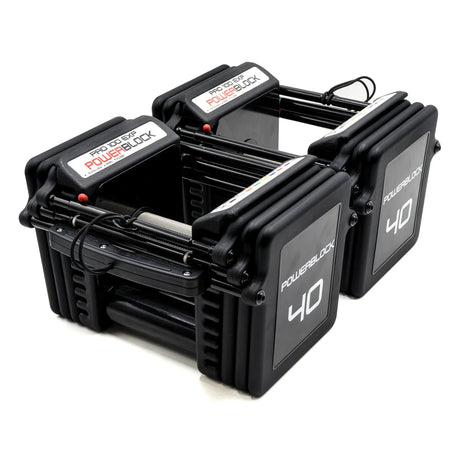
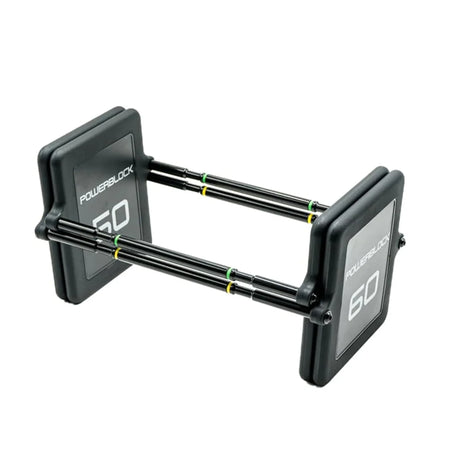
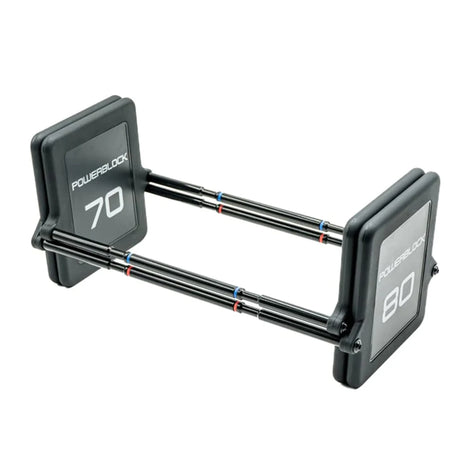
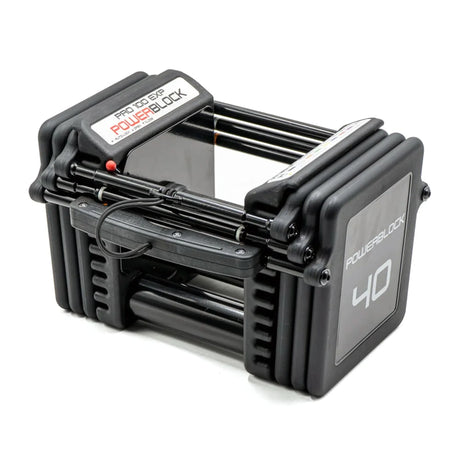
The mid-range weight category is worth noting here. Market data confirms that the 10–20 kg (22–44 lb) range leads all dumbbell weight categories with a 29% market share — the highest-volume segment. Whether you're running fixed or adjustable systems, your storage and display should prioritize easy access to that mid-range. PowerBlock's selectorized design handles this well by design, but if you're running fixed sets alongside an adjustable station, make sure the 25–45 lb pairs are on the most accessible tier of your fixed rack. Facilities looking to extend the upper weight range of an existing PowerBlock Pro 100 system can do so incrementally — the Pro 100 Stage 3 Expansion Kit adds the 60–80 lb range without replacing the base unit, which keeps storage requirements minimal and the existing stand configuration intact.

Total Cost of Ownership: What Commercial Gym Operators Actually Pay Over 5 Years
The purchase price of a dumbbell rack is the smallest number in the five-year cost equation. Operators who buy on price alone consistently underestimate three other cost categories — and one liability exposure that doesn't show up in a spreadsheet until it does.
Total cost of ownership for a commercial dumbbell rack breaks into four components. First, initial purchase price — the obvious one. Second, installation and floor prep: freight shipping on heavy commercial racks can add 10–15% to the equipment cost, and if your floor isn't properly prepared with commercial rubber flooring, you're adding that cost later anyway. Third, replacement and repair costs from structural failure or joint loosening — budget racks in high-traffic facilities often need frame repair or full replacement within 24–36 months of installation. Fourth, member experience cost: a rack that's overloaded, poorly positioned, or incompatible with the facility's dumbbells creates re-racking problems, floor hazards, and member frustration. These don't appear on a profit-and-loss statement, but they drive churn.
The welded-versus-bolted construction question is directly relevant to 2026 procurement decisions. Fully welded frames are structurally superior to bolt-only assemblies — welds distribute forces continuously across the frame, while bolted joints experience repeated dynamic loading from members re-racking dumbbells dozens of times per hour. In a facility running 200+ member visits per day, bolted joints require periodic retightening to maintain structural integrity. That maintenance rarely gets scheduled consistently. Over two to three years, the cumulative cost of maintenance labor and eventual joint failure in bolt-together racks often exceeds the price premium of a fully welded commercial unit bought upfront.
The liability exposure deserves its own paragraph. The National Safety Council's 2021 figure of 409,224 exercise equipment injuries is the baseline risk context for every rack decision. An overloaded rack — one rated at 500 lbs holding 840 lbs of dumbbells — isn't a budget rack being used hard. It's an underspec piece of equipment waiting to fail. When it tips or collapses during a peak-hour session, the incident report, the injury claim, and the facility's documented purchasing decision become part of the legal record. ASTM F3105 compliance and proper load rating verification are the facility manager's paper defense — not just a technical checkbox.
On the innovation side, premium commercial rack manufacturers are beginning to integrate real-time load monitoring and usage analytics into rack designs, as noted by Spherical Insights and Verified Market Reports. For facility managers tracking equipment utilization, scheduling proactive maintenance, and demonstrating equipment return on investment to ownership or boards, this data layer is genuinely useful — not a gimmick. It's the kind of feature that makes a higher upfront cost defensible in a multi-location operation.
Blue Sky works with commercial facilities on volume purchasing for multi-zone and multi-location orders — operators outfitting multiple training areas or managing a portfolio of fitness facilities should contact Blue Sky directly for volume pricing on PowerBlock stand packages and complete free-weight zone configurations. At scale, distributor pricing through Blue Sky typically runs 15–30% below manufacturer's suggested retail price, which substantially changes the total cost of ownership math on a multi-location procurement.

Frequently Asked Questions
1. What is the best dumbbell stand for a commercial gym?
For most full-service commercial gyms, a horizontal 3-tier angled rack built with 11-gauge steel is the best dumbbell stand. It supports 1,000–1,200 lbs, accommodates hex dumbbells from 5–100 lbs, provides clear sightlines, and handles high member throughput without creating bottlenecks. Saddle-style racks are the right choice when the facility uses round-head urethane or pro-style dumbbells — the contoured cups prevent rolling and give each pair a fixed home, which improves re-racking behavior significantly. For facilities running adjustable dumbbell systems in space-constrained environments, a purpose-built PowerBlock compact or column stand is the correct solution.
2. How much weight can a commercial dumbbell rack hold?
Commercial-grade 3-tier racks built with 11-gauge steel typically hold 1,000–1,200 lbs. Premium 4-tier commercial models can exceed 2,100 lbs capacity and span up to 97 inches in length. Budget racks using 12-gauge or thinner steel are often rated at 800 lbs or less — which is insufficient for a full 5–100 lb dumbbell set, the loaded weight of which exceeds 1,000 lbs. Verifying that rated capacity exceeds actual set weight is the most critical spec check before any commercial rack purchase.
3. What is the difference between a saddle-style and a flat-tier dumbbell rack?
Saddle-style racks use contoured cups that cradle each dumbbell head individually, making them ideal for round-head dumbbells and preventing rolling. Flat-tier racks use straight horizontal shelves suited for hex-head dumbbells, which naturally resist rolling due to their shape. Choosing the wrong rack style for your dumbbell type creates re-racking problems and floor hazards — members will leave pairs anywhere convenient rather than struggling to seat them in incompatible storage. Always match rack style to dumbbell head geometry before purchasing.
4. Are PowerBlock stands compatible with all adjustable dumbbells?
PowerBlock stands are designed specifically for PowerBlock adjustable dumbbell dimensions and handle geometry — they are not universal racks. Using them with other adjustable dumbbell brands creates instability because handle dimensions, block width, and weight stack geometry differ between manufacturers. Always verify compatibility before purchasing any stand for an adjustable dumbbell system. Blue Sky carries the full PowerBlock stand lineup, including the Commercial Pro Rack Stand and Commercial Pro Max Stand engineered specifically for high-traffic commercial environments.
5. How much floor space does a commercial dumbbell zone need?
The free-weight zone should represent 30–40% of total commercial gym floor space, with at least 3 feet of clear space between the dumbbell rack face and any bench lineup to prevent congestion. Industry standards recommend allocating 25–35 square feet per active member on the training floor, calculated for peak-hour simultaneous users rather than average daily membership. ADA compliance also mandates a 30-inch by 48-inch clear floor space at each equipment type for wheelchair access, which must be built into the original layout — not retrofitted after installation.
6. What steel gauge should I look for in a commercial dumbbell rack?
11-gauge steel is the industry benchmark for commercial dumbbell storage. Anything lighter — indicated by a higher gauge number such as 12-gauge or 14-gauge — is typically insufficient for full commercial dumbbell sets in high-traffic facilities with multiple daily users. The structural difference becomes most apparent under repeated dynamic loading: 11-gauge frames maintain their geometry over years of heavy use, while thinner gauges develop flex and joint stress that compounds over time and accelerates the need for repair or replacement.
7. Should I use fixed or adjustable dumbbells in my commercial gym?
Both have a defined role in a well-planned commercial facility, and many operators run both configurations simultaneously. Fixed rubber hex dumbbells held 42% of the rubber dumbbell product type market in 2025, driven by immediate use readiness and durability under heavy daily use — they are the right primary choice for high-traffic free-weight zones with simultaneous users. Adjustable systems like PowerBlock are the fastest-growing segment at 7.3% compound annual growth rate through 2034, and they reduce floor space requirements dramatically for boutique studios, hotel fitness centers, and secondary training zones where square footage is the primary constraint.
8. What is ASTM F3105 and why does it matter for dumbbell rack procurement?
ASTM F3105 is the primary compliance standard covering externally loaded strength training equipment, including free-weight storage stations and benches, specifying design and manufacturing parameters that reduce injury risk. It matters for commercial procurement because it establishes the documented technical baseline that facility managers can reference when verifying a rack's structural adequacy — and when building their liability defense if an incident occurs. Purchasing racks that meet ASTM F3105 and documenting that decision is a standard risk management practice for any commercial facility operator in 2026.
The Right Dumbbell Stand Is a Long-Term Facility Decision — Make It Count
The framework for getting this right isn't complicated. Match rack type to dumbbell head shape. Verify that rated capacity exceeds the actual loaded weight of your dumbbell set — with margin. Confirm 11-gauge welded steel construction for any primary commercial installation. Plan layout for flow, ergonomics, and ADA clearance from day one.
Facilities that skip any of those steps pay for it — through replacement costs when undersized racks fail, through liability exposure when an overloaded stand tips during a peak session, and through member experience degradation when a poorly positioned rack turns the free-weight zone into the building's worst bottleneck. All of it is preventable with the right spec decision upfront.
For facilities running or evaluating PowerBlock adjustable dumbbell systems, the stand selection logic is equally clear: match the stand tier to the dumbbell series and the traffic volume. The Commercial Pro Rack Stand and Commercial Pro Max Stand are the correct commercial-grade choices for high-traffic environments — not the home or compact variants. Blue Sky stocks the full PowerBlock stand lineup, from the Large Compact Stand at $109 for boutique applications to the Commercial Pro Max Stand at $419 for heavy-use commercial configurations.
Browse Blue Sky's full lineup of PowerBlock dumbbell stands — from compact studio options to commercial Pro Max configurations — and contact us for volume pricing on multi-zone or multi-location orders. Facilities managing multiple training areas or a portfolio of fitness locations should reach out directly; volume distributor pricing changes the total cost of ownership math substantially.
For operators working through the broader layout question, the commercial weight room layout guide covers zone sequencing, traffic flow, and structural planning in detail — a logical next step after locking in rack selection.
As Spherical Insights projects, the dumbbell rack market reaches $1.68 billion by 2035. Facilities that build spec-correct, properly laid-out free-weight zones today will have the structural and spatial capacity to adapt as the industry grows — without tearing down and rebuilding what they've already installed.