

Table of Contents:
- What Is the Hyperice Vyper? Specs, Design, and How It Actually Works
- The Science Behind the Vyper: Does Vibrating Foam Rolling Actually Work?
- Vyper in Commercial Settings: Real-World Value for Gyms, Clinics, and Corporate Wellness
- Vyper vs. Traditional Foam Roller: Is the Price Difference Justified?
- Who Should Buy the Vyper — and Who Shouldn't
- Frequently Asked Questions About the Hyperice Vyper
- In-Depth Buyer Questions Answered
- The Bottom Line: Is the Vyper Worth It for Your Facility?
Recovery technology is no longer a luxury amenity at forward-thinking fitness facilities — it's become a measurable competitive differentiator. The global fitness recovery services market hit $8.3 billion in 2025 and is projected to reach $26.8 billion by 2035, representing a 12.4% compound annual growth rate that few other segments in the industry can match. Facilities investing in recovery infrastructure now aren't chasing a fad — they're positioning ahead of a documented, accelerating demand curve.
But here's the tension: not every recovery tool earns its place on a commercial floor. The Hyperice Vyper retails for approximately $209 per unit. That's not a casual purchase for a facility manager ordering ten of them for a new recovery zone. A vibrating foam roller at that price point needs to justify its cost-per-use, survive daily abuse from dozens of users, and actually deliver measurable outcomes for members, patients, or employees — not just look impressive in a product photo.
Most "is the Vyper worth it" conversations happen on Reddit threads and YouTube channels aimed at home gym hobbyists. This is a different conversation. This guide answers the question from the perspective of commercial facility managers, physical therapy and chiropractic clinics, and corporate wellness buyers who need ROI data and operational clarity — not Instagram aesthetics.
Here's what we'll cover: the Vyper 3's exact specs and how the vibration mechanism works physiologically, the peer-reviewed clinical evidence (and its honest limitations), real-world commercial use cases from F45 to Purdue Athletics, a direct feature comparison against traditional foam rollers, and a clear verdict on who should buy it and who shouldn't. Hyperice is the official recovery technology partner of the NBA, NFL, MLB, and UFC — that institutional credibility matters when you're evaluating a brand for commercial deployment, and we'll contextualize it throughout.
What Is the Hyperice Vyper? Specs, Design, and How It Actually Works
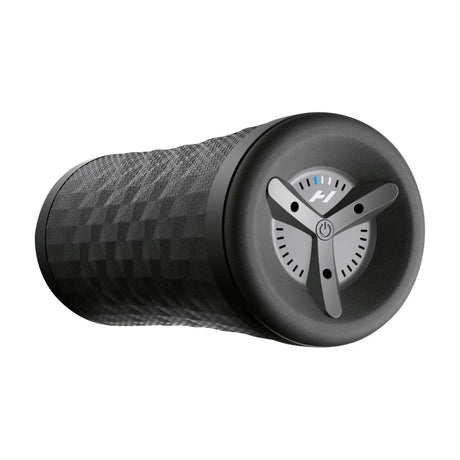
The Vyper 3 is Hyperice's current flagship vibrating foam roller. That distinction matters — it's not a passive recovery prop or a standard cylindrical roller with a motor duct-taped inside. It's an engineering-forward myofascial release tool built around localized vibration therapy, and the design decisions reflect that intent throughout.
Core Specifications
The Vyper 3 measures 5.4" x 5.4" x 13" and weighs 2.8 lbs (1.27 kg). It runs on an 18V rechargeable lithium-ion battery that delivers approximately two hours of continuous use per full charge. The unit includes a 1-year manufacturer warranty. For commercial buyers comparing specs across recovery tools, those numbers tell a specific story: light enough for easy patient or member handoff, compact enough for multi-unit recovery stations, and durable enough to cycle through daily charge-and-use rotations.
The Vyper 3 offers three vibration speed settings. For reference, the Vyper 2.0's published vibration specs — 45, 68, and 92 Hz across the three settings, maintaining G-force levels of 6.9, 7.8, and 8.8 respectively even under body mass — establish the engineering standard the product line is built to. That G-force retention under load is significant: many lower-grade vibrating rollers lose amplitude when a user's full body weight compresses the foam, defeating the purpose entirely. Hyperice engineered the Vyper line specifically to maintain vibration intensity under realistic use conditions.
The EPP Exterior — and Why the Material Choice Matters
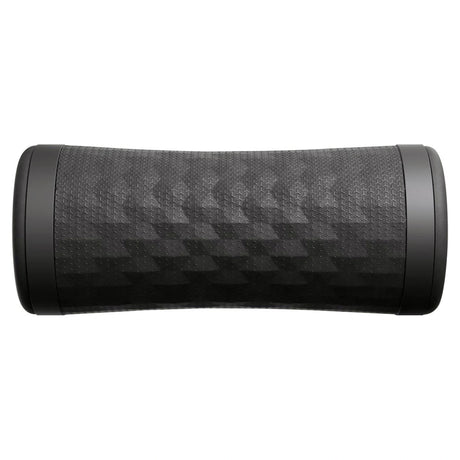
The Vyper 3's body is constructed from contoured EPP (Expanded Polypropylene) foam. Hyperice markets this as eco-friendly and lightweight, and both claims are accurate. But the commercial durability angle is the one that doesn't get enough attention.
EPP is a closed-cell foam that resists compression fatigue under repeated heavy use. In commercial environments with 20–50+ users per day, this material choice is the difference between a tool that stays effective for two to three years and one that flattens out in months. Standard EVA foam rollers are not built for this load. EVA compresses and deforms over time, losing its structural integrity under sustained multi-user demand. EPP doesn't behave that way — it retains its shape and density through the kind of punishment a commercial recovery floor dishes out daily.
The contoured design also serves a specific functional purpose: it's engineered to avoid direct pressure on the spine and other sensitive anatomical areas. This isn't a marketing claim — it's a structural feature with real clinical implications, particularly for PT clinics and corporate wellness settings where liability and patient safety are genuine concerns.
How Localized Vibration Therapy Works
The Vyper applies targeted mechanical stimulation to specific soft tissue regions — this is localized vibration, not whole-body vibration. The distinction matters. Whole-body vibration platforms send oscillation through the entire musculoskeletal system simultaneously. The Vyper's vibration is site-specific, directed through the contact point between the roller and the tissue being addressed.
Scientific literature associates this targeted mechanical stimulation with enhanced blood flow, oxygenation, and neuromuscular tension reduction, as documented in PeerJ (2019) and corroborated by research from Strength Resurgence. The mechanical stimulus activates mechanoreceptors in the fascia and muscle tissue, modulating pain signals and promoting circulation to the treated area — effects that a passive roller rolling under body weight alone simply doesn't produce at the same magnitude.
App Integration and the Programming Layer
The Vyper 3 connects to the Hyperice App, which provides guided recovery sessions, professional programming advice, and automatic vibration speed adjustment based on the selected routine. For commercial settings specifically, this matters operationally: it removes the need for staff to instruct every member or patient on proper use, standardizes recovery programming across your facility, and delivers a consistent, professional experience without requiring a dedicated recovery coach on the floor.
The Product Positioning Sweet Spot
According to the Elite Performance Institute's sports chiropractic review, the Vyper 3 occupies the gap between a standard foam roller and a massage gun. Broader surface coverage plus vibration makes it ideal for large muscle groups — quads, hamstrings, glutes, thoracic back — where a massage gun's small contact head becomes tedious and a passive roller lacks the neurological stimulus. Massage guns remain the better tool for isolated, pin-point soft-tissue work on specific trigger points. The Vyper is not trying to replace them. It's filling a distinct coverage-and-stimulus role that neither alternative handles as effectively.
The Science Behind the Vyper: Does Vibrating Foam Rolling Actually Work?
Vibrating foam rollers carry a premium price tag. That means the science has to hold up — especially for clinical buyers and institutional procurement officers who need more than testimonials and pro athlete endorsements to justify a line item. Here's what the peer-reviewed literature actually says.
The Nova Southeastern University RCT (2018)
The most cited controlled trial in this space is Cheatham, Stull, and Kolber's randomized controlled trial published in the Journal of Sport Rehabilitation. The findings are specific enough to be meaningful: the vibrating foam roller produced a pressure pain threshold increase of 180kPa, compared to 112kPa for the non-vibrating roller. The vibrating roller also produced a 7-degree increase in knee range of motion versus 5 degrees for the non-vibrating group. The difference in pressure pain threshold reached statistical significance at p=.03 — a result that holds up under clinical scrutiny.
For PT and chiropractic clinics, that pain threshold data is particularly actionable. Higher pressure pain tolerance means patients can tolerate more thorough myofascial work, which translates directly to treatment quality and session productivity.
Adherence and Session Duration
A 2017 study in the Journal of Sport Rehabilitation introduced a finding that doesn't get enough attention: vibration reduces the discomfort of foam rolling enough that users roll significantly longer. And duration matters — rolling for at least 120 seconds produces measurably better outcomes than shorter sessions.
Kyle Stull, DHSc, formerly senior manager of research and program design at Implus LLC and a published researcher in this area, explained the mechanism clearly: the vibration feature improves efficacy not just through direct physiological effect, but through improved adherence. Less pain during rolling means users stay with the tissue longer, which produces the downstream outcomes — better ROM, reduced soreness — that the evidence supports. It's a compounding effect that passive rollers simply can't replicate.
Range of Motion and Flexibility
A 2015 study by researchers at UNC, referenced by Kingsfield Fitness, found that vibrating foam rollers can increase range of motion, blood flow, and flexibility by up to 40% — compared to 18% for traditional foam rollers. That's not a marginal improvement. For facilities running group stretching classes, pre-hab sessions, or warm-up protocols, a 40% vs. 18% flexibility improvement across a member population represents a meaningful difference in outcomes and member satisfaction.
PeerJ (2019) and the Crossover Trial
The PeerJ 2019 randomized crossover trial from the University of Central Lancashire examined vibration versus non-vibration foam rolling on flexibility, dynamic balance, and perceived joint stability following exercise-induced fatigue. The crossover design is methodologically strong — the same subjects experienced both conditions, controlling for individual variation. The results favored the vibrating condition across multiple outcome measures, reinforcing that the performance edge isn't limited to pain threshold alone.
PMC Evidence on Hip Extension ROM
A PubMed Central-published study examining vibration foam rolling (VFR) versus non-vibration foam rolling (NVFR) found that VFR achieved greater short-term effects on pain perception and passive hip extension range of motion. For clinical contexts — PT clinics treating hip flexor tightness, hamstring restrictions, or post-surgical mobility deficits — that distinction between tools has direct treatment implications.
The Honest Caveat
Behm DG, writing in Sports Medicine (2022), notes that effect sizes across foam rolling studies are generally modest and most study populations are small. That's a legitimate observation and worth acknowledging, particularly for clinical readers trained to weigh evidence conservatively. The research base for vibrating foam rolling is not as deep or as large-sample as the evidence behind physical therapy modalities with decades of trials behind them.
That said, the preponderance of peer-reviewed evidence — across multiple independent research groups, using different methodologies, examining different outcome measures — consistently supports vibrating foam rolling as meaningfully superior to non-vibrating rolling for acute pain threshold, range of motion, and session adherence. That's not a gimmick. That's a validated upgrade with a plausible physiological mechanism and a growing evidence trail behind it.

Vyper in Commercial Settings: Real-World Value for Gyms, Clinics, and Corporate Wellness
The science establishes what the Vyper can do. The commercial question is whether it does it reliably, at scale, across different facility types. The real-world adoption data here is more compelling than most buyers realize.
Gyms and Studios
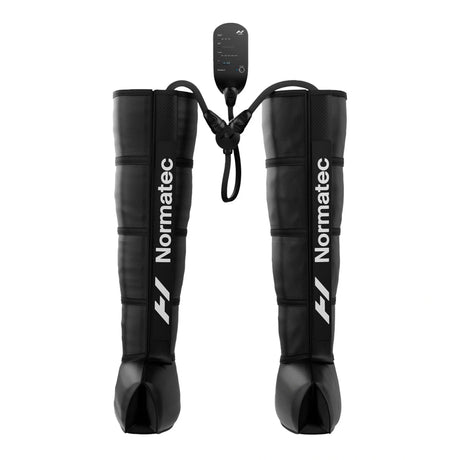
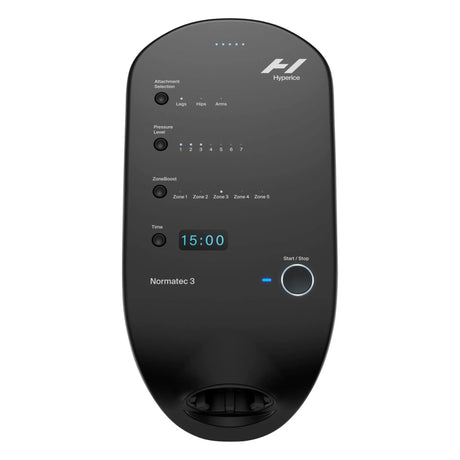
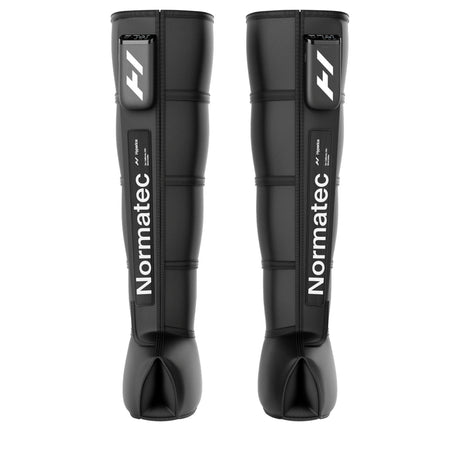
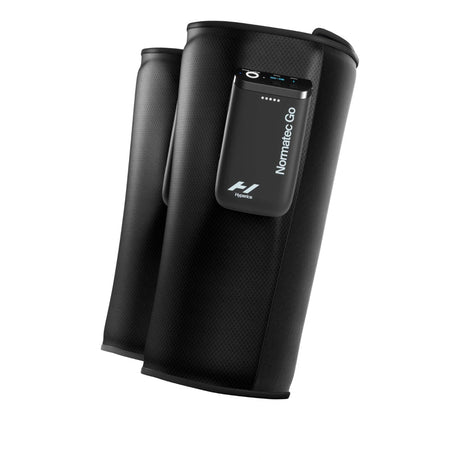
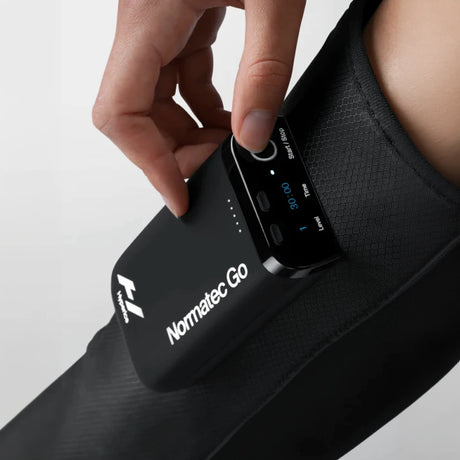
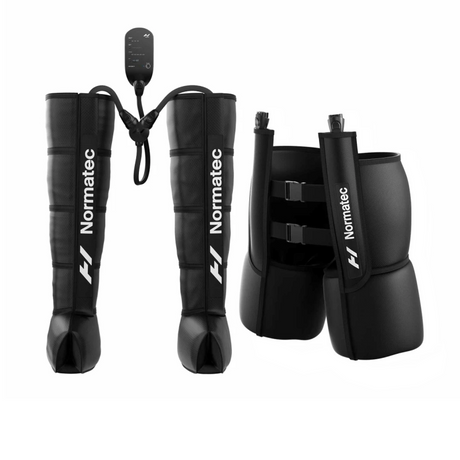
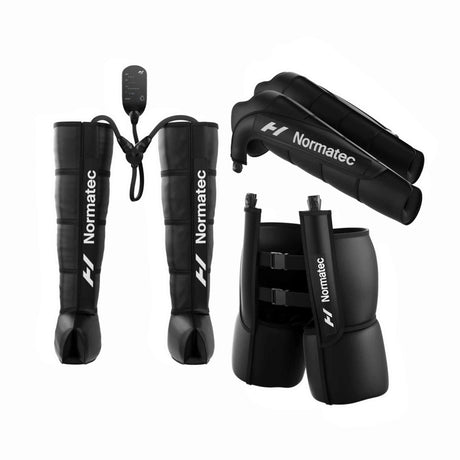
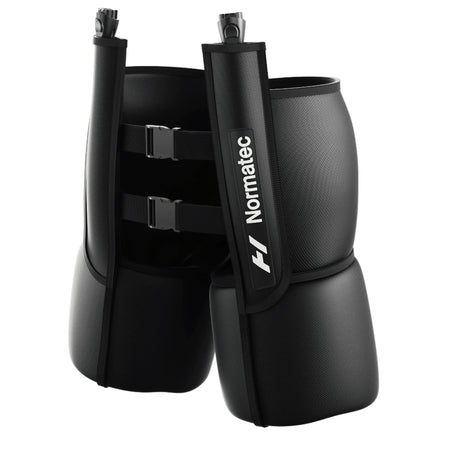
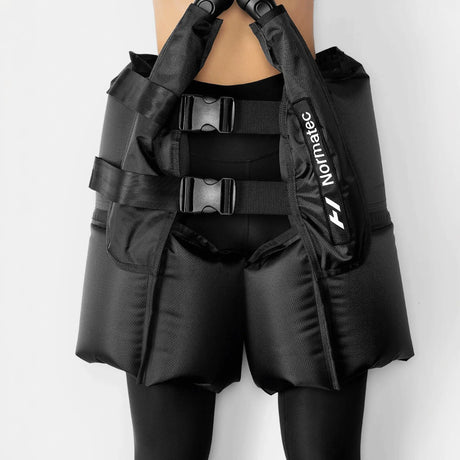
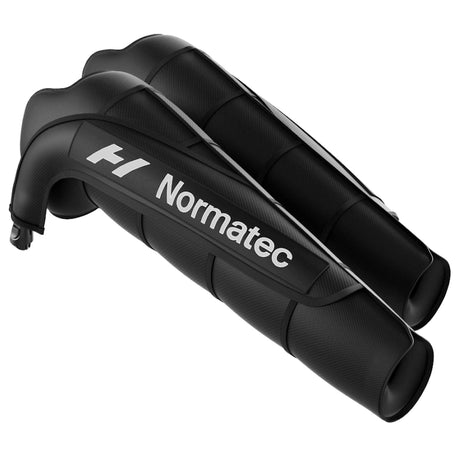
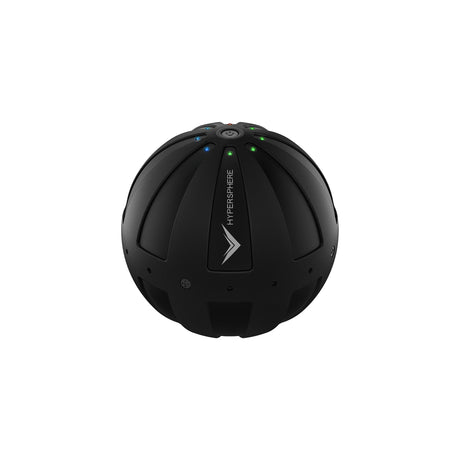
In June 2025, F45 Training — ranked the #1 gym chain in the U.S. by Men's Journal — partnered with Hyperice to deploy the Vyper vibrating foam roller, Hypervolt, Normatec boots, and Hypersphere across select studios worldwide. This isn't a small pilot. F45's model is built on group training efficiency and member retention — they don't add recovery tools for novelty. They add them because recovery programming drives return visits, reduces dropout, and creates a differentiated member experience that justifies premium membership pricing. Buyers evaluating Normatec as part of a broader recovery suite will find our cost vs. benefits analysis of Normatec a useful companion to this guide.
For a gym or studio owner reading this, the F45 partnership signals something specific: a facility at the scale and brand awareness of F45 evaluated the Hyperice product suite against every available option and chose it as the recovery infrastructure for their studios globally. That's a meaningful endorsement of the Vyper's commercial viability.
Purdue Athletics invested in Hyperice recovery tools for its student-athletes beginning with the 2024–25 season, citing recovery technology as integral to athlete health, well-being, and mental performance. High-frequency institutional use — multiple athletes per day, every day through a competitive season — is exactly the durability environment EPP was engineered for. Purdue's adoption validates the Vyper as a purpose-built institutional tool, not a consumer product with a commercial label.
According to Market Intelo, an estimated 62,000 new commercial recovery suite installations are projected globally in 2026. Facilities building recovery zones now are getting ahead of a documented infrastructure wave — not speculating on an unproven trend.
Physical Therapy and Chiropractic Clinics
The Vyper's clinical evidence base makes it a defensible tool for patient-facing applications. The Cheatham et al. RCT, the PeerJ crossover trial, and the PMC hip extension study collectively provide the kind of peer-reviewed backing that clinical practitioners need to justify adding a tool to their treatment inventory. It's not experimental — it's evidence-supported.
The contoured EPP design avoids spinal pressure, which is critical for clinical safety when the roller will be used across a diverse patient population. At 2.8 lbs, it's easy to hand between patients or transport between treatment rooms. The EPP surface is non-porous and wipeable — a practical sanitation consideration in clinical environments where infection control standards apply.
The Vyper fills a specific clinical gap: broader myofascial stimulation than a massage gun for large muscle groups, making it an effective complement to manual therapy or a practical patient self-care teaching tool. Teaching a patient to use the Vyper at home between appointments — guided by the Hyperice App — extends your treatment influence beyond the clinic wall without requiring additional staff time.
Corporate Wellness Programs
The barrier to use with the Vyper is genuinely low. No training certification required. No staff supervision needed during sessions. The Hyperice App delivers guided programming directly to the user's phone, removing the need for an on-site instructor. The compact 5.4" x 5.4" x 13" footprint means it fits in wellness rooms, break areas, and even touchdown spaces in open office environments.
For corporate wellness buyers, that combination — low maintenance burden, high utilization potential, professional recovery outcomes — makes the Vyper one of the more operationally efficient tools in the recovery equipment category. Add it to a recovery station alongside a massage chair or compression boots, and you've created a multi-modality recovery experience that reads as a genuine employee benefit, not a treadmill gathering dust in a corner.
The Ecosystem Advantage
When Blue Sky works with facility managers on recovery room buildouts, the most common mistake is buying one-off tools from multiple brands — then facing fragmented warranties, incompatible apps, and no unified programming story for members. The Hyperice ecosystem (Vyper + Normatec + Hypervolt + Venom) solves this: one vendor relationship, one app platform, one warranty contact. That's an operational advantage that doesn't show up in a spec sheet but matters every week when a unit needs service, a staff member needs programming guidance, or you're onboarding a new group of members to your recovery zone.
Single-brand procurement also simplifies the conversation with leadership when it's time to expand — you're not managing five relationships with five support chains. You're expanding a system you already understand.

Vyper vs. Traditional Foam Roller: Is the Price Difference Justified?
The Vyper 3 retails for approximately $209 per unit. A quality commercial-grade traditional foam roller runs $20–$40. That's a 5x to 10x price premium, and the question of whether it's justified deserves a direct, structured answer — not a soft pivot to brand talking points.
For commercial buyers, the relevant question isn't "is $209 a lot?" — it's "what does $209 per unit deliver in terms of member outcomes, session adherence, clinical results, and throughput versus a $20–$40 passive roller at scale?" Those are different questions with a different answer.
Where Traditional Rollers Win
Be honest about the trade-offs: traditional foam rollers have a real cost advantage, especially at volume. They require no charging infrastructure, carry zero tech failure risk, and sanitation can be straightforward with the right surface material. For a facility on a constrained budget with no recovery programming in place yet, a bank of standard rollers is a legitimate starting point. They work. The science supports foam rolling as an effective recovery modality — the vibration adds a meaningful upgrade, but the foundation is solid regardless.
Where the Vyper Wins
The outcome data favors the Vyper substantially. Vibrating foam rollers increase range of motion, blood flow, and flexibility by up to 40% compared to 18% for traditional rollers, per the UNC 2015 study. The Cheatham et al. RCT documented 180kPa versus 112kPa in pressure pain threshold — a 60% larger improvement for the vibrating condition. The session duration research (Journal of Sport Rehabilitation, 2017) shows that vibration reduces discomfort enough to keep users rolling past the 120-second threshold that produces the best outcomes — a threshold that standard rollers struggle to reach because users quit early due to discomfort.
Then there's institutional validation. The Vyper's adoption by the NBA, NFL, F45, and Purdue Athletics isn't incidental. These organizations have access to every recovery tool on the market and dedicated resources to evaluate them. Their selection of the Hyperice Vyper line reflects both the clinical evidence and the operational durability of the product.
The EPP construction is a commercial durability factor that the $20–$40 roller category simply can't match. Standard EVA foam rollers deform under repeated heavy use. EPP holds its structural integrity through the daily multi-user demand of a commercial floor — which means the actual cost-per-use gap between a $209 Vyper that lasts three years and a $30 EVA roller that flattens in four months is smaller than the sticker price suggests.
The 1-year manufacturer warranty and Hyperice App integration round out the commercial case. App-guided programming standardizes member experience without staff investment. Warranty coverage reduces operational risk on each unit. Those are real operational values that the traditional roller category doesn't provide.
For individual home users who roll sporadically twice a week, the premium is harder to justify. For commercial facilities, PT clinics, and corporate wellness programs where utilization is real, outcomes matter, and member experience drives retention decisions, the Vyper's premium is justified and the ROI case is clear.
Hyperice Vyper 3 vs. Traditional Foam Roller: Feature-by-Feature Breakdown
Here's how the Vyper 3 stacks up against a standard non-vibrating foam roller across the metrics that matter most for commercial buyers.
| Feature | Hyperice Vyper 3 | Traditional Foam Roller |
|---|---|---|
| Vibration capability | 3 speed settings (45, 68, 92 Hz); G-force maintained under body mass | None |
| ROM / flexibility improvement | Up to 40% (UNC 2015); 7-degree knee ROM increase (Cheatham et al. 2018) | Up to 18% (UNC 2015); 5-degree knee ROM increase (Cheatham et al. 2018) |
| Pressure pain threshold effect | 180kPa improvement (p=.03, RCT 2018) | 112kPa improvement (RCT 2018) |
| Session adherence (rolling duration) | Reduced discomfort drives longer sessions; users more likely to exceed 120-second threshold | Discomfort often cuts sessions short; harder to sustain 120+ seconds on sensitive tissue |
| App integration / guided programming | Hyperice App — guided sessions, auto speed adjustment, pro programming | None |
| Material durability for commercial use | Contoured EPP (closed-cell, compression fatigue-resistant) | Typically EVA foam (compresses and deforms under heavy multi-user load) |
| Weight | 2.8 lbs (1.27 kg) | 0.5–1.5 lbs (varies) |
| Battery / power requirement | 18V lithium-ion; ~2 hours per charge | No power required |
| Warranty | 1 year manufacturer warranty | Varies; typically 30–90 days or none |
| Price (per unit) | ~$209 | $20–$40 |
| Best commercial use case fit | Recovery zones, PT clinics, corporate wellness, multi-user high-frequency environments | Budget buildouts, supplemental recovery stations, low-frequency use settings |
Across every outcome metric that drives commercial value — ROM, pain threshold, adherence, durability, and programming infrastructure — the Vyper 3 delivers a measurable advantage over the passive roller category.

Who Should Buy the Vyper — and Who Shouldn't
The Vyper is not the right tool for every situation. Being specific about fit is more useful than a blanket recommendation, so here's an honest breakdown by buyer type and use case.
Buy the Vyper If:
- You're a commercial gym or studio building or expanding a recovery zone, especially if you're considering a Hyperice multi-modality suite. The Vyper integrates with Normatec, Hypervolt, and Venom under one app and one warranty structure — that ecosystem simplicity has operational value every week.
- You're a PT or chiropractic clinic that wants an evidence-backed myofascial tool that patients can self-administer with app guidance between appointments. The clinical evidence from Cheatham et al., PeerJ, and the PMC hip extension study gives you defensible justification.
- You're a corporate wellness buyer looking for a low-maintenance, high-utilization recovery tool with a compact footprint and zero staff instruction requirements. The Hyperice App handles the programming.
- You already use or plan to use other Hyperice products. Adding the Vyper to an existing Normatec or Hypervolt setup compounds the ecosystem benefits without adding vendor complexity.
- Your facility runs high daily user volume. The EPP construction handles multi-user commercial load in a way that EVA alternatives simply don't sustain over time.
Consider Alternatives If:
- Budget is your primary constraint and you have no recovery programming infrastructure in place yet. Start with standard rollers, build the recovery habit and zone culture, then upgrade to vibrating tools as utilization justifies the investment.
- You need primarily isolated, pin-point tissue work. A percussion massage gun like the Hypervolt handles that role better — the Vyper's broader surface coverage is a strength for large muscle groups, not a precise instrument for trigger point work.
- You're buying for a single individual with infrequent foam rolling habits. The premium is harder to justify at low utilization volumes. This is a commercial-grade tool priced accordingly.
- Your facility has no reliable charging infrastructure or cannot tolerate any downtime between users. The battery dependency is a real operational consideration — a passive roller is always ready. Build your charging rotation plan before deploying multiple units.
A Note for School and University Athletic Departments
For school and university athletic departments specifically, the Vyper is one of the highest-ROI recovery tools per dollar because it requires no supervision, no staff certification, and no consumables. Athletes can self-administer with app guidance pre- or post-practice. Purdue's adoption reinforces that this isn't a consumer product dressed up as professional — it's purpose-built for institutional use at exactly the frequency and demand level a Division I athletic program requires.
The broader market context supports moving on this category now. According to Future Data Stats, the global sports recovery technology market is estimated at $3.1 billion in 2025 and projected to reach $10.5 billion by 2033 at a 9.5% compound annual growth rate. Facilities investing in tools like the Vyper today are positioning ahead of documented demand growth — not speculating on an unproven direction.
One final credibility note: Hyperice was recognized on Fast Company's World's Most Innovative Companies list for 2026. That's not a consumer review publication — Fast Company evaluates institutional momentum, R&D investment, and market impact. Hyperice's inclusion signals a company with forward trajectory in recovery technology, not one coasting on a single product cycle.

Frequently Asked Questions About the Hyperice Vyper
Is the Hyperice Vyper worth the money?
For commercial facilities, PT clinics, and corporate wellness programs: yes. The peer-reviewed evidence consistently shows superior outcomes over passive rollers — 40% vs. 18% ROM improvement, 180kPa vs. 112kPa pressure pain threshold — and the EPP construction delivers the multi-user durability that justifies the per-unit cost over time. For a single home user who rolls infrequently, the premium is harder to defend.
How long does the Vyper 3 battery last?
The Vyper 3 delivers approximately two hours of continuous use per full charge on its 18V lithium-ion battery. In a commercial rotation with multiple units, build a charging schedule so units cycle through charge between peak use blocks — this prevents any single unit from being unavailable mid-session.
Can the Vyper be used in a commercial gym or clinic?
Yes — and it's specifically built for that environment. F45 Training deployed the Vyper across select studios worldwide after partnering with Hyperice in June 2025. Purdue Athletics has used Hyperice tools with student-athletes since the 2024–25 season. The EPP exterior, wipeable surface, and Hyperice App programming layer are all features that serve commercial and clinical environments better than home-use-grade alternatives.
What's the difference between the Vyper and a regular foam roller?
The Vyper adds localized vibration therapy — mechanical stimulation at 45, 68, or 92 Hz — to the myofascial release effect of standard foam rolling. That vibration produces statistically significant improvements in pressure pain threshold, range of motion, and session adherence that passive rollers don't achieve. The EPP construction also substantially outlasts standard EVA foam under commercial load conditions.
Does vibrating foam rolling actually work? Is there science behind it?
Yes, with appropriate nuance. Multiple peer-reviewed trials — including the Cheatham, Stull, and Kolber RCT (2018) at Nova Southeastern University, the PeerJ 2019 crossover trial, and a PMC-published study on hip extension range of motion — all show measurable superiority for vibrating foam rolling over non-vibrating across pain threshold, flexibility, and ROM outcomes. Behm DG (Sports Medicine, 2022) notes effect sizes are modest and study populations are generally small — a legitimate caveat — but the directional consistency across independent research groups is compelling.
How does the Vyper compare to a massage gun like the Hypervolt?
Different tools for different jobs. The Vyper's broad cylindrical contact surface covers large muscle groups — quads, hamstrings, glutes, thoracic back — more efficiently than a massage gun's small head. The Hypervolt, with its percussive action and interchangeable attachments, is superior for isolated, pin-point soft-tissue work on specific trigger points. For comprehensive commercial recovery programming, both tools have a place — they complement rather than replace each other.
Is the Vyper 3 app integration worth using in a commercial setting?
For commercial settings, the Hyperice App is one of the Vyper's most underrated features. It delivers guided recovery sessions directly to users' phones, adjusts vibration speed automatically based on the selected routine, and removes the need for staff instruction at the point of use. That means you can deploy the Vyper in a recovery zone without assigning a staff member to oversee it — a real operational efficiency in facilities where labor costs matter.
How many Vyper units do I need for a commercial recovery zone?
A practical starting point is one unit per two to three simultaneous users during peak recovery blocks. The Vyper's 5.4" x 5.4" x 13" footprint is compact enough to store multiple units in a minimal footprint. Factor in charging rotation — with two-hour battery life, units can cycle through a charge between morning and evening peak periods in most facilities. A six-to-eight unit deployment typically supports a well-utilized commercial recovery zone without throughput constraints.
In-Depth Buyer Questions Answered
1. Is the Hyperice Vyper 3 worth the price for commercial facilities?
The Vyper 3 is worth the investment for commercial facilities where utilization is real and member outcomes drive retention decisions. Peer-reviewed evidence documents 40% ROM improvement versus 18% for passive rollers, a 180kPa versus 112kPa pressure pain threshold advantage, and meaningfully longer session adherence due to reduced rolling discomfort. The EPP construction resists compression fatigue under 20–50+ daily users, making the cost-per-use calculus over a two-to-three-year product life substantially more favorable than the $209 sticker price suggests.
2. How does localized vibration therapy differ from whole-body vibration?
Localized vibration therapy targets mechanical stimulation to a specific contact point between the tool and the tissue, while whole-body vibration sends oscillation through the entire musculoskeletal system simultaneously. The Vyper's vibration is site-specific — directed through the roller's contact surface to the fascia and muscle tissue beneath it. This targeted approach activates mechanoreceptors locally, modulating pain signals and promoting circulation in the treated area without the systemic load of a whole-body vibration platform.
3. What is EPP foam and why does it matter for commercial durability?
EPP, or Expanded Polypropylene, is a closed-cell foam that resists compression fatigue under sustained heavy use, making it the appropriate material for commercial recovery environments. Unlike standard EVA foam — which compresses and permanently deforms under repeated multi-user load — EPP retains its shape and density through daily punishment on a commercial floor. For a facility with 20–50+ users per day, this material difference determines whether a roller remains therapeutically effective after two years or becomes a flattened prop after a few months.
4. Which types of facilities benefit most from the Hyperice Vyper?
Commercial gyms and studios building or expanding recovery zones, physical therapy and chiropractic clinics, university athletic departments, and corporate wellness programs all represent high-fit use cases for the Vyper. These environments share the characteristics that justify the premium: real daily utilization, outcome-sensitive members or patients, and operational benefit from app-guided programming that reduces staff instruction burden. Low-frequency individual use cases — a single home user rolling twice a week — represent a weaker fit for the price point.
5. Can the Vyper 3 replace a percussion massage gun in a recovery zone?
The Vyper 3 and percussion massage guns like the Hypervolt are complementary tools, not substitutes for each other. The Vyper's broad cylindrical contact surface covers large muscle groups — quads, hamstrings, glutes, thoracic back — more efficiently than a massage gun's small percussive head. Massage guns remain superior for isolated, pin-point trigger point work where precise tissue targeting is the goal. A complete commercial recovery zone benefits from having both modalities available rather than relying on either tool alone.
6. Are there peer-reviewed studies supporting vibrating foam rolling?
Yes, multiple independent peer-reviewed studies support vibrating foam rolling as measurably superior to non-vibrating rolling across key outcomes. The Cheatham, Stull, and Kolber RCT (Journal of Sport Rehabilitation, 2018) documented statistically significant improvements in pressure pain threshold (p=.03) and knee range of motion favoring the vibrating condition. The PeerJ 2019 randomized crossover trial from the University of Central Lancashire found advantages across flexibility, dynamic balance, and perceived joint stability. A PubMed Central-published study additionally found greater short-term effects on hip extension range of motion for vibration foam rolling versus standard rolling.
7. How should a commercial facility manage Vyper battery life across multiple units?
The Vyper 3 delivers approximately two hours of continuous use per full charge, which in most facilities comfortably spans a single peak use block. Facilities should build a staggered charging rotation — cycling units through charge between morning and evening peak periods — to ensure no unit is unavailable during high-traffic windows. A six-to-eight unit deployment with a structured rotation typically eliminates throughput constraints in a well-utilized commercial recovery zone without requiring additional charging equipment beyond standard outlets.
8. Is the Hyperice Vyper appropriate for patient use in a physical therapy clinic?
The Vyper is appropriate for clinical patient use and is supported by peer-reviewed evidence that clinical practitioners can cite defensibly. The contoured EPP design avoids direct spinal pressure — a meaningful safety feature across a diverse patient population. The wipeable, non-porous surface meets practical infection control standards for clinical environments. The Hyperice App enables patients to self-administer guided rolling sessions at home between appointments, extending treatment influence beyond the clinic without additional staff time investment.

The Bottom Line: Is the Vyper Worth It for Your Facility?
The Vyper 3 is not a novelty. It's a clinically validated, institutionally adopted recovery tool that earns its price tag when utilization is real and outcomes matter. Four independent peer-reviewed trials support its superiority over passive rollers on the metrics that commercial buyers care about — pain threshold, range of motion, and session adherence. F45, Purdue Athletics, and Hyperice's partnerships with every major professional sports league confirm that institutional buyers at the highest level have evaluated and committed to this product line.
For commercial facilities, PT clinics, and corporate wellness programs, the $209 per-unit investment delivers measurable ROI through better member and patient outcomes, higher recovery session adherence, and differentiation in a market where 62,000 new commercial recovery suite installations are projected in 2026 alone. The facilities building recovery infrastructure now are not early adopters taking a risk — they're ahead of a documented wave.
Blue Sky Fitness Supply carries the Hyperice Vyper 3, and for commercial buyers, we understand multi-unit procurement, recovery room buildouts, and the operational considerations that matter when you're equipping a facility rather than a home gym. Whether you're adding a few units to an existing recovery corner or outfitting a full multi-modality suite, our Hyperice Vyper collection is the place to start. If you're building beyond a single tool, explore the full Hyperice lineup — Normatec compression, Hypervolt percussion, and Venom heat therapy — all available through Blue Sky and all manageable under the single Hyperice App ecosystem.
And if you're serious about building a complete multi-modality recovery program, the clinical evidence on cold water immersion therapy is worth your time — our guide on cold plunge benefits for athletic recovery covers what 55+ studies actually reveal about the modality that pairs most powerfully with vibration therapy and compression in a complete recovery stack.