

Table of Contents:
- Why Infrared Saunas Are the Right Call for Cold-Climate Installations
- Cold-Climate Infrared Sauna Installation: Insulation, Electrical, and Site Requirements
- Maxxus Infrared Sauna Models: Which Size Fits Your Cold-Climate Facility
- Infrared Sauna Cold Climate Energy Costs: What Facilities Actually Pay
- Health Benefits That Make Cold-Climate Sauna Investment Worth It for Members
- Frequently Asked Questions: Infrared Sauna Cold Climate Installations
- The Bottom Line for Cold-Climate Sauna Buyers
Cold-climate facilities have a sauna problem that most buying guides pretend doesn't exist. Gyms, recreation centers, and home wellness spaces in Minnesota, Wisconsin, Michigan, and across the northern tier of the U.S. are dealing with a genuine engineering challenge when they add an infrared sauna cold climate installation to their plans: ambient winter temperatures that regularly sit at 0°F or below, and equipment specs written as if the unit will always live in a temperature-controlled showroom.
Here's the number that stops most facility managers cold: an infrared-only sauna can take 25–35 minutes to reach 140°F when starting from a 0°F ambient temperature, according to Peak Saunas' 2026 installation guide. Under normal conditions, that same unit hits operating temperature in 10–15 minutes. That's nearly double the heat-up time — a user experience problem and an infrared sauna energy cost problem rolled into one, compounding every single winter session.
But here's the twist most contractors don't expect. Infrared saunas are actually better suited to cold-climate installations than traditional saunas, not worse. The reason is physics: infrared heats the body directly via radiant energy rather than warming the surrounding air. As Mayo Clinic explains, this means users experience genuine therapeutic warmth even while the cabin air temperature is still rising. The cold-ambient penalty hits the air, not the person sitting inside — which eliminates the single biggest objection to northern installations.
Sauna culture runs deep in cold-climate states. Peak Saunas' 2025 research confirms that commercial sauna demand is particularly strong in Minnesota, Wisconsin, and Michigan — markets where members aren't just interested in wellness amenities, they expect them.
This guide covers everything a facility manager or general contractor needs to execute a cold-climate infrared sauna installation correctly: insulation R-value specs, electrical requirements, site planning gotchas, model sizing for commercial footprints, and the specific Maxxus features that make it the logical choice for northern builds. If you're also weighing infrared against traditional, the Infrared Sauna vs Traditional Sauna: Complete 2026 Commercial Guide covers that side-by-side comparison in detail.
Why Infrared Saunas Are the Right Call for Cold-Climate Installations
Start with the physics, because the physics make the business case.
A traditional sauna heats the surrounding air to 180–200°F. Getting a cabin full of air to that temperature when the ambient environment starts at 0°F requires an enormous energy overhead — the heating elements are fighting the cold on every surface of the structure simultaneously. An infrared sauna targets operating temperatures of 110–130°F, but more importantly, the primary mechanism is radiant energy absorbed directly by the body. The cabin air temperature is a secondary output, not the primary goal. That distinction matters enormously in a cold-climate commercial context.
For an indoor sauna cold weather installation, the practical result is this: a member who steps into an infrared cabin on a -10°F January morning in Minneapolis feels warmth from the panels within the first few minutes, even if the cabin air hasn't equilibrated. A traditional sauna at the same stage of its heat-up cycle feels like a cold wooden box. Member perception of value is formed in those first two minutes — infrared wins that moment decisively.
The energy efficiency gap is significant. SolarTech Online's analysis puts infrared sauna consumption at 1–3 kWh per session versus 6–9 kWh for traditional saunas — 60–70% more efficient. In a cold climate where extended heat-up cycles push consumption toward the higher end of that range, the monthly delta becomes a real line item. HomeInDepth's market analysis puts monthly infrared operating costs at $5–8, compared to $12–15 for traditional saunas and $15–20 for steam rooms. Annualized, that's $60–96 versus $144–180 for traditional — a gap that grows across a multi-unit commercial installation.
For facility managers building a total cost of ownership model, the sauna insulation R-value planning (covered in the next section) determines where in that cost range your facility lands each winter. Pair that with one operational change that costs nothing: remote-start capability. Peak Saunas' 2025 research specifically recommends using a timer or app-enabled remote start for cold-climate installations so the unit begins heating before members arrive. That single protocol change eliminates the extended cold-start wait time entirely from the member experience.
The market trajectory validates the investment timing. According to Grand View Research's 2026 sauna market report, the infrared segment is projected to grow at a 7.5% CAGR from 2026 to 2033, outpacing the overall sauna market growing at 6.4%. North America is the fastest-growing regional market, driven by rising home wellness adoption and increasing sauna integration in fitness centers. Cold-climate facility managers installing now are ahead of a curve that's only going to become more competitive.
Blue Sky positions infrared over traditional for cold-climate commercial buyers specifically because of the lower electrical infrastructure requirement and faster user-ready time — two factors that matter on a tight construction timeline or in a facility that can't afford extended installation downtime. A commercial sauna installation that requires plumbing, ventilation ducting, and high-amperage dedicated circuits is a weeks-long project. An infrared install with a dedicated electrical circuit can be operational in a single day. Facility managers evaluating layout options for their wellness wing will also find practical guidance in our sauna layout and design ideas guide, which covers placement strategies that apply equally well to commercial builds.
The comparison table below puts the full installation picture side by side for facility managers and contractors evaluating all three options.
| Installation Factor | Infrared Sauna (Maxxus) | Traditional Sauna (Built-In) | Steam Room |
|---|---|---|---|
| Electrical requirement | 120V/20A or 240V dedicated circuit | 240V dedicated circuit (higher amperage) | 240V dedicated circuit + generator |
| Plumbing required | No | No | Yes — water supply and drain |
| Ventilation ducting required | No | Required (fresh air intake) | Required (exhaust ventilation) |
| Assembly method | Modular clasp-together panels | Built-in structure, framed construction | Tiled built-in enclosure |
| Relocatable after install | Yes — disassembles to panels | No — permanent structure | No — permanent structure |
| Recommended wall insulation (cold climate) | R-13 to R-15 | R-13 to R-19 | R-13 to R-19 + vapor barrier |
| Recommended ceiling insulation (cold climate) | R-26 to R-30 | R-26 to R-30 | R-26 to R-30 |
| Vapor barrier required in unheated spaces | Yes — below unit in garage/basement | Yes | Yes — critical |
| Floor load (3-person unit) | 320–390 lbs | Varies — structure adds weight | High — tile, water, framing |
| Typical install time | 4–8 hours (one crew, one day) | Several days to weeks | Several weeks |
Cold-Climate Infrared Sauna Installation: Insulation, Electrical, and Site Requirements
This section is written for general contractors and facility managers handling site planning. The framing here is practical — job-site decisions, not marketing language.
Insulation Specifications
According to Sun Home Saunas' insulation guide, the recommended range for sauna walls is R-13 to R-15, and R-26 to R-30 for ceilings. In northern climates where winter temperatures regularly drop below 20°F — which covers most of Minnesota, Wisconsin, the Upper Peninsula of Michigan, and similar regions — target the upper end of both ranges.
One critical caveat: over-insulating has a cost ceiling. Sun Home Saunas' analysis indicates that going beyond R-30 on ceilings or R-19 on walls produces diminishing returns where the additional material cost exceeds the lifetime energy savings. Hit the sweet spot. Don't engineer past it.
Floor Insulation and Vapor Management
Basement and garage installations in unheated spaces require a vapor barrier below the sauna unit. This is the single most commonly missed item on first-time cold-climate installations, according to Sun Home Saunas' guidance. Cold air infiltration through an uninsulated slab floor wicks heat away from the bottom of the unit and creates condensation cycles that degrade the wood over time.
The fix is straightforward: install a vapor barrier directly on the slab, then place a layer of rigid foam insulation (at minimum 1-inch, R-5) between the barrier and the sauna floor panels. Add weatherstripping around the unit's base perimeter. Neither of these steps is expensive — but skipping them on a $6,000–$12,000 sauna install to save $200 in materials is not a trade-off worth making.
Ambient Temperature Planning
According to Peak Saunas' 2026 installation guide, infrared saunas operate most efficiently when ambient temperatures fall between 50°F and 85°F. Below that range, heat-up time and energy consumption both increase. Contractors placing a unit in an unheated garage or storage room with winter ambient temps of 20–30°F have two practical options: install supplemental space heating in the sauna room (a small electric baseboard heater set to 50°F is sufficient), or accept extended pre-heat cycles and configure remote-start accordingly.
Contractors installing Maxxus in unheated garages or basements should include vapor barrier and weatherstripping in the installation spec from the start — not as an afterthought. Blue Sky recommends requesting a site checklist before delivery to confirm floor flatness, circuit availability, and ambient temperature range during the installation window. A unit delivered in January to a 5°F garage needs a different sequencing plan than a spring install.
Electrical Requirements
Maxxus saunas require a dedicated electrical circuit — 120V/20A for smaller models, 240V for larger configurations — with no plumbing or ventilation ducting required. This is a meaningful distinction from traditional sauna builds, which require fresh-air ventilation systems and often more extensive electrical infrastructure. For a commercial sauna installation in a facility that's already managing a complex mechanical scope, eliminating plumbing and ductwork from the sauna line item is a concrete schedule and budget benefit.
Confirm circuit spec against the specific model before finalizing placement. In cold-climate installs, circuit loads during prolonged winter heat-up cycles can differ from standard operating specs listed in general product documentation.
Floor Load Considerations
Contractors working in older commercial buildings or second-floor installations need to verify subfloor ratings before specifying model size. According to product specs from Dynamic Saunas Direct, the Maxxus 2-person model (MX-K206-01) weighs 250 lbs, the 3-person model (MX-K306-01) weighs 320 lbs, and the corner 3-person model (MX-K356-01) weighs 390 lbs. These are point-load considerations for any structure not engineered for concentrated weight in a fixed footprint.
Modular Assembly Advantage
Maxxus uses a clasp-together panel assembly system, which means the unit can be brought through standard doorways in individual panels and assembled on-site in tight or irregularly shaped spaces. More importantly for commercial facility managers: the unit can be disassembled and relocated if the facility renovates. A built-in traditional sauna is a permanent structural installation. A Maxxus unit is not — and that flexibility has real value in commercial real estate that changes configuration over time.
SolarTech Online's efficiency analysis notes that proper insulation and maintenance can reduce sauna energy consumption by 20–30%. Including weatherstripping and reflective barriers in the installation spec from day one — rather than retrofitting them later — is how contractors deliver that savings from the start.
For contractors working in municipal or public facility contexts, the Fire Station Sauna Guide: Commercial Installation & AFG Funding 2026 covers additional site-planning requirements specific to those environments.

Maxxus Infrared Sauna Models: Which Size Fits Your Cold-Climate Facility
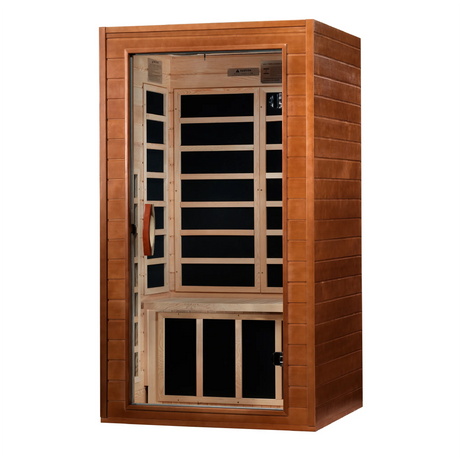
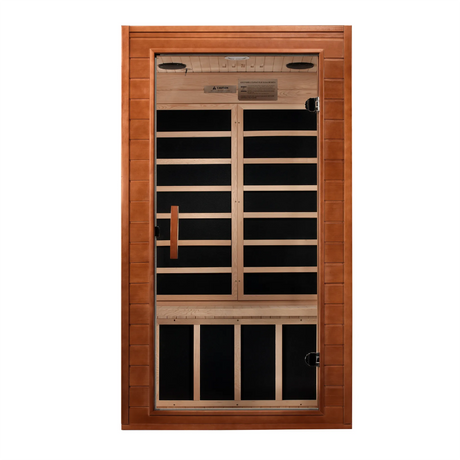
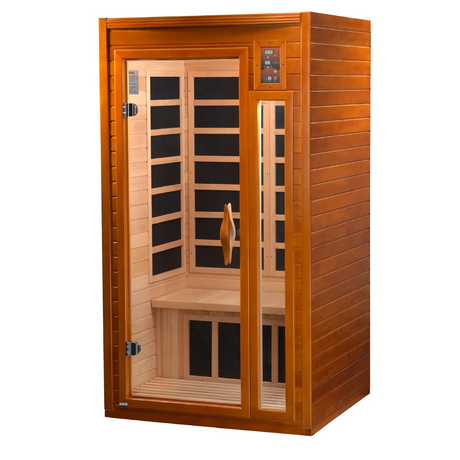
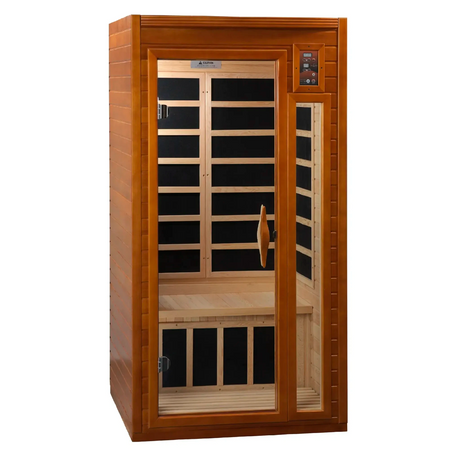
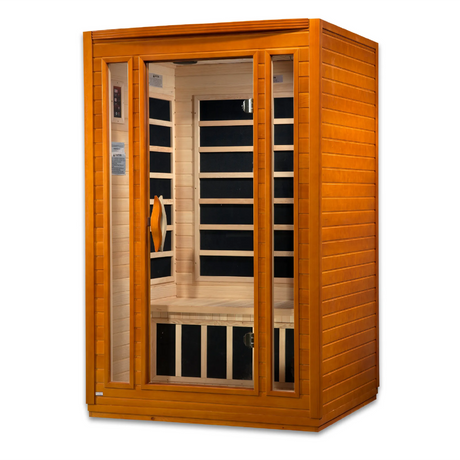
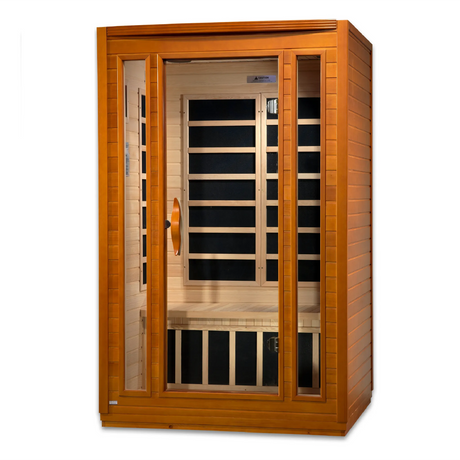
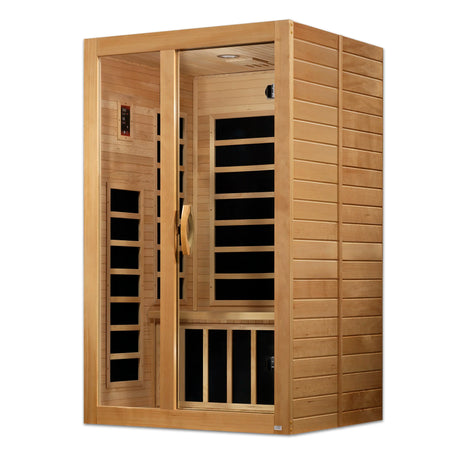
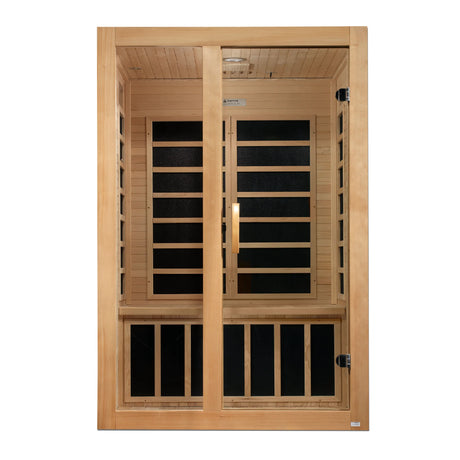
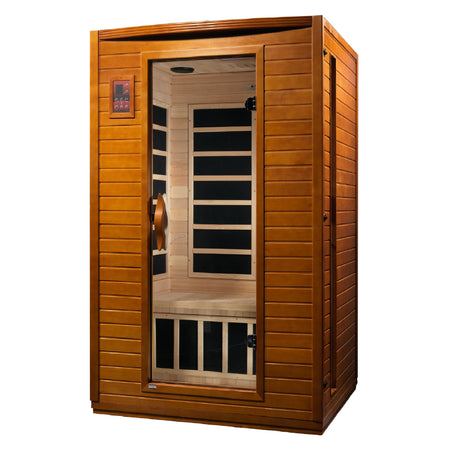
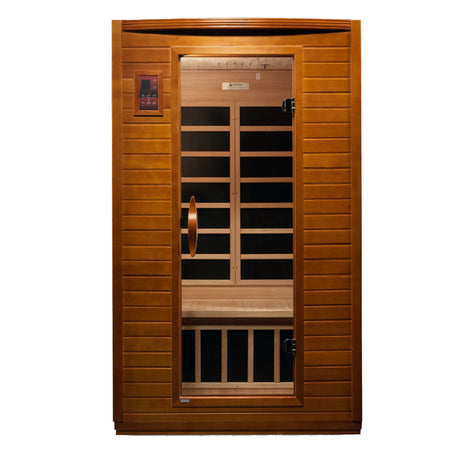
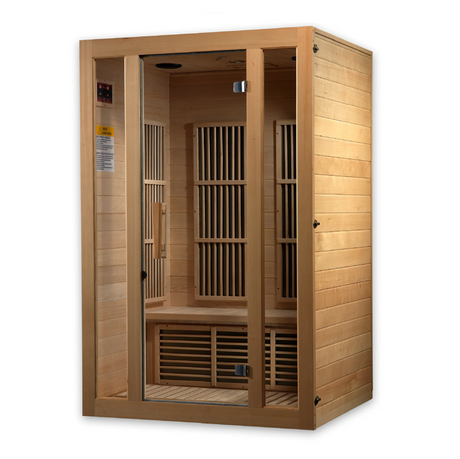
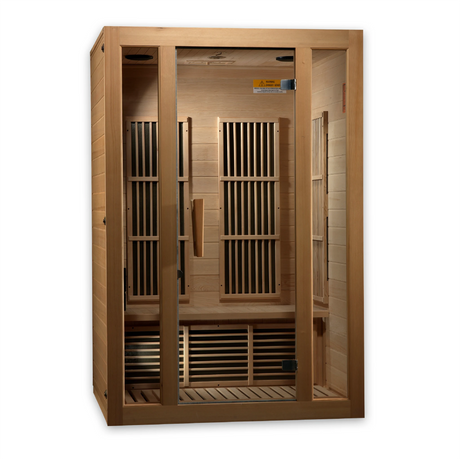
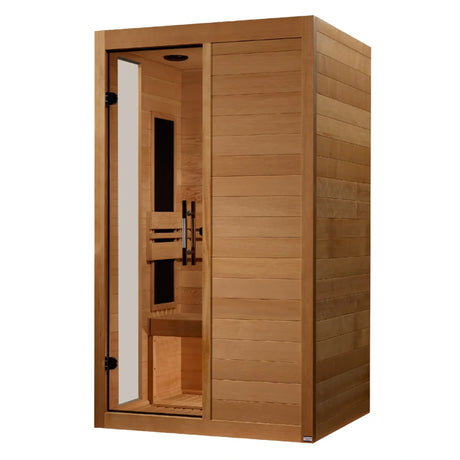
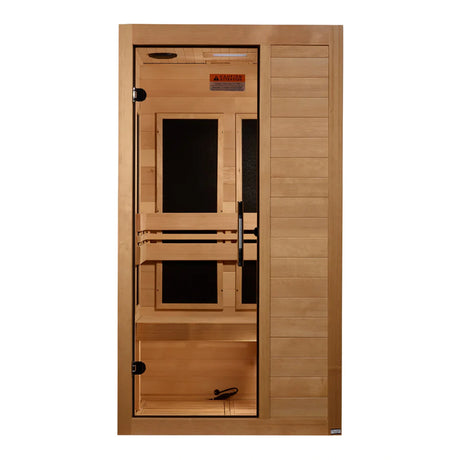
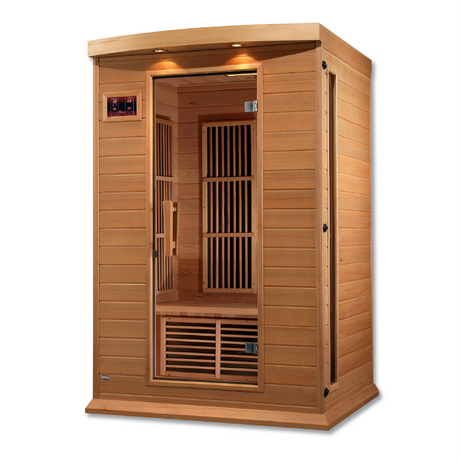
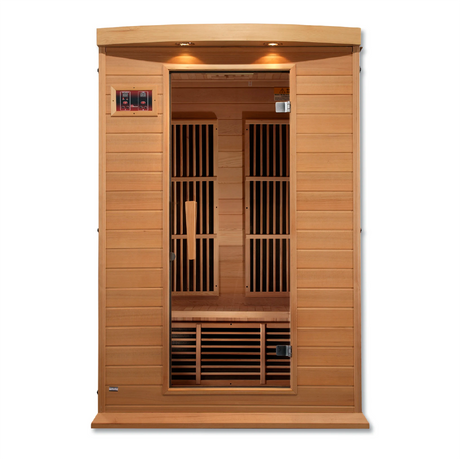
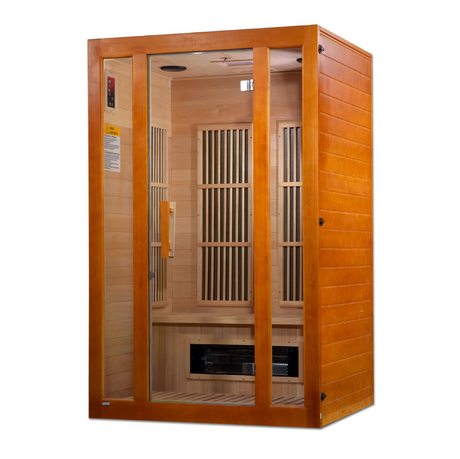
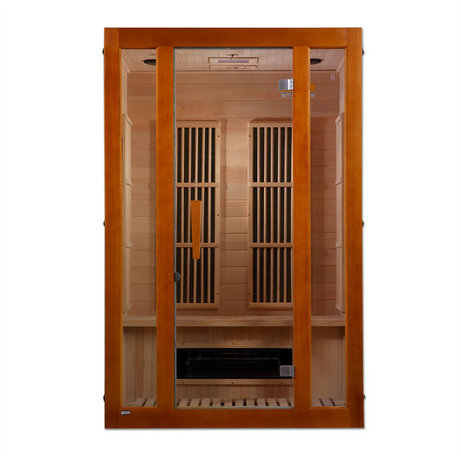
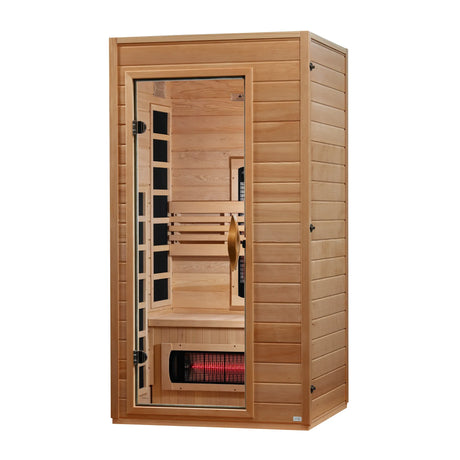
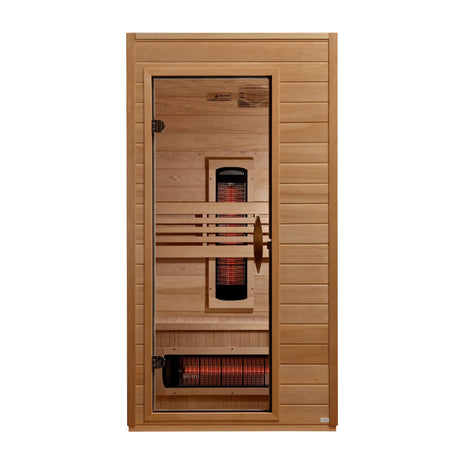
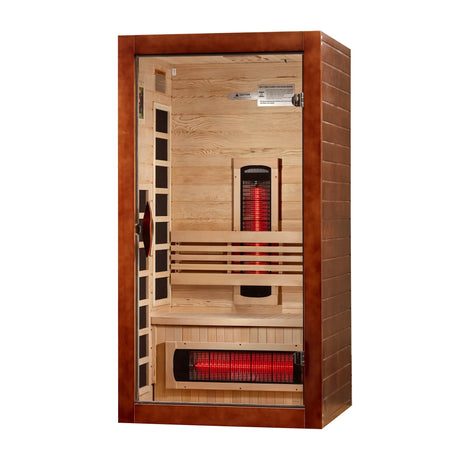
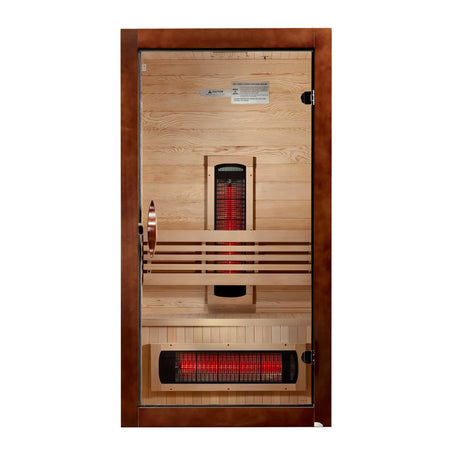
Maxxus is manufactured by Golden Designs Inc. and sits at the upper tier of the modular infrared sauna market. The two defining technical features are Low EMF carbon heating panels (rated under 8mG) and PureTech near-zero EMF panels for full spectrum models — both of which matter for commercial environments where members are spending extended time in the cabin. Construction is Canadian Hemlock or Red Cedar, both selected for durability, dimensional stability at operating temperatures, and heat retention.
Why Carbon Heating Panels Matter in Cold Climates
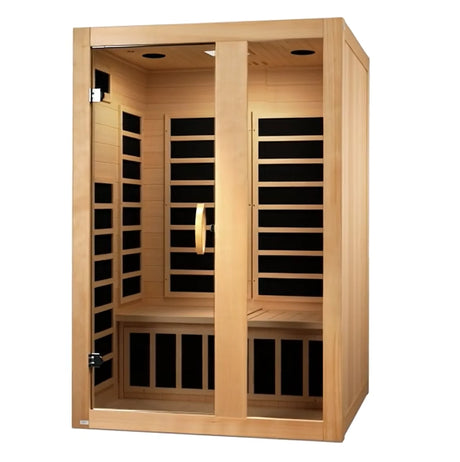
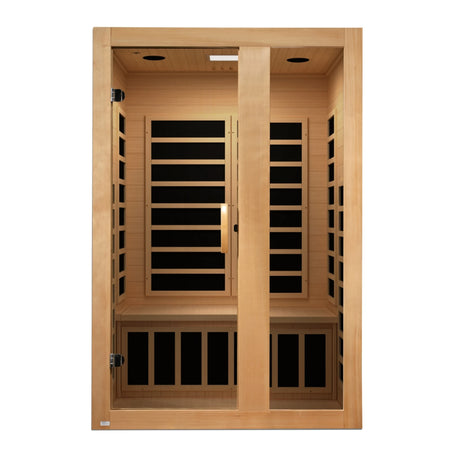
Carbon heating panels deliver even heat distribution across the full interior surface area of the cabin. Ceramic heaters, by contrast, concentrate heat in specific zones and create hot spots — which also means cold corners on the opposite side of the cabin. In a normal ambient environment, that unevenness is a comfort issue. In a cold-ambient installation where the cabin is fighting a 50°F or greater temperature differential with the outside environment, cold corners become a real operational problem that members notice and complain about.
Consistent panel coverage eliminates that problem. Every wall surface contributes to the thermal environment, so the cabin heats evenly from the start of the pre-heat cycle rather than relying on convection to eventually equalize the temperature distribution.
Wood Selection for Commercial Environments
The wood choice is an intentional decision for commercial facility managers, not an aesthetic preference. Canadian Hemlock is hypoallergenic and odorless — a critical specification for an enclosed indoor commercial space serving a diverse member population that may include people with fragrance sensitivities or respiratory conditions. Red Cedar adds a natural aroma that some members strongly prefer, but that same aroma can be a sensitizer for others over repeated exposure. Choose based on your membership demographic, not just what looks good in the catalog photo.
Full Spectrum vs. FAR-Only
Maxxus full spectrum infrared models incorporate Near, Mid, and FAR infrared wavelengths simultaneously. According to Golden Designs Inc.'s full spectrum product documentation, near infrared targets the epidermis for cell renewal and inflammation reduction. Mid infrared penetrates body tissue to increase blood flow and reduce muscle and joint pain. FAR infrared drives cardiovascular response and supports the detoxification effects most commonly associated with sauna use.
FAR-only units deliver the core cardiovascular and relaxation benefits at a lower price point. Full spectrum models are the better fit for athletic recovery programs, physical therapy integration, or facilities positioning their sauna as a performance recovery tool rather than a general wellness amenity. Match the spectrum to the member demographic — not every facility needs full spectrum, and acknowledging that is more useful than defaulting to the premium option across the board. The Maxxus S-Line Full Spectrum Infrared Sauna is worth examining as a benchmark for facilities weighing full spectrum capability against the FAR-only price point.
Model Sizing for Commercial Decision-Making
Three models cover the commercial use case spectrum for most northern facility builds:
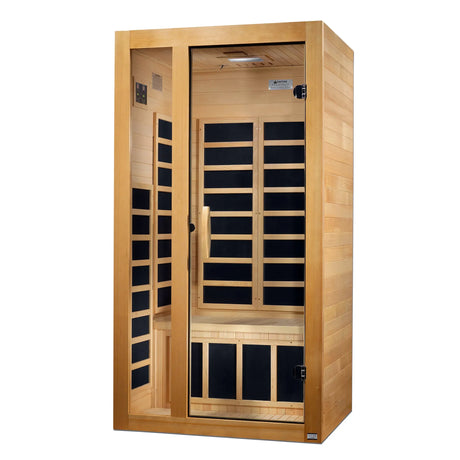
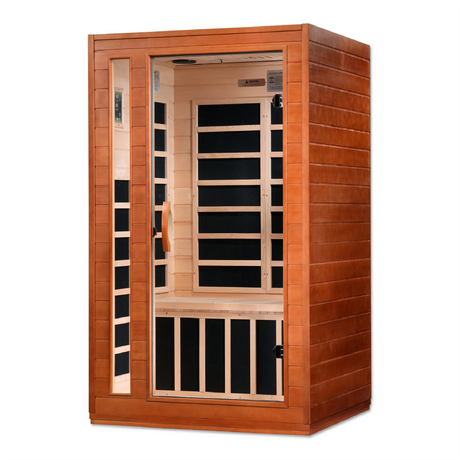
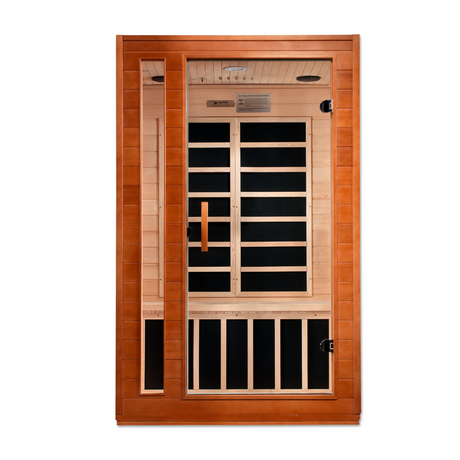
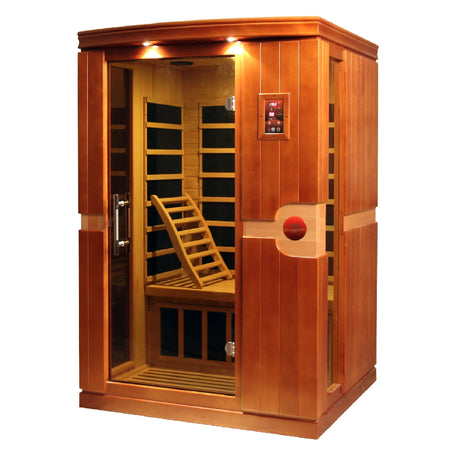
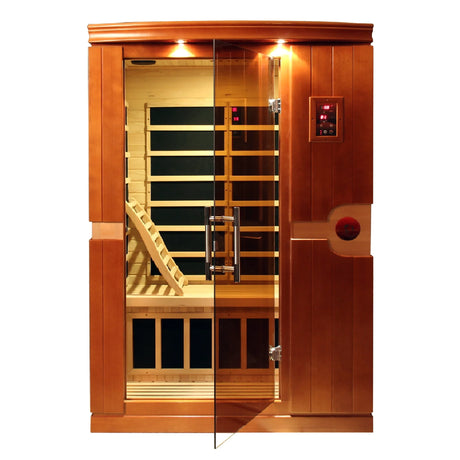
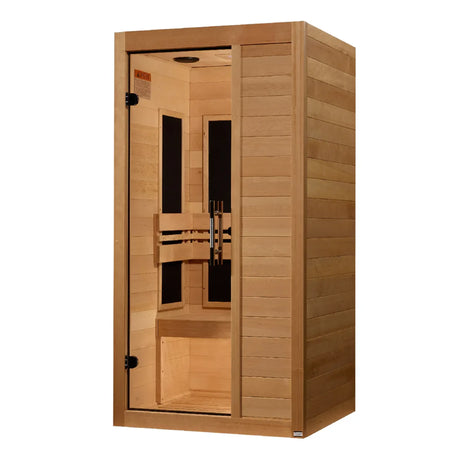
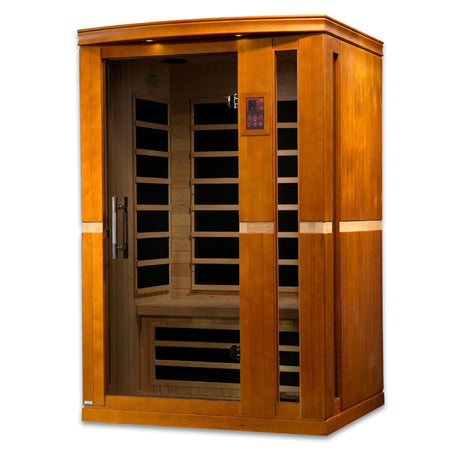
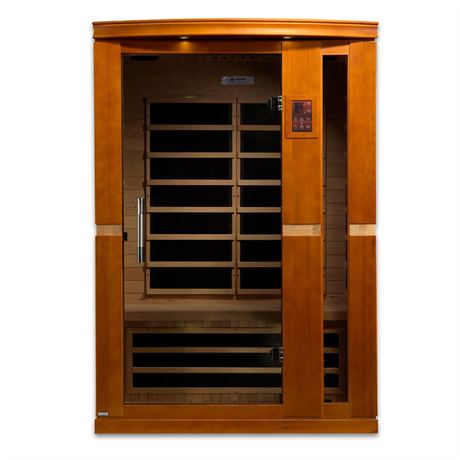
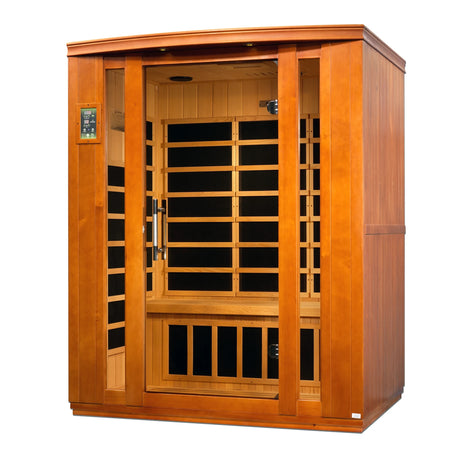
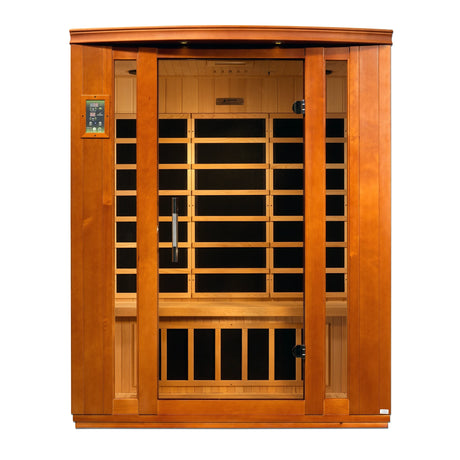
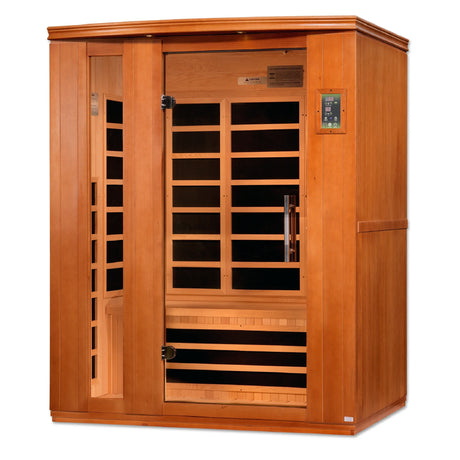
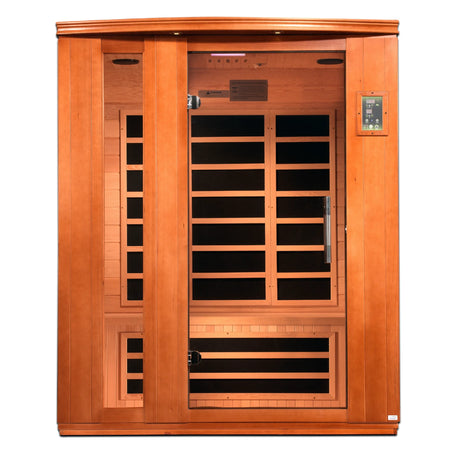
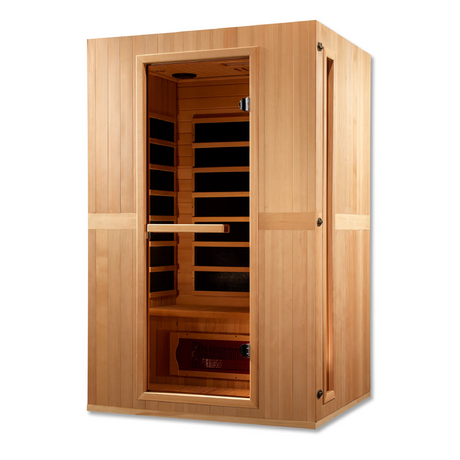
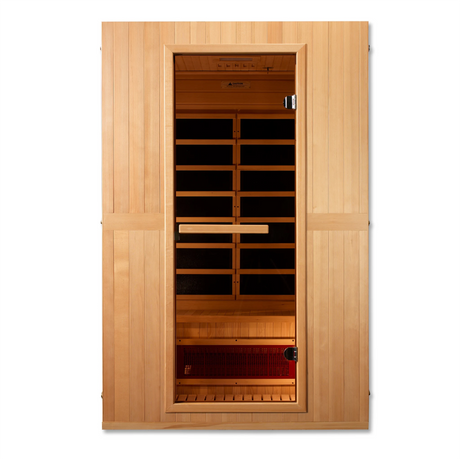
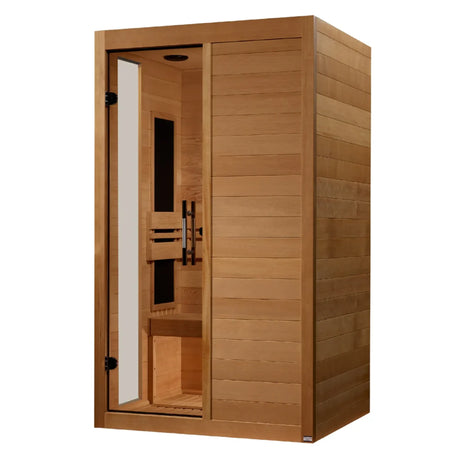
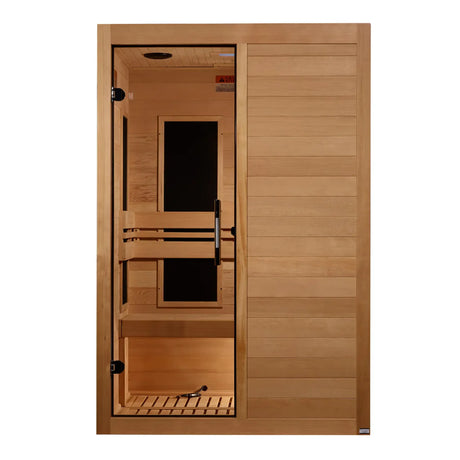
- The 2-person model (MX-K206-01) measures 50" x 42" x 75" and weighs 250 lbs. This fits smaller studios, hotel wellness rooms, or private training suites where throughput demand is low and space is constrained.
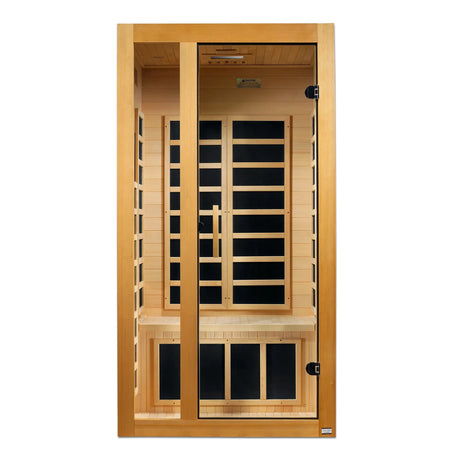
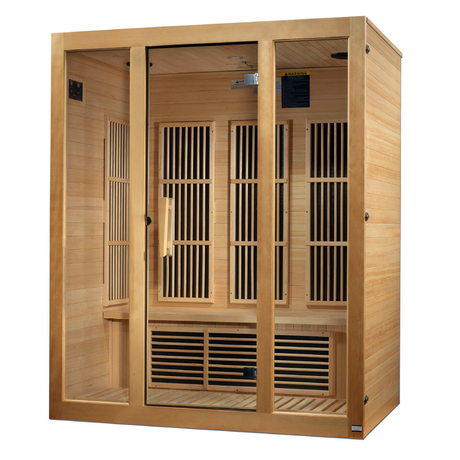
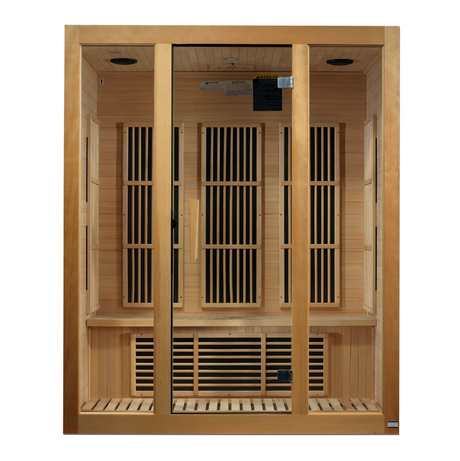
- The 3-person model (MX-K306-01) measures 64" x 44" x 75" and weighs 320 lbs. This is the most common commercial footprint — it fits standard alcove spaces in locker rooms and wellness wings and handles back-to-back member sessions without requiring extended re-heat time between uses.
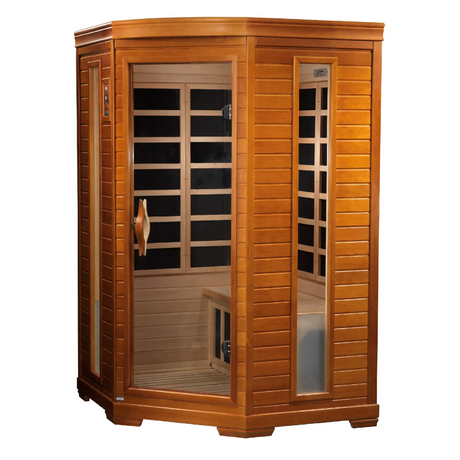
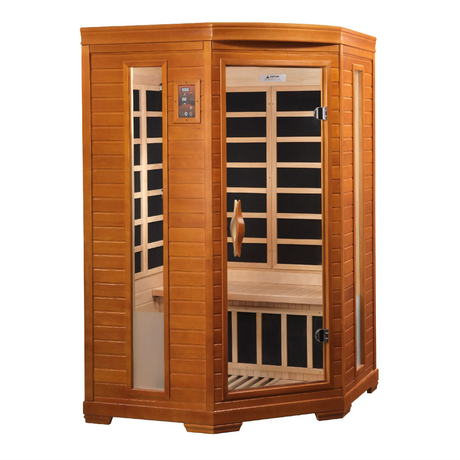
- The corner 3-person model (MX-K356-01) measures 60" x 60" x 75" and weighs 390 lbs. Corner placement is the right answer when optimizing dead corner square footage in a gym floor plan — it eliminates the wasted triangle of space that corner placement typically creates in rectangular rooms. The Maxxus Telluride Full Spectrum Infrared Sauna is the flagship corner-format model and is worth reviewing against your facility's footprint drawings before finalizing placement.
Under normal ambient conditions, Maxxus units reach operating temperature (110–130°F) in 10–15 minutes, according to Maxxus FAQ documentation from Sunflare Saunas. In a cold-start scenario at 0°F ambient, expect 25–35 minutes. The operational protocol for northern facilities is consistent: use the remote-start function to begin the pre-heat cycle before members reach the sauna, not after they arrive.
Volume pricing and multi-unit lead times are available for facilities ordering more than one Maxxus unit — increasingly common in rec centers and athletic facilities building dedicated wellness wings. Buyers should contact Blue Sky early in project planning to confirm lead times, as freight for 320–390 lb units requires scheduling coordination that can't be compressed at the last minute. If you're planning a multi-unit wellness wing, our recovery zone design guide for commercial gyms covers how to plan cold plunge and sauna placement together for maximum throughput and member flow.
One additional talking point for facility owners making a capital investment case to ownership or a board: according to Sun Home Saunas' 2026 guide, a professionally installed sauna can add $3,000–$15,000 to property value. It's one of the few wellness amenity investments that contributes directly to real estate equity.

Infrared Sauna Cold Climate Energy Costs: What Facilities Actually Pay
Facility managers need a real number to build a business case, not a range that spans 60%. Here's how to think about infrared sauna energy cost for a cold-climate commercial installation.
The baseline: HomeInDepth's market analysis puts infrared sauna monthly operating costs at $5–8 under normal ambient conditions. In cold-climate northern facilities during winter months — when ambient temperatures are lowest and heat-up cycles run longer than normal — budget for the upper end of that range, and potentially slightly above it during the coldest months. Call it $8–12/month in January and February for facilities in Minnesota or Wisconsin. That number is still well below traditional sauna ($12–15/month) and well below steam room operating costs ($15–20/month).
The Levers That Move the Number
Two operational choices have an outsized impact on monthly cost, according to My Sauna World's infrared sauna cost calculator. Running at 140°F instead of 125°F increases electricity use by roughly one-third. Extending sessions from 30 to 45 minutes increases energy consumption by approximately 50%. In a cold-climate installation where the heating elements are already working harder to overcome lower ambient temperatures, these choices compound. A facility running at 140°F with 45-minute sessions in January is looking at a meaningfully different cost than a facility running at 125°F with 30-minute sessions.
The practical recommendation: set operating protocol defaults at 125°F and 30-minute sessions. Members who want more can always extend their session or adjust temperature manually — but the default setting controls the majority of your energy cost.
Smart Scheduling for Commercial Facilities
Group multiple users into single heating cycles wherever possible. A sauna preheated for the 7am session can accommodate back-to-back users through mid-morning without requiring a full re-heat cycle between each member. Off-peak electricity timing — where utility rate structures allow — shifts consumption to lower-cost hours. Smart usage patterns like these can cut annual operating expenses by up to 40%. On a baseline annual cost of $96 ($8/month × 12), that's a $38 savings per unit per year — modest in isolation, but meaningful when scaled across multiple units or evaluated over a five-year operating horizon.
Dr. Anna B. Shannahan, a physician at Northwestern Medicine, recommends shorter sessions more frequently rather than longer sessions less often — a usage model that Northwestern Medicine documents as the clinically preferred approach for infrared sauna benefits. For commercial facilities, this recommendation aligns perfectly with the smart scheduling model: shorter sessions reduce per-session energy cost while increasing member throughput in the same operating window. The clinical guidance and the operational efficiency guidance point in exactly the same direction.
Solar Compatibility
Because Maxxus infrared saunas draw only 1.5–3.5 kW, they are fully compatible with solar offset systems using as few as 2–3 modern 400W panels. For LEED-certified facilities or eco-focused builds, this is a sustainability angle worth including in the capital investment presentation — the sauna's operating cost can be effectively zeroed out within an existing solar installation that has available capacity.
Blue Sky recommends facility managers request the full electrical spec sheet for their specific Maxxus model before finalizing placement — especially in cold-climate installs where circuit loads during prolonged winter heat-up cycles may differ from the standard operating specs listed in general product documentation.

Health Benefits That Make Cold-Climate Sauna Investment Worth It for Members
Facility managers need clinically grounded talking points — for member communications, website copy, and membership acquisition conversations. This section provides them.
Cardiovascular Impact
The foundational study in sauna health research is the Kuopio Ischaemic Heart Disease Risk Factor Study, published in JAMA Internal Medicine in 2015. Men who used a sauna 4–7 times per week showed a 40% lower risk of all-cause mortality and a 63% lower risk of sudden cardiac death compared to once-weekly users. That's a dramatic outcome from a wellness amenity, and it's the kind of clinical credibility that converts fence-sitting members into consistent sauna users.
More recent research adds to that foundation. A 2024 meta-analysis published in the European Journal of Preventive Cardiology reviewed 17 studies involving 2,264 participants and found that regular infrared sauna use improved arterial function by 24–36% after just four weeks of consistent use. Four weeks. That's a measurable result within a single membership month — the kind of short-term outcome that drives member retention conversations.
Athletic Recovery
For gyms and athletic facilities, the recovery angle is the most direct member benefit to communicate. Cleveland Clinic researchers equated the physical response of an infrared sauna session to walking at a moderate pace, and noted that improved blood circulation from infrared sauna use can help speed up muscle recovery following physical activity. The carbon heating panels in Maxxus units contribute here — even heat distribution means improved circulation response throughout the body rather than localized surface warming.
Full spectrum infrared models add targeted mid-infrared wavelength therapy that penetrates body tissue directly to increase blood flow and reduce muscle and joint pain — a meaningful upgrade for facilities serving athletes, older active adults, or members managing chronic musculoskeletal conditions.
Broader Clinical Research
Mayo Clinic's infrared sauna research documentation covers investigated conditions including high blood pressure, heart failure, dementia, Alzheimer's disease, type 2 diabetes, and arthritis. Facility managers don't need to make medical claims in member communications — but they can reference that these are actively studied applications backed by clinical investigation at major research institutions. That framing is accurate and compelling without crossing into medical advice territory.
The Cold-Climate Cultural Argument
In Minnesota, Wisconsin, Michigan, and across the broader northern tier, sauna culture is not a wellness trend arriving from coastal cities. It's a regional identity marker with deep Scandinavian and Finnish roots that have been embedded in these communities for generations. According to Business Research Insights, 62% of global consumers associate sauna use with improved mental and physical wellness — and in cold-climate markets, that association comes pre-loaded with cultural resonance.
Offering an infrared sauna in a northern facility isn't just adding a recovery amenity. It's speaking the language of the local membership base. That's a direct acquisition and retention argument that doesn't require a clinical study to make.
For facilities considering pairing sauna with cold plunge as a contrast therapy protocol, the Cold Plunge Benefits for Athletic Recovery: What 55+ Studies Actually Reveal post covers the evidence base in detail — and contrast therapy is one of the most effective member experience upgrades available at any price point.

Frequently Asked Questions: Infrared Sauna Cold Climate Installations
How long does an infrared sauna take to heat up in cold weather?
Under normal ambient conditions of 50–85°F, Maxxus units reach operating temperature in 10–15 minutes, according to Sunflare Saunas' Maxxus FAQ documentation. At 0°F ambient starting temperature, Peak Saunas' installation guide puts that number at 25–35 minutes. The operational solution is remote start or timer-based pre-heating — begin the cycle before members arrive, not when they're already standing at the door.
What insulation R-value do I need for an indoor sauna cold weather installation?
Sun Home Saunas' insulation guide recommends R-13 to R-15 for walls and R-26 to R-30 for ceilings. In climates where temperatures regularly fall below 20°F, target the upper end of both ranges. Don't go beyond R-30 on ceilings or R-19 on walls — the additional material cost exceeds the lifetime energy savings those extra points deliver. The sauna insulation R-value sweet spot is a real ceiling, not a "more is always better" spec.
Can I install an infrared sauna in an unheated garage or basement?
Yes — but plan for longer heat-up cycles, install a vapor barrier below the unit, add floor insulation, and include weatherstripping around the base perimeter. Expect cold-climate energy costs at the upper end of the $5–8/month range during winter, potentially reaching $8–12/month in the coldest months. Supplemental space heating to bring the ambient temperature to 50°F before the sauna cycle begins will significantly reduce pre-heat time and energy consumption.
What electrical circuit does a Maxxus infrared sauna require?
A dedicated circuit — 120V/20A for smaller models, 240V for larger configurations. No plumbing or ventilation ducting is required, per Maxxus' official installation documentation. Confirm the circuit specification against your specific model number before finalizing placement, particularly in cold-climate installs where extended heat-up cycles may affect circuit load.
Is infrared or traditional sauna better for a cold-climate facility?
Infrared, for three reasons that directly affect operational cost and member experience. First, energy consumption is 1–3 kWh per session versus 6–9 kWh for traditional — a 60–70% efficiency advantage confirmed by SolarTech Online's analysis. Second, infrared heats the body directly rather than the air, so members feel therapeutic warmth even while the cabin is still warming up. Third, the installation requires only a dedicated electrical circuit with no plumbing or ventilation requirements — a materially simpler scope for the contractor and a shorter timeline for the facility.
What is the best Maxxus sauna model for a commercial gym?
The 3-person model (MX-K306-01) at 64" x 44" x 75" fits most commercial alcove spaces and handles back-to-back member sessions efficiently. For facilities with dead corner square footage to use, the corner 3-person model (MX-K356-01) at 60" x 60" x 75" is the stronger choice — it optimizes space that would otherwise be wasted and delivers the same throughput capacity. Both weigh enough (320 lbs and 390 lbs respectively) to require subfloor verification before install in older buildings.
How much does it cost to run an infrared sauna in winter in a cold climate?
Budget $8–12/month during the coldest winter months when ambient temperatures are lowest and heat-up cycles run longer than normal. That remains below traditional sauna operating costs ($12–15/month) and well below steam room costs ($15–20/month). Smart scheduling — grouping users into single heating cycles, using remote start, and setting default temperatures at 125°F — brings costs toward the lower end of that winter range.
Can I pair an infrared sauna with a cold plunge in a cold-climate facility?
Yes, and the combination is one of the most clinically supported recovery protocols available. Contrast therapy — alternating between sauna heat and cold immersion — is strongly valued by athletic and fitness-focused members. The Cold Plunge Benefits for Athletic Recovery: What 55+ Studies Actually Reveal post covers the full evidence base and protocol guidance for facilities evaluating a contrast therapy setup.
The Bottom Line for Cold-Climate Sauna Buyers
The core argument holds up across every section of this guide: infrared saunas are the logical choice for cold-climate installations because they heat the body directly, run at dramatically lower energy cost than traditional alternatives, and require far less mechanical infrastructure to install and operate.
The Maxxus line fits the commercial cold-climate use case specifically well. Carbon heating panels eliminate cold corners — a real operational problem in cold-ambient environments that ceramic heaters create and infrared panels solve by design. The modular clasp-together assembly system simplifies installation in tight or irregularly shaped commercial spaces, and the units can be disassembled and relocated if a facility renovates — a commercial longevity advantage that a built-in traditional sauna simply cannot offer. The choice between Canadian Hemlock and Red Cedar lets facility managers tailor the cabin environment to their membership's needs, whether that's the odorless hypoallergenic environment of Hemlock or the aromatic experience of Cedar.
For facility managers: the business case is clear. Lower total cost of ownership, faster heat-up, a stronger member experience from the moment someone steps inside, and a culturally resonant amenity in markets where sauna use is a regional identity — not an imported trend. For contractors: no plumbing, no ducting, a dedicated electrical circuit, and a panel system that assembles in a single day and moves with the facility if it ever changes.
If you're evaluating infrared sauna options for a cold-climate installation, Blue Sky Fitness Supply carries the full Maxxus sauna collection with commercial volume pricing available. Contact the team directly for specs, lead times, and multi-unit quotes. And if you're still weighing infrared against traditional before committing, the Infrared Sauna vs Traditional Sauna: Complete 2026 Commercial Guide covers that comparison with the same level of specificity this guide brought to the cold-climate installation question. Facilities working through the broader question of how to size for growing commercial demand should also review the 6-person infrared sauna commercial sizing guide, which addresses capacity planning for high-traffic wellness environments where a single 2- or 3-person unit may not be enough.