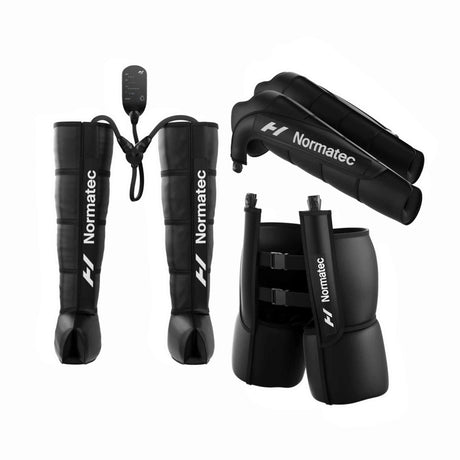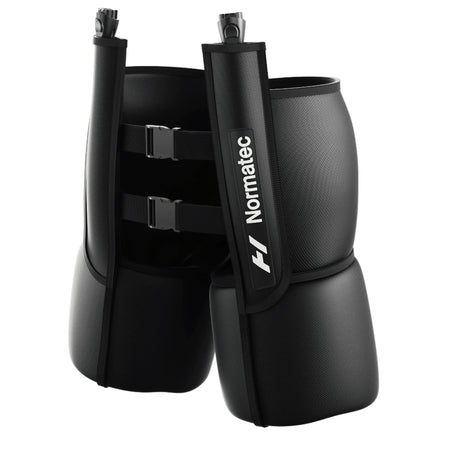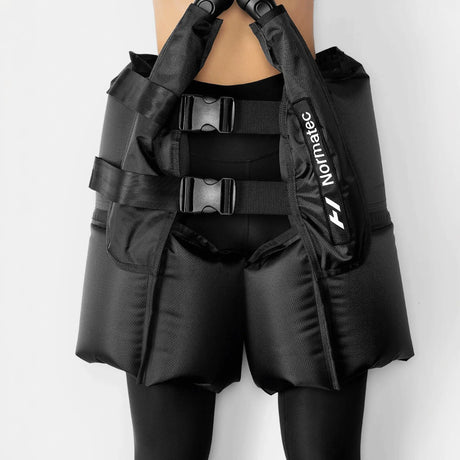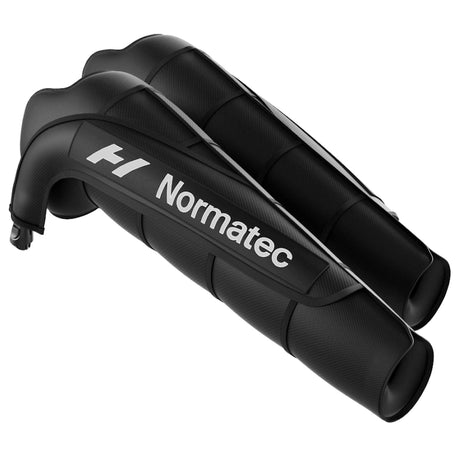


Table of Contents:
- Every Normatec Charger Type Explained: Model-by-Model Breakdown
- Normatec Charger Compatibility Table: Quick-Reference for Facility Managers
- Normatec Charger Troubleshooting: A Step-by-Step Fix for When Your Unit Won't Charge
- Replacement Normatec Chargers: Official vs. Third-Party — What Facilities Need to Know
- Normatec Charger Management for Commercial Facilities and Clinical Settings
- Frequently Asked Questions
- Keep Your Normatec Fleet Online — and Your Recovery Room Running
Compression therapy has moved from elite sports medicine into mainstream commercial fitness. Walk through most serious gyms, PT clinics, and corporate wellness suites today and you'll find Normatec systems running back-to-back sessions throughout the day — often four, six, or eight units at a time. The normatec charger keeping each of those units alive is a $30 component that most facilities think about exactly once: when a unit stops working.
Here's the operational reality that catches facility managers off guard: Normatec now spans four completely different charger standards. The Normatec 3 uses a 15V DC wall charger. The Normatec Elite uses a 12V DC / 4A charger. The Normatec Go uses a 5V USB-C setup. These aren't interchangeable — not by connector, not by voltage, not by any improvised workaround. Plug the wrong charger into the wrong unit and you're looking at a potential device failure on equipment that costs $999 to $2,400 to replace, and a voided 2-year warranty on top of it.
The good news: this is almost never a product defect. According to industry reporting on the booming recovery market, the global fitness recovery sector is valued at $8.3 billion in 2025 and is projected to reach $26.8 billion by 2035 — which means facilities are deploying more recovery equipment than ever, and procurement complexity is growing with it. The charger confusion that sidelines Normatec units is almost always a labeling and procurement problem, not a hardware problem. It's 100% preventable.
This guide exists to prevent it. What follows is a model-by-model charger specification breakdown, a quick-reference compatibility table, a five-step charging troubleshooting sequence, and sourcing guidance for replacement chargers — everything a commercial gym operator, PT clinic manager, or corporate wellness buyer needs to keep a Normatec fleet running without interruption. If you're also evaluating whether the investment makes sense in the first place, our analysis of Normatec's cost versus benefits covers the full ROI picture for commercial buyers.
Every Normatec Charger Type Explained: Model-by-Model Breakdown
Hyperice maintains an official charger compatibility guide — updated as recently as July 2026 — that maps every product in the Normatec line to its required charger voltage. Before you order a single replacement charger or stock a spare, that guide is your authoritative reference. Bookmark it. What follows here is the operational translation of that guide for facility managers who need it fast.
There are four distinct charger standards across the current Normatec product family. Each one is fundamentally different from the others. Understanding which standard applies to which unit is the entire game.
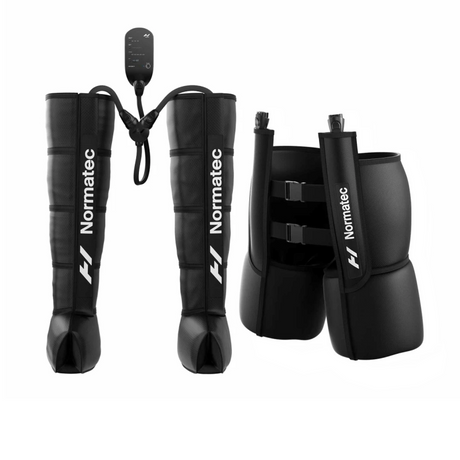
Normatec 3 / 2.0 / 2.0 Pro — 15V DC / 1A Wall Charger
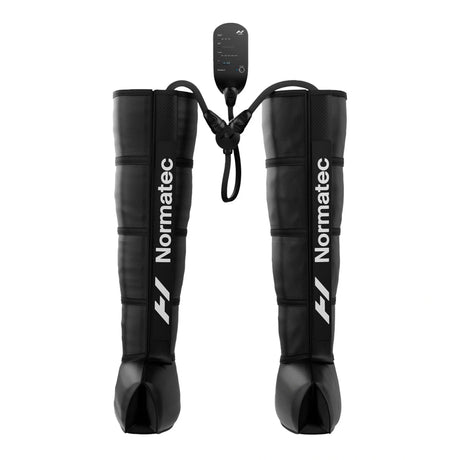
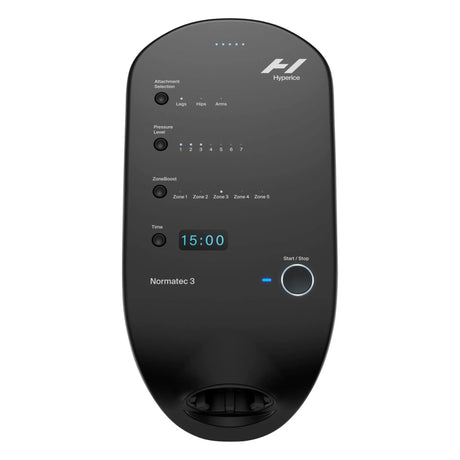
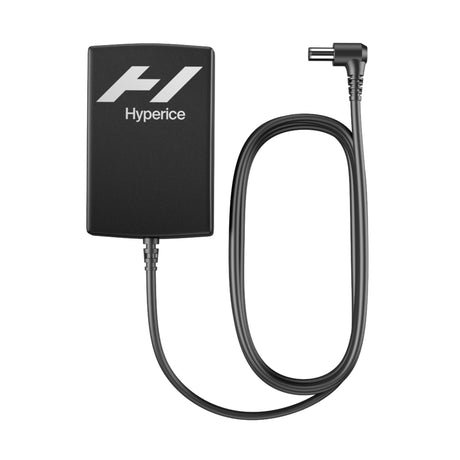
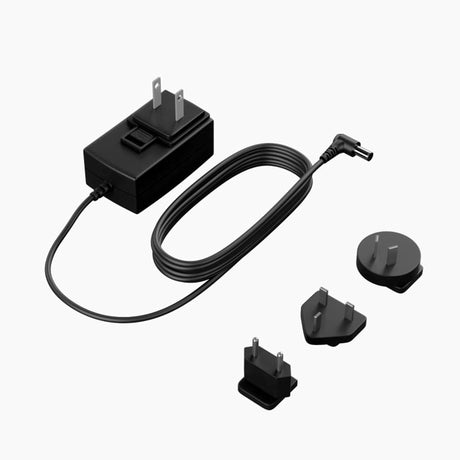
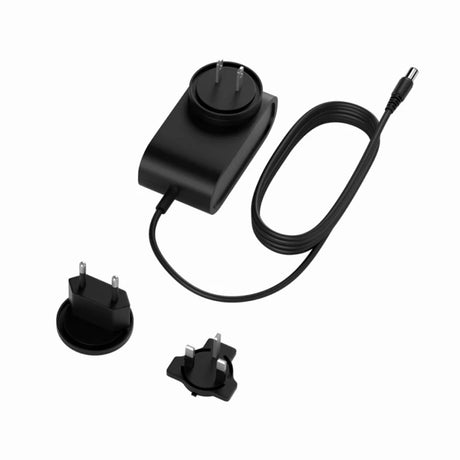
This is the charger most commercial facilities need first, because the Normatec 3 is the most widely deployed model in gym and clinical environments. According to Hyperice's official product specifications, the Normatec 3 Charger by Hyperice uses a 15V DC / 1A wall charger with a 4-foot proprietary cord. The power supply accepts worldwide voltage (100–240V / 50–60Hz), and three international plug adapters are included in the box.
That international compatibility is a detail many buyers miss at purchase. Sports organizations running travel programs, athletic trainers accompanying teams internationally, or facilities in multi-voltage regions don't need a separate travel adapter — the official charger already handles it. The battery provides 3+ hours of continuous use per charge, and charging begins automatically when the charger is connected to both the device and a live outlet. There is no separate charge mode to activate.
This same 15V / 1A charger is compatible with the older Normatec 2.0 and Normatec 2.0 Pro systems, making it a single SKU that covers a range of units in facilities that may still be running legacy equipment alongside newer Normatec 3 systems.
Normatec Elite / Elite Hip — 12V DC / 4A Wall Charger
The Normatec Elite uses a completely different charger than the Normatec 3. The voltage is 12V DC at 4 amps — versus 15V at 1 amp for the Normatec 3. These are not substitutable. Hyperice's support documentation explicitly warns that using the wrong voltage charger is an incompatibility risk, and the voltage gap between these two charger families is significant enough to cause real damage.
There's also a cable distinction within the Elite family: the Normatec Elite uses a 12V Dual Wall Charging Cable (two charging cords for simultaneous leg charging), while the Normatec Elite Hip uses a 12V Single Charging Cable. Same voltage, different cable configuration. If you're procuring replacements for an Elite fleet, you need to know which specific unit you're buying for — not just "the Elite charger."
Normatec Go / Lower Legs — 5V USB Dual Charger
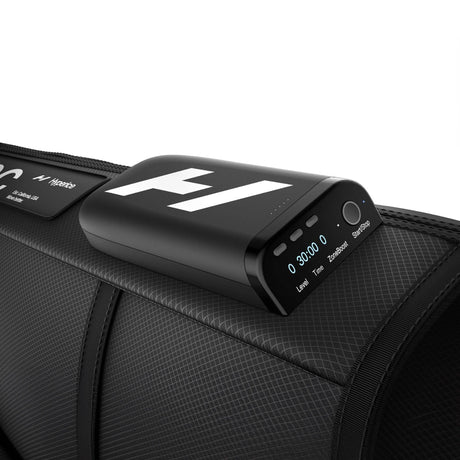
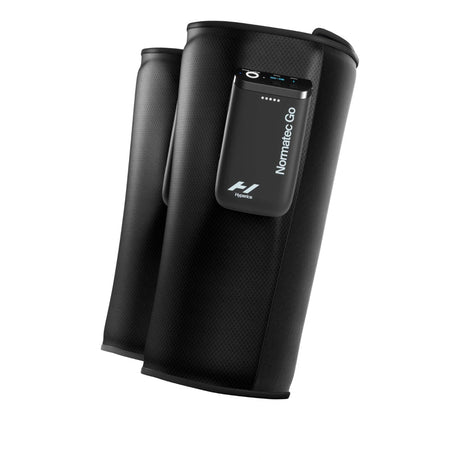
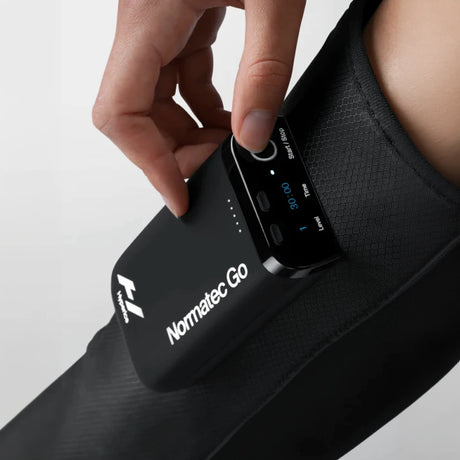
The Normatec Go is a different category of device entirely. At 1.2 lbs, with 1–7 intensity levels, a pressure range of 40–220 mmHg, and Bluetooth app connectivity, it's designed for portability — and its charging standard reflects that. The Normatec Go by Hyperice and Normatec Lower Legs are the only products in the Normatec lineup that use USB charging: a 5V dual charger with two USB-A to USB-C cords.
That's a fundamentally different charging architecture from any other Normatec product. A USB-C cable that works perfectly for your Normatec Go does absolutely nothing for a Normatec 3 — and a 15V Normatec 3 charger plugged into a Normatec Go is a serious incompatibility risk.
Facilities with mixed Normatec fleets — for example, Normatec 3 leg systems plus Normatec Go units for travel or satellite stations — must maintain completely separate charger inventories. A single shared charger pool without labeling will eventually result in a wrong-voltage connection attempt, which is the most preventable cause of Normatec unit downtime we see in commercial settings. The solution isn't complicated: label everything, store chargers at their assigned stations, and never pool them.
Normatec Charger Compatibility Table: Quick-Reference for Facility Managers
Facilities running a mixed Normatec fleet — even two different model families — need to procure and store chargers separately. Cross-contamination between charger types is the operational failure mode this table is designed to prevent. Use it as the reference document at your procurement desk and your recovery room station.
| Normatec Model | Charger Type | Voltage / Amperage | Cable Type | International Compatible? | Battery Life |
|---|---|---|---|---|---|
| Normatec 3 / 2.0 / 2.0 Pro | 15V DC Wall Charger | 15V / 1A | Proprietary wall plug, 4-ft cord | Yes (100–240V, 3 adapters included) | 3+ hours |
| Normatec Elite | 12V DC Wall Charger (Dual) | 12V / 4A | Two proprietary charging cords | Not specified | Not published |
| Normatec Elite Hip | 12V DC Wall Charger (Single) | 12V / 4A | One proprietary charging cord | Not specified | Not published |
| Normatec Go / Lower Legs | 5V USB Dual Charger | 5V | USB-A to USB-C (two cords) | Yes (standard USB) | Not published |
Hyperice explicitly warns against mixing charger voltages across product lines. Always verify the model label on both the charger and the device before connecting — especially in environments where multiple staff members may be managing the recovery room. When procuring replacement chargers, match the voltage and amperage specifications exactly as shown above. Visual similarity of the connector is not a reliable guide — the wrong charger can look close enough to the right one while operating at a completely different voltage.

Normatec Charger Troubleshooting: A Step-by-Step Fix for When Your Unit Won't Charge
A compression therapy room running back-to-back 20–30 minute sessions has no margin for a dead unit during peak hours. The Normatec 3's 3+ hour battery life sounds generous until you run the math on a full day of commercial use — and realize that mid-day charging is not optional, it's scheduled infrastructure. A unit that won't charge at noon is a unit that doesn't run at 3 p.m., which is typically the highest-demand window in both gym and clinical environments.
In a commercial recovery room running back-to-back 20–30 minute sessions, the Normatec 3's 3+ hour battery will need a mid-day charge window. Facilities that don't build a dedicated mid-day charging window into their session schedule will find units dead during peak afternoon hours — the highest-demand period in most gym and clinic environments. Build the charging window into your session schedule, not your afterthought.
When a unit does fail to charge, the technician-recommended triage sequence follows these five steps before escalating to Hyperice support.
Step 1: Test the outlet with a different device. Before assuming the charger or unit is faulty, rule out the power source entirely. Plug a phone charger or any other device into the same outlet and confirm it works. Tripped breakers and loose outlet connections are a surprisingly common culprit — especially in recovery rooms where multiple devices draw power simultaneously.
Step 2: Inspect and clean the charging port. High-use environments accumulate debris. Lint, dust, and moisture in the charging port can prevent a solid electrical connection even when the cable appears fully seated. Use a dry toothpick or compressed air (not a metal object) to carefully clear the port before retrying. This alone resolves a meaningful share of non-charging complaints in commercial settings.
Step 3: Let the battery fully drain, then reconnect the charger. Lithium-ion batteries can enter a low-power state that prevents them from registering a charge when partially discharged. If the unit still has some battery life remaining, run it until it powers off naturally — then connect the charger to a confirmed live outlet and allow it to begin charging from a fully depleted state.
Step 4: Perform a soft reset. Unplug the charger completely. Hold the power button for 10 seconds. Then reconnect the charger to both the device and the outlet. This clears the device's charge management cycle and resolves many firmware-level charging registration issues without any hardware intervention.
Step 5: Contact Hyperice HyperCare support. If the unit still won't charge after completing steps 1–4, the problem is beyond field-level triage. Escalate immediately to Hyperice's support team for warranty evaluation or battery replacement assessment. Do not continue attempting DIY fixes at this stage — further intervention risks voiding warranty coverage.
One important operational note: according to Hyperice's support documentation, the Normatec 3 charges automatically when the power supply is connected to both the device and a live electrical outlet. There is no separate "charge mode" to activate. If the unit is connected correctly and nothing happens — no indicator light, no response — the problem is definitively hardware, cable, or port-related, not a settings issue.
For PT clinics and commercial gyms, keep a documented charger log at each recovery station. When a unit starts showing inconsistent charging behavior — takes longer than usual, drops charge unexpectedly, requires multiple connection attempts — log it immediately. Proactive documentation means you can escalate a failing unit before it fails completely during a scheduled session, not after. Our deep dive into the science behind Normatec compression therapy explains why session continuity matters therapeutically, not just operationally.
The warranty implications are worth stating plainly: using an unauthorized or wrong-voltage charger and then experiencing a device failure voids the Hyperice 2-year warranty entirely. The warranty covers manufacturing defects only — not mishandling, not unauthorized accessories. On a $1,500 Normatec system used four times per week, the per-session cost over two years is approximately $1.44, compared to $80–$120 per professional massage session. Protecting that investment with proper normatec charging cable management is genuinely one of the highest-ROI maintenance habits a facility can build.

Replacement Normatec Chargers: Official vs. Third-Party — What Facilities Need to Know
This is a procurement decision, not a consumer question. Facility managers, PT clinic administrators, and corporate wellness buyers evaluating replacement normatec charger options face a specific trade-off: warranty protection versus cost flexibility. Here's how to think through it correctly.
The Official Hyperice 15V Normatec Charger
The official Hyperice Normatec 15V Charger is priced at $30 and covers the Normatec 3, Normatec 2.0, and Normatec 2.0 Pro. It includes a 4-foot proprietary cord and three international plug adapters. From a warranty perspective, this is the only unambiguous choice for units still under their 2-year warranty. Using this charger eliminates any accessory-related warranty dispute from the start.
The 4-foot cord length works well for most recovery room station configurations, but some facility layouts — particularly those with floor-mounted seating farther from wall outlets — may find the cord length limiting. That's a legitimate operational consideration, not a defect.
Third-Party 15V Replacement Chargers
Third-party 15V replacement chargers for Normatec 3 systems are available and generally specify worldwide input voltage compliance (100–240V / 50–60Hz), which matches the official charger's international compatibility. Cord lengths typically range from 4.9 feet to 6.5 feet — meaningfully longer than the official 4-foot cord, which some facility layouts genuinely benefit from.
The risk is clear and non-negotiable: Hyperice's 2-year warranty explicitly excludes damage caused by unauthorized accessories. A facility using a third-party charger on an in-warranty unit assumes the full replacement liability risk for a device that costs $999 to $2,400. That's not a theoretical risk — it's a documented warranty exclusion.
The reasonable framework: use official chargers on any Normatec unit still within its warranty period, and document that procurement decision. For out-of-warranty units in high-volume commercial environments where a longer cord is genuinely useful, a verified third-party charger with confirmed 15V DC / 1A output may be a cost-effective backup option. Voltage verification is non-negotiable regardless of which route you choose.
Practical Charger Management for Multi-Unit Facilities
From a distributor perspective, the most common charger procurement mistake we see is facilities bulk-ordering a single charger model for a mixed Normatec fleet after a unit goes down. Always audit your exact model inventory before ordering replacements — and order one spare per model family at the same time you purchase the units, not after your first failure event. For facilities evaluating a full Normatec boot setup across multiple stations, the B2B buyer's guide to Normatec boots covers fleet procurement strategy in detail, including model selection and accessory planning.
A few specific recommendations for facility operators:
- Label every charger with the compatible model using a durable cable tag or label maker — not a Post-it note, not tape, a permanent label.
- Store chargers at their assigned station rather than in a central charger pool. Central pools create exactly the cross-model mixing conditions that cause wrong-voltage connection attempts.
- For Normatec 3 fleets of four or more units, maintain at least one spare 15V charger on hand. A $30 spare prevents what can easily become a multi-day unit downtime event while a replacement ships.
- When purchasing a hyperice normatec charger replacement in quantity, cross-reference the current Hyperice official charger compatibility guide (updated July 2026) before submitting the purchase order — not the guide from when you last bought units.
One broader context point worth noting: in June 2024, Nike and Hyperice unveiled a collaborative wearable recovery suite featuring compression boots with on-demand heat and dynamic air compression, as reported by Future Market Insights. That signals that the Hyperice product ecosystem is actively expanding. Future models may introduce new charger standards. Buying spare chargers in bulk for a model family you're planning to expand? Verify current compatibility before placing that order — not by assumption based on what worked two years ago.
The official Hyperice 15V Normatec Charger is available through Blue Sky Fitness Supply's Normatec charger product listing for $30 — which is the sourcing path we recommend for facilities that want authorized accessories without the procurement guesswork.

Normatec Charger Management for Commercial Facilities and Clinical Settings
Let's talk operator-to-operator for a moment.
The compression recovery systems market was valued at $1.32 billion in 2024 and is projected to reach $2.46 billion by 2033, growing at a 7.1% CAGR. Recovery amenities are no longer optional features in commercial fitness — they're revenue drivers and member retention tools. The leg compression recovery system segment alone sits at $300 million in 2024, projected to double to $600 million by 2033 at 8.5% annual growth, according to Verified Market Reports.
Top-performing commercial gyms generate 30–40% of their revenue from non-membership services, with recovery amenities as a core component of that mix. A Normatec unit that's offline because of a missing or wrong charger isn't just an inconvenience — it's lost revenue and a member experience failure during what is, statistically, your highest-demand afternoon window.
According to IHRSA, global gym membership reached 183 million in 2023. That member base is increasingly expecting in-facility recovery as a standard offering. The facilities that will hold those members aren't the ones with the most equipment — they're the ones with equipment that's reliably operational.
Recommended Charger Management Protocols
- Maintain a dedicated spare charger for each Normatec model family in the facility. One spare per model family, stored separately from active-use chargers, clearly labeled.
- Label all chargers with model compatibility using durable cable tags at the time of purchase — before deployment, not after the first mix-up.
- Create a simple charger check log at each recovery station: a weekly visual inspection of the cord condition, connector, and charging port. Thirty seconds per station, once a week.
- Include charger condition in your standard equipment maintenance audit alongside general unit inspection and sanitation checks.
- Establish a reorder threshold: when your spare count for any model family drops to zero, reorder before the next failure event — not after it.
For PT and Chiropractic Clinics
Patient throughput is your operational constraint. A non-charging Normatec unit discovered at the start of a scheduled appointment is a patient experience failure that also affects the next patient in the slot behind it. For PT clinics specifically: charger inventory should be treated the same way as gloves or sanitizing wipes — a consumable operational supply with a reorder threshold, not a one-time capital purchase. A $30 charger that prevents a cancelled patient appointment pays for itself immediately.
For Corporate Wellness Buyers
Employee utilization of recovery amenities has documented wellbeing and retention ROI. A non-functional Normatec unit in a corporate wellness room doesn't just reduce amenity utilization — it creates a visible perception of underinvestment in the space. The maintenance habit required to prevent this is genuinely minimal: label chargers, keep one spare, run a weekly visual inspection. That's it. The cost of that protocol is less than $50 per model family. The cost of not having it is a unit that sits offline for however long it takes procurement to respond.
There's also a therapeutic continuity point worth noting. As explained by Performance Optimal Health, Normatec's dynamic pulse compression actively mimics the muscle pump mechanism to enhance fluid movement out of the limbs — unlike static compression, which simply squeezes. That sequential zone-flushing pattern requires an uninterrupted session to complete its full cycle. A unit that dies mid-session because of a missed charging window doesn't just inconvenience the user — it delivers an incomplete therapeutic intervention. Charger availability is, quite directly, part of the clinical and wellness value of the equipment.

Frequently Asked Questions
1. What charger does the Normatec 3 use?
The Normatec 3 uses a 15V DC / 1A wall charger with a 4-foot proprietary cord. Three international plug adapters are included in the box. The same charger is compatible with the Normatec 2.0 and Normatec 2.0 Pro, making it a single SKU that covers legacy and current units in mixed fleets. The power supply accepts worldwide voltage (100–240V), so no separate travel adapter is needed for international use.
2. Is the Normatec Elite charger the same as the Normatec 3 charger?
No — the Normatec Elite uses a 12V DC / 4A charger, which is a completely different voltage from the Normatec 3's 15V / 1A charger. These chargers are not interchangeable under any circumstances. Hyperice explicitly warns that using the wrong voltage charger is an incompatibility risk that can damage the device. Mixing these two charger families in a multi-unit facility is one of the most consequential procurement errors a facility manager can make, and it voids the 2-year warranty on a device that costs $999–$2,400 to replace.
3. Can I use a USB-C charger with my Normatec?
Only the Normatec Go and Normatec Lower Legs accept USB charging — specifically a 5V dual charger with USB-A to USB-C cords. All other Normatec models, including the Normatec 3, Normatec Elite, Normatec Elite Hip, and the Normatec 2.0 series, use proprietary wall chargers and are not USB-C compatible. Attempting USB charging on those models will not work and risks port damage. The USB charging architecture of the Normatec Go is unique to that product line and should never be assumed to apply to any other unit in the family.
4. Will using a third-party charger void my Normatec warranty?
Yes — Hyperice's 2-year warranty explicitly excludes damage caused by unauthorized accessories, including third-party chargers. If a unit is damaged while using a non-official charger, Hyperice will not cover the repair or replacement under warranty. Given that Normatec units cost $999–$2,400 to replace, the $30 official charger is the straightforward warranty-protection decision for any in-warranty unit. For out-of-warranty units, a verified third-party charger with confirmed 15V DC / 1A output may be a reasonable backup option, but voltage verification is non-negotiable regardless.
5. How long does a Normatec 3 take to charge?
Hyperice does not publish a specific charge time for the Normatec 3, but the battery provides 3+ hours of continuous use per full charge. Charging begins automatically when the 15V charger is connected to both the device and a live electrical outlet — no separate charge mode is required. For facility scheduling purposes, it is safest to plan a full overnight or extended mid-day charging window rather than relying on partial charges between back-to-back sessions.
6. What should I do if my Normatec won't charge?
Follow a five-step triage sequence before escalating to Hyperice support. First, test the outlet with a different device to confirm the power source is live. Second, inspect and clean the charging port for lint, dust, or moisture. Third, let the battery drain completely and then reconnect the charger from a fully depleted state. Fourth, perform a soft reset by unplugging the charger, holding the power button for 10 seconds, and reconnecting. If the unit still won't charge after all four steps, contact Hyperice HyperCare support immediately for warranty evaluation — further DIY intervention at that point risks voiding coverage.
7. Can I use a Normatec charger internationally?
Yes — the official 15V Normatec charger accepts 100–240V / 50–60Hz input, which covers virtually every country's electrical standard. Three international plug adapters are included in the box out of the box, making the official charger travel-ready without any additional accessories. This is a meaningful advantage for sports organizations running travel programs or athletic trainers accompanying teams to international competitions, as no separate voltage converter or adapter purchase is required.
8. How should commercial facilities manage chargers across a mixed Normatec fleet?
Facilities running multiple Normatec model families must maintain completely separate charger inventories for each model. The core protocol is straightforward: label every charger with its compatible model using a durable cable tag at the time of purchase, store chargers at their assigned station rather than in a shared pool, and keep at least one spare charger per model family on hand before your first failure event. A weekly 30-second visual inspection of cord condition and charging ports at each station, combined with a reorder threshold for spare chargers, is sufficient to prevent the vast majority of downtime events in commercial recovery rooms.
Keep Your Normatec Fleet Online — and Your Recovery Room Running
Four charger standards. One product brand. That's the core operational reality of managing a Normatec fleet in 2026. The Normatec 3's 15V charger, the Elite's 12V dual setup, the Elite Hip's 12V single cable, and the Go's 5V USB configuration are not interchangeable — and the single most preventable cause of Normatec downtime in commercial settings is a charger that got mixed into the wrong station.
The fix isn't complicated. Label every charger at purchase. Store chargers at their assigned station. Keep one spare per model family on hand before your first failure event — not after it. Reference the official Hyperice charger compatibility guide (updated July 2026) before any bulk procurement decision. That protocol costs less than an hour of staff time to set up and less than $30 per model family to maintain. The alternative is a $999–$2,400 unit sitting offline on a $30 problem.
For gym operators: equipment uptime is member experience. For PT clinics: it's patient throughput and clinical continuity. For corporate wellness buyers: a recovery room that actually works is the amenity — a room with dark, idle units is just furniture. The charger management practices in this guide protect all three of those outcomes simultaneously.
The warranty risk deserves one final, clean statement: using the wrong charger on an in-warranty Normatec unit — and then experiencing a failure — removes Hyperice's 2-year warranty coverage on equipment that costs up to $2,400 to replace. A $30 authorized charger sourced from the right distributor is the only logical alternative.
If you need to replace or stock a spare 15V Normatec charger, the official Hyperice 15V Normatec Charger is available directly through Blue Sky Fitness Supply's Normatec charger product page at $30. Facilities building out multi-modal recovery spaces can also explore Blue Sky's broader Normatec 3 Legs system and the full recovery equipment collection, which covers compression therapy, cold therapy, and recovery gear sourced for commercial and clinical use.
Order the spare before you need it. Label it before it leaves your hands. The rest takes care of itself.