

Table of Contents:
- Why Sauna Recovery Protocol Differs by Athlete Type: The Mechanism Breakdown
- Sauna Recovery Protocol for Endurance Athletes: Build the Adaptation Block
- Sauna Recovery Protocol for Strength Athletes: Recover Faster Without Blunting Gains
- Infrared vs. Traditional Sauna for Athletic Recovery: Which Type Fits Your Facility?
- Building a Commercial Sauna Recovery Program: Protocols, Scheduling, and ROI
- Frequently Asked Questions
- The Right Sauna Protocol Is the One Your Athletes Will Actually Follow — Consistently
A survey of 153 elite endurance track and field athletes found that 96.7% of them use sauna bathing as their primary post-exercise recovery tool — ranked above massage (86.9%), daytime naps (81.0%), and cold water immersion (15.0%). These are Olympic-level competitors with access to every recovery modality money can buy. They chose sauna, consistently, more than anything else.
That number matters. But here's where most facilities get it wrong.
Despite that elite-level adoption, the majority of commercial gyms, PT clinics, and corporate wellness centers still run one-size-fits-all sauna sessions for every athlete who walks through the door. A 30-minute traditional Finnish sauna at 190°F is not the same as a 20-minute infrared session at 110°F. Treating a marathon runner the same as a powerlifter isn't neutral — it's likely undermining both.
The research on sauna recovery protocol is now specific enough to prescribe by athlete type. Endurance athletes (runners, cyclists, rowers, team-sport endurance athletes) and strength and power athletes (resistance trainers, powerlifters, team-sport power athletes) have fundamentally different physiological recovery needs — and the sauna science reflects that. This post breaks down the mechanisms, the evidence, and the exact protocols for each population, so facility managers, clinic operators, and wellness program directors can build offerings that deliver measurable outcomes rather than just a warm room to sit in.
The commercial case is real, too. According to Grand View Research's 2026 industry report, the global sauna market is projected to grow from USD 954.3 million in 2025 to USD 1,556.8 million by 2033 at a 6.4% CAGR, with the commercial segment growing faster than the residential market at 7.0%. Facilities that get the protocol right — and communicate it to members — aren't just adding an amenity. They're adding a retention mechanism.
As a commercial fitness equipment distributor, Blue Sky sees firsthand that facility managers often ask which sauna to buy before asking which protocols their members will actually use. The research is now specific enough to match sauna type to athlete population — and that changes the equipment spec conversation entirely.
Why Sauna Recovery Protocol Differs by Athlete Type: The Mechanism Breakdown
Sauna works. That much is established. But the physiological mechanisms driving recovery benefit in endurance athletes versus strength athletes are different enough that they warrant separate protocols, separate equipment recommendations, and separate conversations with your members or patients.
For endurance athletes, the headline mechanism is plasma volume expansion. Post-exercise sauna causes fluid to shift out of the vascular system initially — but with repeated exposure over structured blocks, the body compensates by increasing total plasma volume. More plasma means greater oxygen-carrying capacity per heartbeat, improved thermoregulatory efficiency, and delayed cardiovascular fatigue during prolonged effort. Researchers and coaches sometimes describe this as "altitude training without the altitude" — the analogy is imperfect, but the underlying adaptation pathway (expanded blood volume improving aerobic capacity) is similar.
The landmark study here is Scoon et al. (2007), published in the Journal of Science and Medicine in Sport: three weeks of 30-minute post-training sauna sessions at 194°F (90°C) in competitive male runners produced a 32% increase in run time to exhaustion at 5K race pace, with plasma volume expanding by 7.1%. That's not a marginal benefit. That's a meaningful performance adaptation from a recovery modality layered on top of existing training.
The mechanism for strength and power athletes is different. Infrared sauna heat penetrates deeper into muscle tissue than the surface-level convective heat of traditional sauna — improving neuromuscular recovery and explosive power metrics rather than cardiovascular adaptation. A 2023 study by Ahokas et al., published in Biology of Sport, tested 16 male basketball players in a randomized crossover design. A single 20-minute post-resistance-training infrared sauna session at 109°F (43°C) produced improved neuromuscular recovery and reduced muscle soreness compared to passive recovery. Single session. Measurable result.
Part of what drives that acute recovery response is heat shock protein activation. HSP70 — a class of proteins researchers sometimes call "molecular chaperones" — is upregulated by thermal stress. These proteins find and repair damaged or misfolded muscle proteins after intense exercise, accelerating the cellular repair process. Regular sauna use increases baseline HSP70 levels over time, giving muscles a larger, more continuously active repair mechanism. This is one reason why cumulative sauna use compounds over weeks, even when acute session benefits are already measurable.
There's a critical distinction here for any facility operator advising athletes on recovery stacking. Cold water immersion, frequently recommended alongside strength training, has been shown by Roberts et al. (Journal of Physiology, 2015) to suppress satellite cell activation and mTOR signaling — the master regulator of muscle protein synthesis — blunting hypertrophy gains over 12 weeks. Heat exposure does not carry this risk. In fact, according to NASM's Recovery Science analysis and research published in PMC11913669, heat exposure activates the mTOR signaling cascade rather than suppressing it. Hypertrophic signaling is preserved. This is not a subtle point — it changes the recommendation for strength athletes entirely.
One additional nuance worth noting for sauna for athletes: research published in PMC (PMC5850892) found that athletes with higher cardiorespiratory fitness develop anti-inflammatory heat stress adaptations faster than deconditioned individuals. Endurance-trained athletes may adapt to sauna protocols more rapidly than sedentary gym members — which is useful framing when setting member expectations.
For facility operators, this distinction in mechanism has a direct scheduling and sales implication. Endurance athletes need consistent, repeated protocol blocks to build systemic adaptations — plasma volume doesn't expand meaningfully from a handful of random sessions. Strength athletes get measurable acute recovery benefits from individual sessions, with cumulative improvements building over weeks. That difference shapes how you should package and price sauna access for each population.
Sauna Recovery Protocol for Endurance Athletes: Build the Adaptation Block
Sauna for endurance athletes is a structured training tool, not an amenity. The evidence base supporting plasma volume expansion, thermoregulatory adaptation, and improved aerobic performance comes from studies using consistent, repeated post-workout protocols — not occasional sessions. That framing matters when you're selling sauna memberships or designing recovery program tiers.
The evidence-backed timing window is post-exercise, within 30–60 minutes of training completion. Pre-exercise sauna at high temperatures risks dehydration and thermoregulatory strain that directly impairs performance before athletes even start. According to SaunaCloud's March 2026 research summary on infrared sauna and athletic performance, post-exercise sauna is the validated timing window — pre-exercise sauna is not supported by the performance research for endurance populations.
The recommended protocol for endurance athletes: traditional Finnish sauna at 176–212°F (80–100°C), 20–30 minutes per session, 3–4 sessions per week, sustained over a minimum consecutive 3-week block. This is not arbitrary — it mirrors the Scoon et al. structure that produced a 32% improvement in run time to exhaustion and 7.1% plasma volume expansion. Plasma volume adaptations require repeated thermal stress over time. A single week of sauna sessions will not produce these effects.
This is the strongest argument for structured sauna memberships over drop-in pricing, at least for endurance-focused facilities. An athlete who purchases six sporadic sessions over two months will not build the same adaptation as one who completes four sessions per week for three consecutive weeks. Communicating this distinction to members — and pricing accordingly — increases both program credibility and per-member revenue.
The heat acclimation benefits extend beyond plasma volume. A Frontiers in Physiology review by Heathcote et al. (2018) confirmed that passive heat acclimation strategies — including sauna — successfully induce heat adaptations including improved exercise performance, thermoregulatory responses, and cardiovascular efficiency. For athletes training for hot-weather events (marathons, triathlons, cycling gran fondos), a structured pre-event sauna block is a legitimate preparation strategy that most commercial facilities are not currently offering.
Research published in PMC (PMC8297353) on elite cross-country skiers reinforces this: medium-term sauna heat acclimation increased plasma volume and improved cardiovascular function during submaximal exercise. These are athletes at the top of their fitness ceiling — and they're still responding to sauna acclimation blocks with measurable cardiovascular improvement.
There's a performance-adjacent benefit worth highlighting for endurance athletes managing high training volumes. A multi-arm randomized controlled trial published in the American Journal of Physiology–Regulatory, Integrative and Comparative Physiology (2022) found that adding 15 minutes of Finnish sauna post-exercise supplemented cardiorespiratory fitness gains, reduced systolic blood pressure, and lowered total cholesterol compared to an exercise-only group. These are meaningful clinical outcomes that extend the value proposition well beyond race performance.
Post-sauna cool-down also produces a measurable parasympathetic nervous system shift — the "rest and digest" state that supports recovery and sleep quality. For high-volume endurance athletes managing heart rate variability across training blocks, this autonomic transition is clinically meaningful. Athletes commonly report improved sleep on training days that include a post-workout sauna session, and this effect is consistent with what we know about autonomic function after heat exposure.
One practical note for facility operators: in heavy training blocks, the cardiovascular load of traditional sauna at 87–90°C adds meaningfully to accumulated training stress. For athletes approaching peak training volume, or for PT and rehab clients working alongside endurance populations, making an infrared sauna available as a lower-cardiovascular-strain alternative gives you protocol flexibility without sacrificing recovery benefit. Hydration access is also non-negotiable — water should be available in or immediately adjacent to the sauna area, and staff should communicate pre- and post-session hydration requirements to members as part of any structured program.

Sauna Recovery Protocol for Strength Athletes: Recover Faster Without Blunting Gains
The conversation about sauna for strength athletes almost always starts with the wrong question. Most lifters ask whether sauna will help them grow. The more important question is whether it will hurt their gains — because the fear of blunting hypertrophy keeps many strength athletes away from any form of heat therapy entirely.
The answer is direct: sauna does not blunt muscle growth. Roberts et al. (Journal of Physiology, 2015) demonstrated that cold water immersion after resistance training blunted strength and mass gains over 12 weeks by suppressing satellite cell activation and mTOR signaling. Heat therapy does not carry this risk — it activates mTOR rather than suppressing it, preserving the hypertrophic signaling environment that post-workout recovery depends on.
The infrared sauna recovery data for strength athletes is compelling. According to a November 2024 review by the Mountain Tactical Institute, IR sauna at 110–115°F immediately post-training produced approximately a 20% greater reduction in muscle soreness and 42–60% improved neurological recovery after high-intensity strength training versus non-sauna controls. That neurological recovery figure matters specifically for power athletes — neuromuscular readiness directly affects the quality of the next training session.
The protocol recommendation for strength athletes diverges from the endurance prescription. Infrared sauna at 109–115°F (43–46°C) is preferred over traditional Finnish sauna for this population for two reasons: deeper tissue penetration at lower temperatures, and significantly lower cardiovascular strain. Mero et al. (SpringerPlus, 2015) found that far-infrared sauna produced significantly lower post-session heart rate compared to traditional sauna — a meaningful distinction for athletes who have already placed substantial cardiovascular demand on their system during heavy training. Sessions of 15–20 minutes, 3–4 times per week post-training, represent the evidence-supported protocol window.
Ahokas et al. published a follow-up study in Frontiers in Sports and Active Living in February 2025, tracking 40 female team-sport athletes through six weeks of post-exercise IR sauna use (10 minutes at 50°C, three times per week). The results showed improved neuromuscular recovery in the sauna group — but no significant hypertrophy advantage over training alone. Both groups gained lean mass at similar rates. For strength athletes and the clinicians advising them, this is good news framed correctly: sauna accelerates recovery without interfering with the adaptation process. It doesn't need to be a hypertrophy accelerator to earn its place in the protocol.
That framing is supported by the broader literature. A 2026 Bayesian meta-analysis reviewed by LemonWire across six qualifying studies found heat therapy's hypertrophy advantage over control was a standardized mean difference of 0.12 — statistically real, practically modest. The honest recommendation: infrared sauna recovery for strength athletes is primarily a recovery acceleration and soreness reduction tool, not a hypertrophy accelerator. That's a legitimate and valuable role. Overclaiming beyond it damages credibility.
HSP70 upregulation adds a cumulative layer. Regular IR sauna use increases baseline heat shock protein levels over time, giving muscles a larger, more continuously available repair mechanism between training sessions. For athletes training four or five days per week with limited recovery windows, this baseline elevation matters.
One protocol warning for strength athletes who also want to use cold plunge: sequencing is critical. If contrast therapy is on the table, sauna should come first, cold plunge later — ideally separated by several hours or reserved for rest days. Cold water immersion immediately after resistance training, when mTOR signaling is most active, is exactly the timing that blunts hypertrophy. The sauna-first sequence preserves the anabolic signaling window; cold therapy can then be used for its anti-inflammatory benefits without competing with muscle-building mechanisms.
From a facility operator perspective, infrared sauna recovery as a standalone offering for strength athletes is one of the easier program elements to sell on perceived value. The acute session benefits — reduced soreness, improved neuromuscular readiness — are felt within 24 hours and compound with consistent use. This is fundamentally different from the slower, systemic plasma volume adaptations that endurance athletes are building over three-week blocks. For commercial gyms where strength athletes represent a significant portion of the membership, that immediacy of feedback is a retention asset.

Infrared vs. Traditional Sauna for Athletic Recovery: Which Type Fits Your Facility?
Both traditional Finnish sauna and far-infrared sauna have legitimate athletic recovery applications. The mistake is treating this as a quality comparison rather than a fit question. For facility managers, PT clinics, and corporate wellness buyers, the right choice depends on which athlete populations you're serving, what your scheduling model looks like, and what your operating budget allows.
Traditional sauna operates at 176–212°F (80–100°C). It produces high cardiovascular strain, which is the same mechanism that drives plasma volume expansion in endurance athletes. The Scoon et al. protocol that delivered a 32% improvement in run time used traditional sauna at 194°F. NASM recommends 176–212°F, 15–20 minutes, 3–4 times per week for cardiovascular and athletic recovery benefits. If your primary athletic population is endurance-focused — running clubs, triathlon training centers, cycling studios — traditional sauna is the format with the strongest evidence base for your audience.
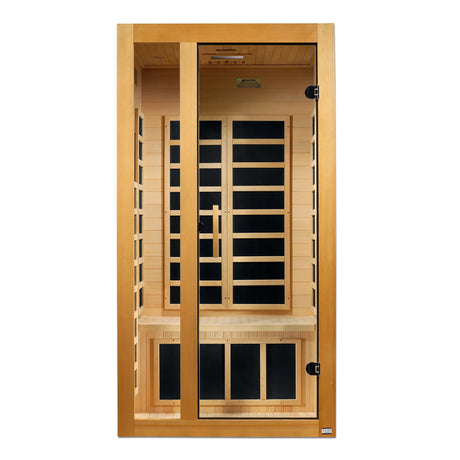
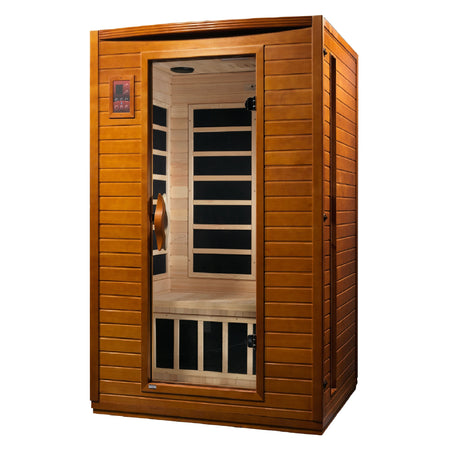
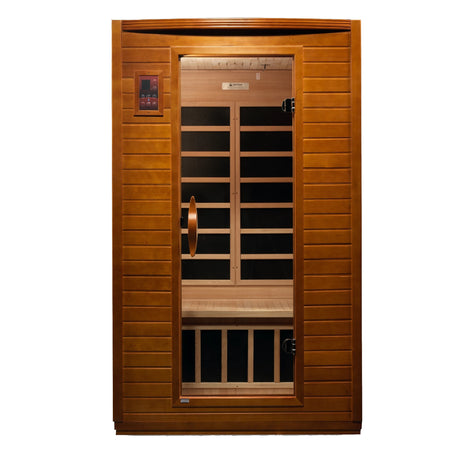
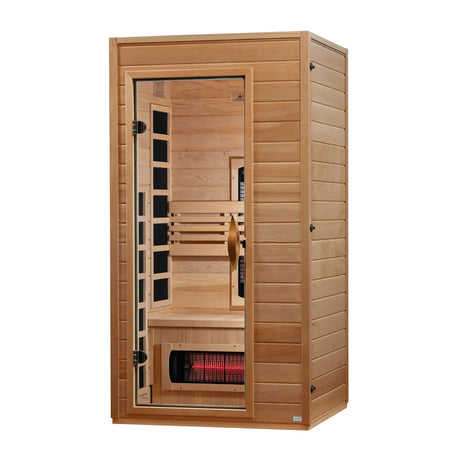
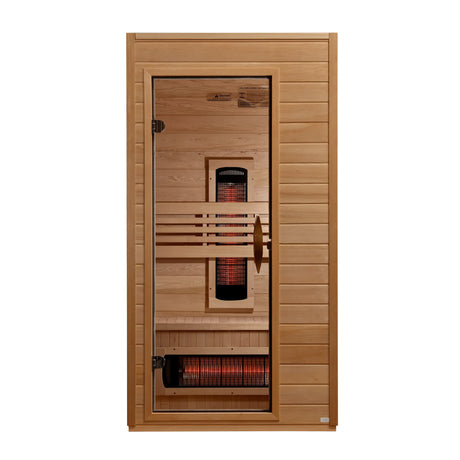
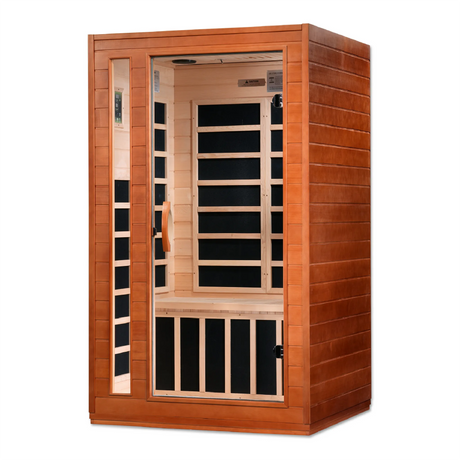
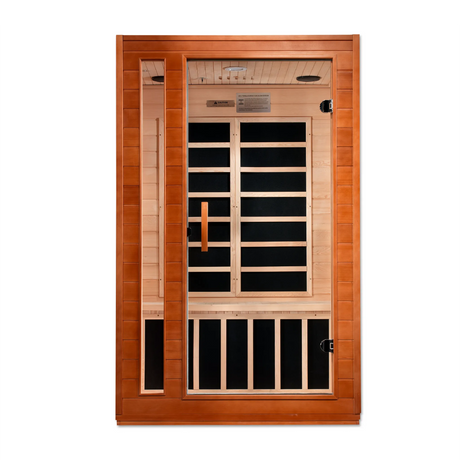
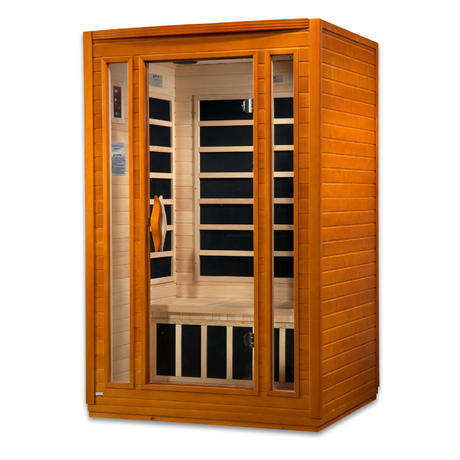
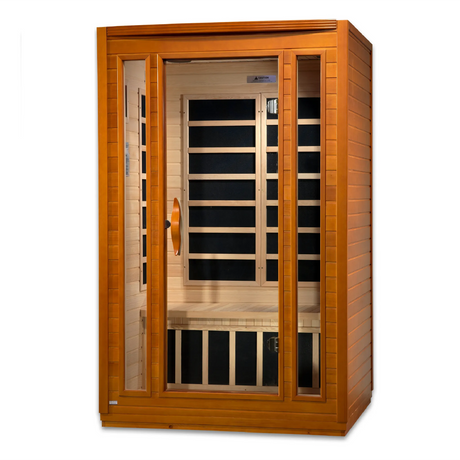
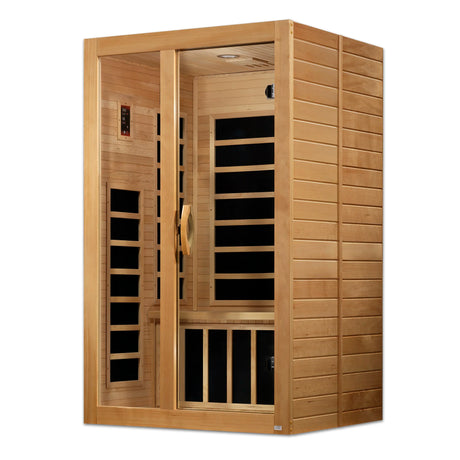
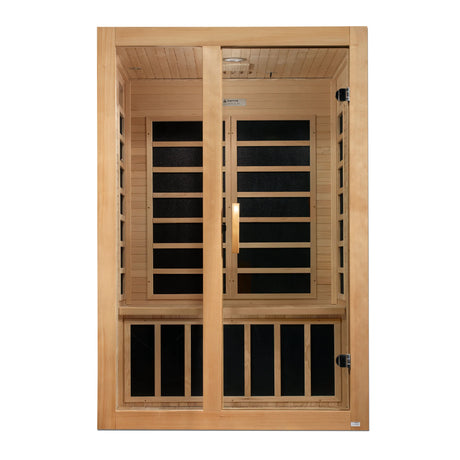
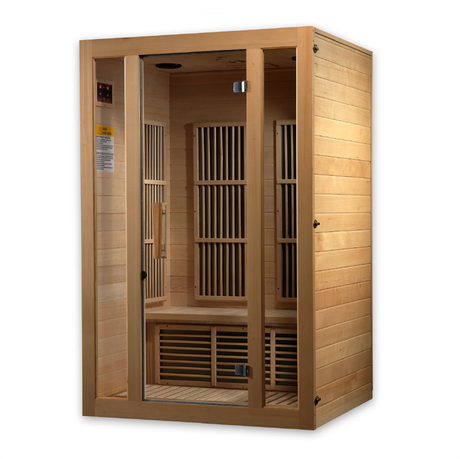
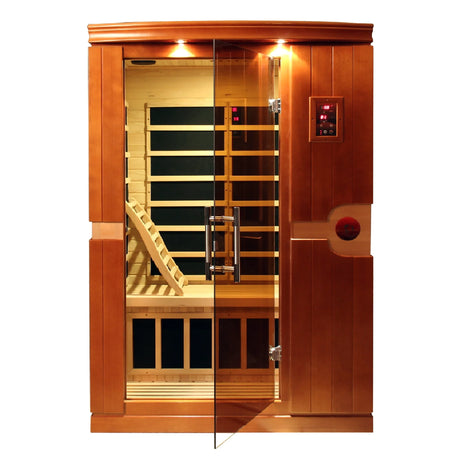
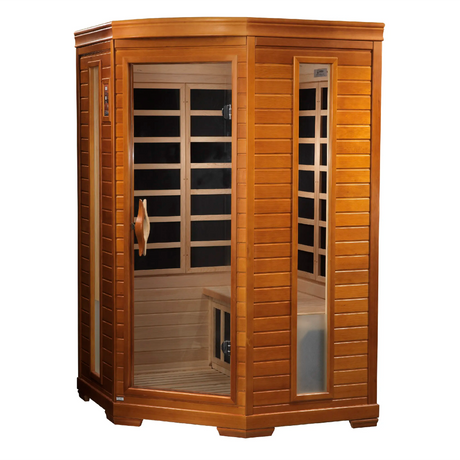
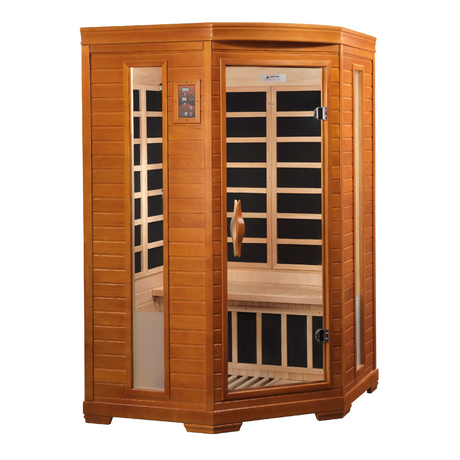
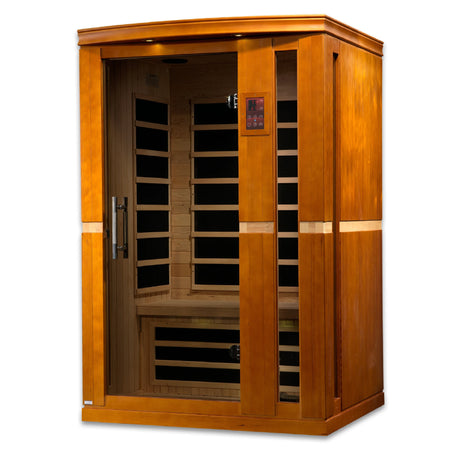
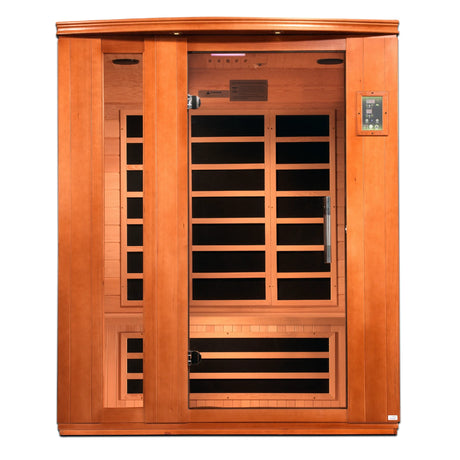
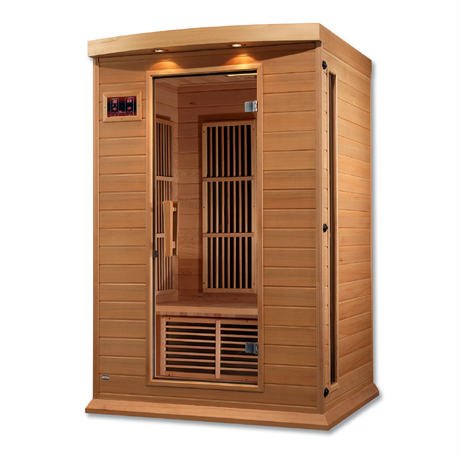
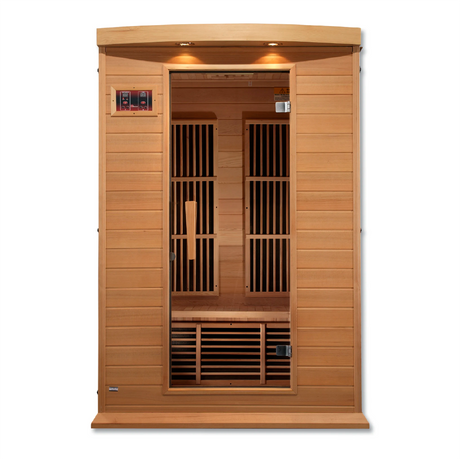
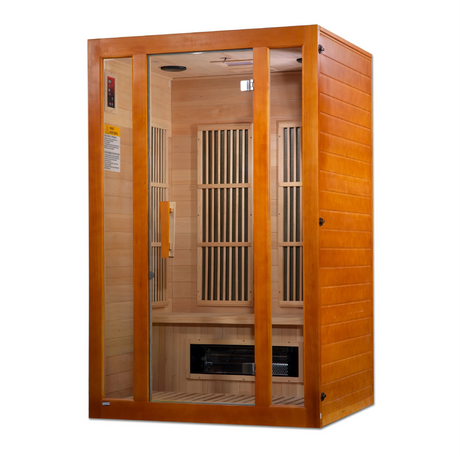
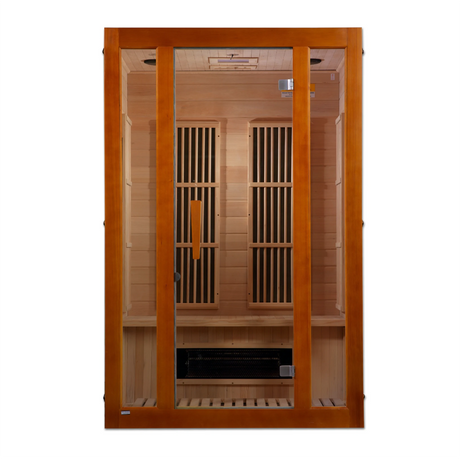
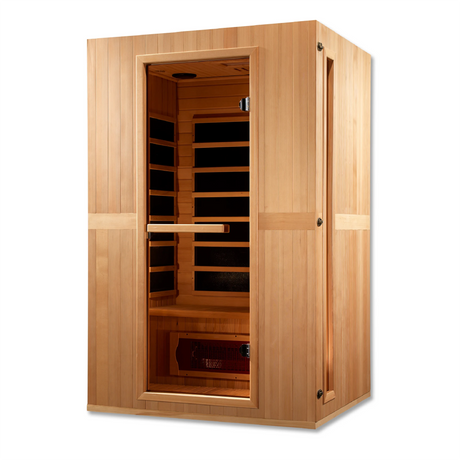
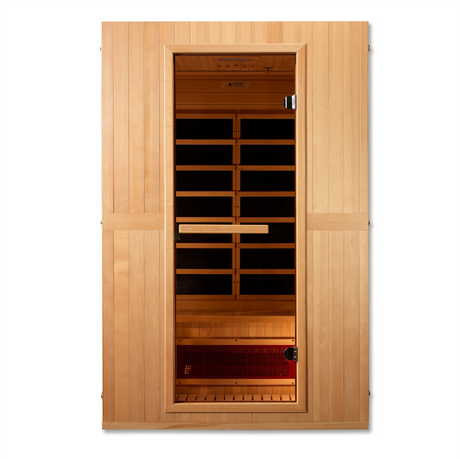
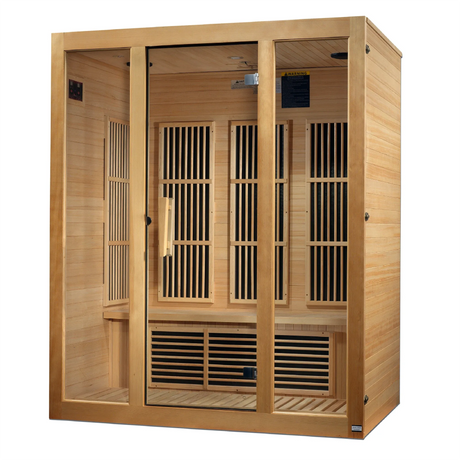
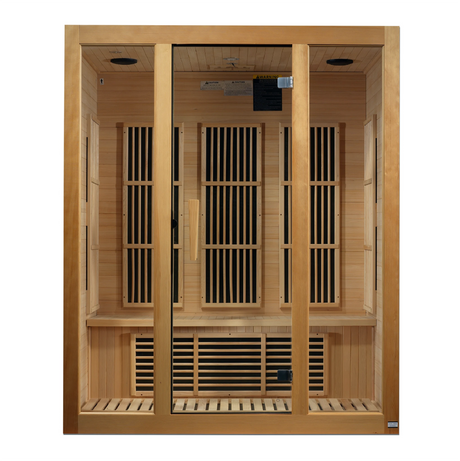
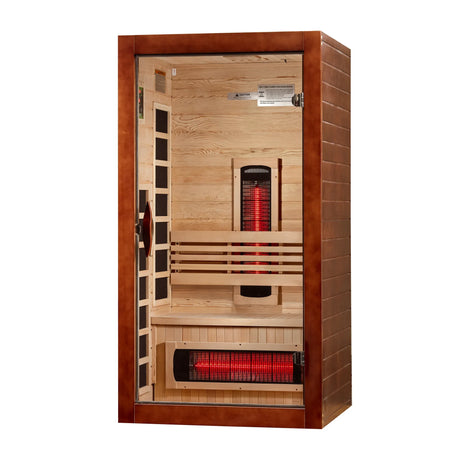
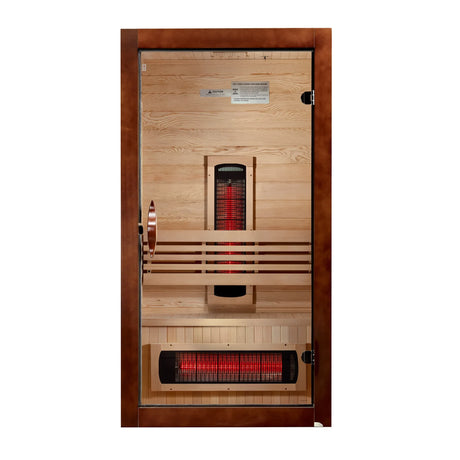
Infrared sauna operates at 95–122°F. It penetrates deeper into muscle tissue at lower temperatures, produces lower cardiovascular strain (Mero et al., SpringerPlus, 2015 found significantly lower post-session heart rate versus traditional), and is better matched to neuromuscular recovery applications for strength athletes and broader rehab populations. It's also the fastest-growing segment in the commercial market: Grand View Research projects infrared sauna growing at a 7.5% CAGR from 2026 to 2033 — the fastest-growing category within the sauna market, driven by exactly this type of commercial adoption in gyms and PT clinics.
When Blue Sky works with PT clinics and commercial gyms on sauna spec, one of the most underappreciated factors is warmup time. An IR sauna that reaches target temperature in 15–20 minutes fits appointment-based scheduling without wasted session windows. Traditional saunas requiring 30–45 minutes to heat can create throughput bottlenecks in busy facilities — particularly in PT clinic environments where a 30-minute heat block between patients creates dead scheduling time. For a deeper look at how layout decisions interact with unit selection, the sauna layout and design guide covers footprint planning and spatial considerations worth reviewing before finalizing any commercial installation.
| Feature | Traditional Finnish Sauna | Far-Infrared Sauna |
|---|---|---|
| Temperature range | 176–212°F (80–100°C) | 95–122°F (35–50°C) |
| Primary recovery mechanism | Plasma volume expansion, thermoregulatory adaptation, cardiovascular stress response | Deep tissue penetration, neuromuscular recovery, HSP70 activation |
| Best athletic population | Endurance athletes (runners, cyclists, rowers) | Strength/power athletes, rehab populations, deconditioned members |
| Recommended session duration | 20–30 minutes | 15–20 minutes |
| Cardiovascular load on athlete | High — heart rate elevates significantly | Low to moderate — significantly lower HR vs. traditional (Mero et al., 2015) |
| Warmup time | 30–45 minutes | 15–20 minutes |
| Monthly operating cost (electricity) | ~$12–15/month | ~$5–8/month |
| Best facility type fit | Endurance training centers, open-access gym environments | PT clinics, corporate wellness, strength-focused gyms, multi-population facilities |
| Evidence strength for endurance adaptation | Strong — Scoon et al. (2007), Heathcote et al. (2018), PMC8297353 | Moderate — some endurance benefit, but less studied at lower temps |
| Evidence strength for strength/neuromuscular recovery | Moderate — general recovery benefit applies | Strong — Ahokas et al. (2023, 2025), Mountain Tactical Institute (2024) |
On operating costs: according to Home In Depth's 2025 sauna market analysis, traditional sauna runs approximately $12–15 per month in electricity, infrared sauna runs $5–8, and steam rooms run $15–20. Commercial installations start at approximately $8,000 for entry-level units. For facilities comparing long-term operating cost across a five-year ownership horizon, the IR advantage compounds significantly — particularly relevant for corporate wellness buyers managing tight facilities budgets.
One trend worth noting for facility managers planning new recovery spaces: in May 2025, Sunlighten — a leading infrared sauna brand — acquired key assets from cold-therapy company Ice Barrel to build combined heat and cold recovery suites. According to Grand View Research's 2026 sauna market report, contrast therapy spaces are emerging as a commercial differentiator. Facilities planning new sauna installations should rough in adequate floor space for both a sauna unit and a cold plunge at the time of initial buildout. Retrofitting after the fact costs significantly more, and this is one of the most common requests Blue Sky hears from facility managers who purchased a sauna first and returned for a cold plunge within 12–18 months.

Building a Commercial Sauna Recovery Program: Protocols, Scheduling, and ROI
Installing a sauna is not the same as running a sauna recovery program. The difference in member and patient outcomes — and in facility revenue — comes from structured protocols, clear communication, and scheduling designed around how athletes actually train.
For commercial gyms and recreation centers, the strategic frame is membership retention and session value. Athletes who use post-workout sauna have a higher-value visit and — critically — a reason to come to your facility on rest days. A structured "recovery membership" tier that includes sauna access with protocol guidance (three-week commitment, 3–4 sessions per week, post-training timing) creates a revenue layer beyond baseline membership while giving athletes a protocol outcome to chase. According to Technavio's 2026 US sauna market analysis, the US sauna market is forecast to grow by USD 161.3 million between 2025 and 2030 at a 6.5% CAGR, driven by longevity and preventive health integration — members are actively seeking these services. The demand is already there; the packaging question is whether your facility captures it.
For PT and rehab clinics, the framing shifts to adjunct recovery modality with a legitimate evidence base. The Ahokas et al. 2025 study in Frontiers in Sports and Active Living used a protocol of 10 minutes at 50°C, three times per week, over six weeks with female team-sport athletes — producing measurable improvements in neuromuscular recovery. For post-surgical or injury rehab populations, IR sauna at 43–50°C delivers neuromuscular recovery benefit without the cardiovascular strain of traditional sauna, which broadens the eligible patient population significantly. Clinical language matters here: sauna is an adjunct modality supporting recovery, not a treatment for injury. Staying within that framing protects both patients and practice. For boutique studios and smaller clinical facilities thinking through this integration, the sauna planning guide for small gyms and boutique studios covers space, capacity, and program structure in practical detail.
Sanitation is a practical consideration that separates PT clinic sauna installations from gym installations. IR saunas built with non-porous Canadian hemlock — which is hypoallergenic, resists warping, and doesn't off-gas at operating temperatures — are significantly easier to sanitize between patients than traditional sauna wood. Factor interior material into unit selection decisions, not just temperature range and footprint. Most buyers who come to Blue Sky for PT clinic specifications end up prioritizing this once they work through the daily turnover math.
For corporate wellness buyers, the most compelling frame is recruiting and retention rather than athletic performance. The post-sauna parasympathetic shift and sleep quality improvement on training days (noted across multiple recovery research summaries, including Backyard Discovery's July 2026 analysis) is particularly relevant for sedentary-to-active employees managing high-stress work environments. Sauna access carries a perception of exclusivity that drives utilization — employees use wellness amenities they associate with premium treatment. That utilization data becomes part of the benefits ROI story.
Scheduling throughput requires some planning based on unit type. IR sauna: 20-minute sessions plus 5 minutes of turnover, reaching full temperature in 15–20 minutes from a cold start, makes back-to-back appointment scheduling clean. Traditional sauna: 30-minute sessions, but the 30–45 minute warmup window means you should plan for the unit to run continuously during peak hours rather than cycling on and off. For PT clinics, appointment-based scheduling is relatively straightforward. For commercial gyms, peak post-workout demand concentrates in the 6–8 PM window — unit capacity selection should account for this clustering rather than average daily utilization.
Staff education is one of the most overlooked elements of any commercial sauna program. Front-desk staff and trainers don't need to be recovery scientists — but they should be able to explain the basic distinction between the endurance and strength athlete protocols in two sentences. A one-page protocol card posted near the sauna unit, updated seasonally, handles most member questions and reduces the cognitive burden on floor staff. Facilities that invest in this communication layer see meaningfully better compliance with the structured protocols that actually produce outcomes.
Blue Sky recommends that facilities planning contrast therapy spaces — sauna plus cold plunge — rough in adequate floor space for both units during initial buildout. Retrofitting after the fact is significantly more expensive, and planning both together at installation is a common ask from facility managers who initially bought only a sauna and returned for a cold plunge within 12–18 months. For a detailed look at how to design and integrate these combined recovery zones, the commercial gym recovery zone design guide covers spatial planning, equipment sequencing, and member flow considerations. The commercial sauna equipment market is projected to grow at a CAGR of 6.9% from 2026 to 2032 according to Verified Market Research. Facilities adding structured recovery infrastructure now are positioning ahead of the demand curve.
NASM's 2026 recovery science overview reinforces the commercial protocol standards: 15–20 minutes, 3–4 sessions per week, at 176–212°F for traditional sauna cardiovascular and athlete recovery benefits. Having that external clinical validation is useful when positioning a structured recovery program to both members and corporate wellness decision-makers.

Frequently Asked Questions
1. What is the best sauna recovery protocol for endurance athletes?
Post-training traditional Finnish sauna at 176–212°F (80–100°C), 20–30 minutes per session, 3–4 times per week, within 30–60 minutes of training completion, sustained over a minimum consecutive 3-week block. Consistency is the non-negotiable variable — the plasma volume adaptations that drive endurance performance improvement require repeated thermal stress over time. Scoon et al. (2007) produced a 32% improvement in run time to exhaustion and 7.1% plasma volume expansion using exactly this structure. Occasional sauna use will not replicate these results.
2. What is the best sauna recovery protocol for strength and power athletes?
Post-training infrared sauna at 109–115°F (43–46°C), 15–20 minutes per session, 3–4 times per week is the evidence-supported protocol for strength athletes. IR sauna is preferred over traditional Finnish sauna for this population because it produces lower cardiovascular strain — Mero et al. (2015) documented significantly lower post-session heart rate versus traditional sauna — and its deeper tissue penetration is better matched to neuromuscular recovery. Research from the Mountain Tactical Institute's 2024 review showed approximately 20% greater muscle soreness reduction and 42–60% improved neurological recovery versus passive recovery controls. Strength athletes can experience measurable acute benefits from a single session, with cumulative improvement compounding across weeks of consistent use.
3. Does sauna use after resistance training blunt muscle growth?
No — sauna does not blunt muscle growth, and this concern should not keep strength athletes away from heat therapy. The concern about blunting hypertrophy applies specifically to cold water immersion: Roberts et al. (Journal of Physiology, 2015) demonstrated that cold water immersion after resistance training suppressed satellite cell activation and mTOR signaling, blunting strength and mass gains over 12 weeks. Heat exposure activates the mTOR signaling cascade rather than suppressing it, preserving the hypertrophic signaling environment. A 2026 Bayesian meta-analysis found heat therapy's hypertrophy advantage over control at a standardized mean difference of 0.12 — modest, but not a blunting effect. Sauna after lifting does not cost you gains.
4. Should athletes use a sauna before or after training?
Athletes should use sauna after training, not before. The research consistently supports post-exercise sauna — within 30–60 minutes of training completion — as the effective protocol window for both endurance and strength athletes. Pre-exercise sauna at high temperatures risks dehydration and thermoregulatory strain that can impair performance before the training session even begins. Post-exercise timing is when thermal stress produces the recovery and adaptation responses documented across the published research.
5. How does infrared sauna differ from traditional sauna for athletic recovery?
Traditional sauna operates at 176–212°F and produces high cardiovascular stress that drives plasma volume expansion and thermoregulatory adaptations — making it the stronger format for endurance athletes, and the type used in landmark studies like Scoon et al. (2007). Infrared sauna operates at 95–122°F, penetrates deeper into muscle tissue at lower temperatures, and produces significantly lower cardiovascular strain, making it better suited for neuromuscular recovery in strength athletes and for broader populations including rehab patients and deconditioned members. IR sauna also heats faster — 15–20 minutes versus 30–45 minutes for traditional — and costs less to operate at approximately $5–8 per month versus $12–15, making it more practical for appointment-based scheduling in clinical and commercial environments.
6. Can sauna and cold plunge be combined for athletic recovery?
Yes, contrast therapy combining sauna and cold plunge is supported by the recovery literature — but sequencing matters critically, especially for strength athletes. Sauna should come first, with cold plunge used later, ideally separated by several hours or reserved for rest days. Cold water immersion immediately after resistance training suppresses the mTOR signaling that drives hypertrophy during its most active window, which is exactly the timing to avoid. The sauna-first sequence preserves the anabolic signaling environment; cold therapy then delivers its anti-inflammatory benefits without competing with muscle-building mechanisms. For endurance athletes, contrast therapy sequencing is less of a concern for adaptation blunting, as plasma volume adaptations are not as acutely sensitive to cold exposure timing.
7. How quickly will athletes see results from a sauna recovery protocol?
The timeline depends on the athletic population and the type of adaptation being targeted. Endurance athletes need a consistent 3-week block of post-workout sauna to build meaningful plasma volume and thermoregulatory adaptations — the Scoon et al. data showing a 32% improvement in run time to exhaustion came from structured three-week protocols, not sporadic sessions. Strength athletes can experience acute session-level benefits — reduced soreness and improved neuromuscular readiness — from a single post-training IR sauna session, with cumulative improvements compounding across weeks of consistent use. Managing these timeline expectations with members upfront reduces early dropout and improves protocol compliance.
8. What type of sauna is best for a commercial gym or PT clinic?
For most clinical and multi-population commercial settings, infrared sauna offers the more practical specification. Lower operating costs ($5–8 per month versus $12–15 for traditional), faster warmup times that fit appointment scheduling (15–20 minutes versus 30–45 minutes), lower cardiovascular load that widens the eligible patient and member population, and easier interior maintenance all favor IR sauna for multi-use facility environments. Traditional sauna remains the stronger choice for facilities primarily serving competitive endurance athletes where plasma volume and heat acclimation adaptations are the primary protocol goal. Commercial installations start at approximately $8,000, and budget planning should include a dedicated 20-amp circuit for most two-person IR units along with adequate ventilation for the installation type.
The Right Sauna Protocol Is the One Your Athletes Will Actually Follow — Consistently
The research on sauna for athletes has crossed the threshold from promising to prescriptive. Endurance athletes benefit from consistent, 3-week blocks of post-training traditional Finnish sauna for plasma volume expansion and thermoregulatory adaptation — producing measurable improvements in race-pace endurance. Strength athletes get acute and cumulative neuromuscular recovery from infrared sauna without any risk of blunting the hypertrophic adaptations they're training for. Two different mechanisms. Two different protocols. One commercial opportunity.
The post-workout sauna benefits your facility can deliver aren't theoretical. They're documented in peer-reviewed research, adopted by 96.7% of elite endurance athletes, and increasingly sought by the exact commercial member and patient populations driving the market's 6.9% CAGR through 2032 (Verified Market Research). The infrared sauna segment alone is growing at 7.5% annually — the fastest-growing category in the sauna market — as commercial facilities recognize that evidence-backed recovery programming is what separates destinations from commodity gyms.
The competitive window for early differentiation is still open. Facilities that build structured, evidence-backed sauna recovery programs now — rather than simply installing a unit and leaving members to figure out the protocol — will lead that curve rather than catch up to it.
Whether you're speccing a traditional Finnish sauna for an endurance-focused training facility or an infrared unit for a PT clinic or corporate wellness suite, Blue Sky Fitness Supply carries commercial-grade options at the right footprint and throughput for your space. Browse our commercial sauna collection to see current inventory, unit specifications, and electrical requirements — or reach out directly to talk through which unit fits your athlete population and scheduling model.
If you're evaluating both sauna types and want a deeper specification comparison before committing, our guide Infrared Sauna vs Traditional Sauna: Complete 2026 Commercial Guide covers temperature mechanics, installation requirements, and population-specific use cases in full detail.