

Table of Contents:
- What Is a Squat Seat Attachment and Why Commercial Gyms Are Adding Them
- Squat Seat Attachment Compatibility: The Spec Sheet Your Purchasing Team Needs
- Fixed vs. Adjustable Squat Seat: Which Is Right for Your Facility?
- Squat Seat Installation: Step-by-Step Process and Commercial Safety Standards
- Commercial Squat Rack Accessories: Building a Modular Station That Scales
- Frequently Asked Questions
- The Bottom Line for Commercial Facility Managers
Your power rack is probably doing the work of two exercises when it could support eight. That dead floor space — the square footage sitting idle between sessions — costs you money every hour it's underutilized. A squat seat attachment changes that math fast, turning a standard rack station into a platform for box squats, box jumps, leg presses, step-ups, seal rows, and preacher curls without buying a single additional machine or claiming one more inch of floor space.
Here's the catch, though. Nearly everything written about squat seat attachments online was written for home gym hobbyists. And the specs that matter for a hobbyist buying one unit for personal use look nothing like the specs that matter when you're running 200-plus member sessions per day under commercial liability standards. Compatibility requirements, weight ratings, floor anchoring protocols, ASTM safety documentation — these details get glossed over in consumer-facing content because the home gym crowd doesn't need an insurance audit trail.
You do.
According to Mordor Intelligence's 2025 Strength Training Equipment Market Report, the commercial segment holds 62.57% of the global strength training equipment market share in 2024 — and operators across gym franchises, corporate wellness centers, university rec facilities, and boutique studios are all competing for the same members. Every training modality you can offer from a rack station you already own is a direct revenue advantage.
This post is written specifically for commercial facility managers, strength coaches, and procurement teams who are evaluating squat seat attachments for multi-user, high-traffic environments. We'll cover how to verify rack compatibility before issuing a purchase order, how to choose between fixed and adjustable models based on your actual member population, how to install attachments to commercial safety standards, and what a daily maintenance protocol should look like. By the end, you'll have a procurement checklist and a clear decision framework — not a product pitch dressed up as advice.
What Is a Squat Seat Attachment and Why Commercial Gyms Are Adding Them
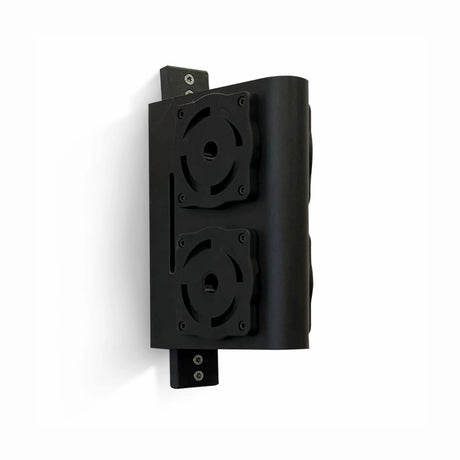
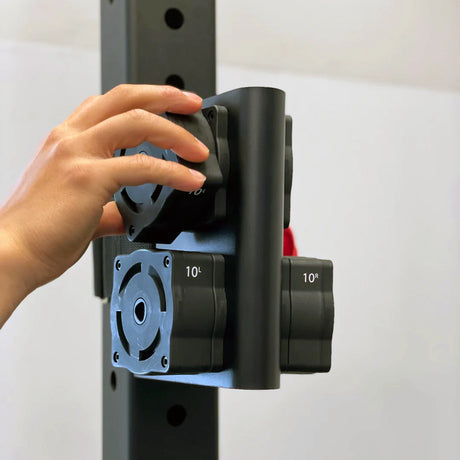
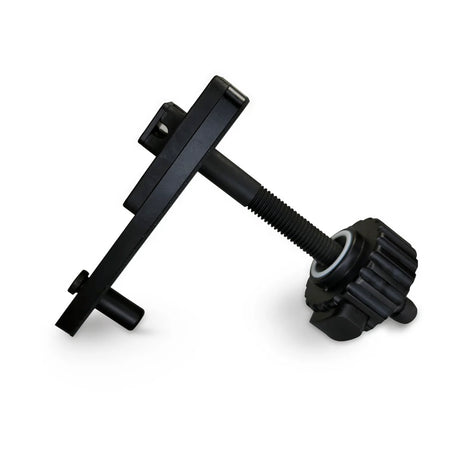
A squat seat attachment — sometimes called a utility seat — is a bracket-mounted pad or platform that clips or pins onto a power rack's uprights or crossmembers to create a stable seated or supported training surface. That's the simple definition. The more useful way to think about it is this: it's a force multiplier for a rack station you already paid for.
Compare it to the alternative. A dedicated hack squat machine runs $2,000 to $6,000 and occupies 40 to 60 square feet of floor space. A belt squat unit costs $3,000 to $8,000 and needs its own footprint entirely. A quality squat seat attachment for a commercial rack costs a fraction of either — and occupies exactly zero additional floor space beyond the rack's existing footprint.
The exercise menu that opens up is broader than most operators expect. According to REP Fitness's product documentation, a properly mounted utility seat supports box squats, box jumps, leg presses, step-ups, and stone loading from a single rack station. Add seal rows and preacher curls to that list, and a single rack station can run a full lower-body and accessory training block without routing members to separate machines. For personal trainers billing premium rates for small-group sessions, that programming variety is a direct revenue argument. Our Squat Seat Machines: The Complete Commercial Buyer's Guide covers this programming case in more detail if you want to map out a full station menu before purchasing.
The orthopedic angle matters just as much. Commercial-grade belt squat attachments can support up to 1,100 lbs, and both belt squat and seated squat configurations remove spinal compressive load entirely. That means members with disc issues, post-surgical limitations, or chronic lower back pain — who might otherwise avoid the free weight area entirely — can participate in structured lower-body programming. Broadening the population that can safely use a single rack station has a direct effect on member experience and retention.
This is exactly why corporate wellness facilities and boutique gyms are leading demand for space-efficient, multi-use rack configurations. These operators don't have 8,000 square feet of floor space to dedicate to a full machine circuit. They need each station to earn its footprint — and a squat seat attachment is one of the most efficient ways to accomplish that.
The commercial fitness equipment market reflects this momentum. Zion Market Research projects the global commercial fitness equipment market will grow from approximately $15.40 billion in 2024 to $29.87 billion by 2034 at a CAGR of 8.42%. Operators buying into that growth are looking for equipment decisions that scale efficiently — which is precisely the argument for modular rack accessories over single-purpose machines.
The commercial squat rack accessories category is expanding because operators are increasingly aware that a rack is a platform, not just a squat station. A squat seat attachment is often the first accessory that opens that realization up.
Squat Seat Attachment Compatibility: The Spec Sheet Your Purchasing Team Needs
Skip this section and you're likely to make the most expensive mistake in rack accessory procurement: buying an attachment that doesn't fit your existing racks.
Compatibility for squat seat attachments comes down to three measurements. Get all three right and your attachment mounts cleanly, seats securely, and performs safely under load. Miss any one of them and you have an expensive piece of steel sitting in your receiving dock that can't be used — or worse, one that gets installed anyway and wobbles under load.
Upright Tubing Size
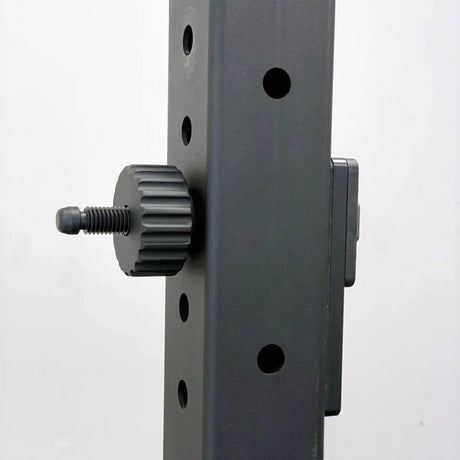
Commercial rack uprights come in three standard sizes: 2x2 inch, 2x3 inch, and 3x3 inch. According to RitFit Sports' 2026 Hack Squat Rack Attachment Guide, most commercial squat rack attachments are specific to one of these three dimensions — and they cannot be adapted between sizes. The 2x2 inch upright is typically found on light-commercial and home gym racks. The 2x3 inch is mid-tier commercial. The 3x3 inch is the heavy commercial standard and what you'll find on most institutional and high-traffic facility racks.
If your rack uses 3x3 inch uprights, you need an attachment built for 3x3 inch uprights. There is no adapter that bridges the gap safely.
Pin Hole Diameter
In addition to tubing size, the pin holes drilled into the uprights must match the attachment's pin diameter. Standard racks use 5/8-inch holes. Monster and heavy commercial racks use 1-inch holes. An attachment designed for 1-inch pins will not seat securely in 5/8-inch holes — and seating a 5/8-inch pin in a 1-inch hole leaves dangerous play in the connection.
Outside Rack Width
The third measurement is outside rack width — the distance between the exterior faces of the two uprights. REP Fitness notes that commercial utility seat attachments are typically engineered for 47 to 49-inch outside rack widths. If your rack falls outside that range, standard attachments may not bridge the connection points properly.
RitFit Sports identifies choosing the wrong attachment dimensions as the single most common purchasing mistake in this category. An ill-fitting attachment doesn't just fail to perform — it wobbles under load at weights that would otherwise feel moderate, creating a direct safety and liability exposure.
Proprietary vs. Open Attachment Standards
Beyond the three measurements above, ask whether your rack uses a proprietary or open attachment standard. Proprietary systems — where attachments are engineered to fit only that manufacturer's specific rack geometry — lock your facility into one parts ecosystem. When the manufacturer discontinues a product line or changes specs, you may not be able to source replacements or additions without replacing the base rack. Open or non-proprietary standards mean attachments from multiple manufacturers are cross-compatible, which gives you flexibility to layer on accessories over time without a forced infrastructure upgrade.
For long-term capital planning, this distinction matters more than the upfront price difference between two attachment options.
What a Commercial-Grade Spec Sheet Looks Like
To make this concrete: the Legend Fitness 3143 Squat Stool is a fixed-height utility seat built for 3x3 inch uprights, priced at $339. The Legend Fitness 3254 Adjustable Squat Seat is an adjustable-height model, also 3x3 compatible, at $589. Both are commercial-grade in construction — 11-gauge steel framing, bolt-down compatible base racks — and both illustrate what a properly specified commercial attachment should document before it ships.
As a distributor working with commercial facility buyers daily, we see compatibility mismatches as the number-one sourcing error — always confirm upright size, hole diameter, and outside rack width against your specific rack model before issuing a PO. Blue Sky's team can cross-reference your existing rack specs against our Legend Fitness attachment lineup before you order, which eliminates the compatibility guesswork entirely.
The practical rule for your purchasing team: never approve a PO on a squat seat attachment without written spec confirmation from the vendor that covers upright tubing size, pin hole diameter, outside rack width, and weight capacity. Get it in writing. If a vendor can't provide it, that's a signal worth taking seriously.

Fixed vs. Adjustable Squat Seat: Which Is Right for Your Facility?
This is an operator-level ROI question, not a preference question. The right answer depends on your member population, your daily throughput, and your maintenance capacity — not on which product has more features.
The Case for Fixed Height (Legend Fitness 3143 Squat Stool — $339)
Fixed-height seats make sense when your user population is defined and consistent. A university athletic program outfitting a team weight room, for instance, is working with athletes in a relatively narrow height range and a structured training program. The seat height gets set once, stays there, and doesn't need to change between sessions. No adjustment mechanism means no adjustment mechanism to fail, inspect, or repair — and faster station-to-station transitions when athletes are rotating through a circuit.
For facilities purchasing multiple rack stations at once, the $250 per-unit cost savings over the adjustable model compounds quickly. Equipping six rack stations with fixed seats instead of adjustable ones is a $1,500 delta that can be reinvested elsewhere in the facility. Facility managers planning a multi-station buildout may find it useful to review our Adjustable Bench Buyer's Guide for Commercial Facilities alongside this post — the same fixed-vs-adjustable trade-off logic applies when specifying bench inventory for the same floor.
The honest trade-off: if your member population is diverse — different heights, different training backgrounds, different programming needs — a fixed seat will work for some and feel wrong for others. That's not a product defect; it's a use-case mismatch.
The Case for Adjustable (Legend Fitness 3254 Adjustable Squat Seat — $589)
Open-access commercial gyms with a broad membership base need adjustability. When a 5'2" member finishes a box squat set and a 6'4" member steps in next, the station needs to reconfigure in under 30 seconds without disrupting the training floor. An adjustable squat seat handles that without involving a staff member.
Personal training operations benefit significantly from adjustable models too. A trainer running back-to-back 60-minute sessions with clients of different heights and programming needs can reconfigure a station between clients in the same time it takes to adjust a bench angle. That operational efficiency is real and measurable.
The trade-off: the height adjustment mechanism adds one more inspection checkpoint to your daily maintenance protocol. It's not a burdensome addition, but it needs to be on the checklist.
| Feature | Legend Fitness 3143 Squat Stool (Fixed) | Legend Fitness 3254 Adjustable Squat Seat |
|---|---|---|
| Price | $339 | $589 |
| Height adjustability | Fixed | Adjustable — multiple height positions |
| Best fit: facility type | Team weight rooms, schools, defined training populations | Open-access gyms, PT studios, corporate wellness centers |
| Member population suitability | Consistent height range; structured programming | Diverse heights; varied training goals |
| Reconfiguration speed between users | Faster — no adjustment needed | Fast — adjusts in under 30 seconds |
| Moving parts / maintenance complexity | No moving parts; minimal maintenance | Adjustment mechanism requires periodic inspection |
| Inspection checkpoints | Pin seating, padding integrity, hardware tightness | All of the above, plus adjustment mechanism function |
| Long-term versatility | Moderate — serves defined programs well | High — adapts to population shifts and programming changes |
For facilities ordering four or more attachment units — for example, equipping a school or corporate wellness center with multiple rack stations — the cost differential between the fixed 3143 and adjustable 3254 becomes a real budget line item. Contact Blue Sky for multi-unit commercial pricing on either model.
As Mordor Intelligence notes, commercial establishments benefit from systematic maintenance protocols that maximize equipment performance and operational lifespan. That's worth factoring into your total cost of ownership calculation — not just the purchase price.

Squat Seat Installation: Step-by-Step Process and Commercial Safety Standards
The liability stakes here are not theoretical. According to Fitness-China.com's Safety Standards Guide, over 90% of weightlifting injuries involve free weights — most caused by poor form, dropped weights, or unstable setups. An improperly installed seat attachment falls squarely into the "unstable setup" category, and in a commercial setting, that means your facility is the liable party.
Here's the installation process that commercial facilities should follow, step by step.
Step 1: Pre-Installation Audit
Before mounting anything, verify that the rack itself is properly anchored to the floor. IronCompany.com's product documentation for the Legend Fitness 3121 commercial squat rack explicitly notes that commercial racks should include bolt-down tabs for anchoring to concrete floors — and that freestanding racks become a stability and safety risk when seat attachments create lateral leverage force away from the rack's center of gravity. If your rack is not anchored, the seat attachment installation shouldn't happen until it is. No exceptions.
Step 2: Dry-Run Fit Check
Mount the attachment with no weight loaded. Confirm that pins seat fully in the upright holes with no gaps, that the attachment doesn't rock under bodyweight pressure, that the height adjustment mechanism (if applicable) moves smoothly through its range, and that the attachment doesn't contact or interfere with any crossmembers. RitFit Sports identifies pins that don't seat fully and any rocking under bodyweight as the two primary installation red flags — if either is present, do not load the attachment until the fit issue is resolved.
Step 3: Weight Capacity Verification
Confirm the manufacturer's written weight rating before allowing any member use. Top10.us.com's squat rack buying guide makes a point worth repeating: a rack rated close to a user's working weight is a false economy and a safety risk. Always account for the impact force of a barbell dropped onto catches — it significantly exceeds the static load of the working weight itself. Size up accordingly.
Step 4: Safety Signage and Inspection Logging
Document the installation date, the installer's name, the initial inspection findings, and the rack and attachment model numbers. ASTM F1749-15 and the OSHA General Duty Clause (29 USC 654) require structured inspection protocols and appropriate safety signage for commercial strength training setups. The documentation from day one is what you reference if a member incident ever leads to a liability review.
Step 5: Staff Training
At least one staff member per shift should be trained to run the daily inspection checklist on all rack attachment points. That checklist should cover pin seating, attachment stability, padding integrity, hardware tightness, and — on adjustable models — adjustment mechanism function. The inspection takes two minutes per station. Skipping it is the kind of shortcut that compounds into a regulatory citation or, worse, a member injury.
The Applicable Safety Standards
ISO 20957-4 and ASTM F3105 are the primary recognized safety standards for commercial racks and benches. They are not legally mandated, but they are referenced by insurers, architects, and procurement professionals as the legal due diligence baseline when documenting safety protocols. ASTM F2276-17 covers strength training equipment standards more broadly and is also relevant for commercial rack setups.
From a distributor perspective, the facilities that skip the floor anchoring step almost always encounter it again — either through a near-miss incident or an insurance audit. Bolt-down anchoring isn't optional in a commercial context; it's the foundation that makes every attachment on the rack safe to use. Insurers who specialize in commercial fitness facilities are increasingly specific about this requirement, and facilities that document their compliance are in a materially better position when a claim is filed.
Safety compliance isn't a regulatory checkbox. It's a direct business asset: facilities meeting recognized ASTM and ISO standards reduce liability exposure, build member trust, and support the retention numbers that make or break an operation's unit economics.

Commercial Squat Rack Accessories: Building a Modular Station That Scales
A squat seat attachment is usually the entry point. The highest long-term capital value comes from thinking beyond the first accessory purchase and building a rack station that accepts a growing ecosystem of modular rack attachments over time.
The layering model works like this: start with a quality 3x3 commercial rack — anchored, properly specified, rated for institutional use. Add a squat seat attachment. Then, over time, layer in a landmine sleeve, a lat pulldown or cable column attachment, dip bars, a monolift attachment. Each addition multiplies the exercise menu of that station without requiring new floor space, new electrical, or new structural work. You're compounding the return on a rack you already paid for.
This only works if you chose a rack with a non-proprietary attachment standard in the first place. Top10.us.com's squat rack buying guide flags this directly: proprietary attachment systems limit future additions and lock facilities into one manufacturer's parts. Before purchasing a base rack, ask the vendor explicitly whether the upright and attachment standard is open or proprietary. If they can't answer that question clearly, that's a signal.
For multi-rack facilities, the standardization argument is even stronger. The operators who get the most long-term value from their rack investment are the ones who standardize on one upright specification across their entire floor. When all your racks run 3x3 with 1-inch holes, every attachment becomes interchangeable — you're buying flexibility into your infrastructure, not just a single product. That means one squat seat attachment can rotate between stations during a maintenance cycle, and you don't need to maintain a separate attachment inventory for each rack model. The Legend Fitness 3138 Peg Squat Rack is one example of a commercial-grade base rack built with this kind of accessory ecosystem in mind.
For budget-constrained buyers — school weight rooms, municipal rec centers — this approach is especially valuable. Rather than buying a full accessory suite upfront, a facility can start with the rack and one or two primary attachments, then add to the ecosystem as the budget allows. The infrastructure investment happens once; the capability additions can be phased over multiple budget cycles.
Before finalizing any attachment purchase, run through this procurement checklist:
- Confirm upright tubing size (2x2, 2x3, or 3x3 inches) — in writing from the vendor
- Confirm pin hole diameter (5/8 inch or 1 inch)
- Confirm outside rack width (typically 47–49 inches for commercial-grade racks)
- Request written weight rating from the manufacturer
- Verify ASTM compliance documentation (F3105, F1749-15, F2276-17 as applicable)
- Confirm attachment standard is non-proprietary
- Request manufacturer warranty terms in writing
- Ask about multi-unit pricing if purchasing four or more units
According to Mordor Intelligence, commercial establishments that invest in modular, systematic equipment ecosystems maximize both performance output and operational lifespan — making the upfront due diligence on attachment compatibility a direct return on investment, not just a procurement formality. For facilities that are also evaluating broader free weight area investments alongside rack accessories, our Dumbbell Rack Buyer's Guide for Commercial Facilities covers the same modular, space-efficiency logic applied to dumbbell storage and station planning.

Frequently Asked Questions
1. What is a squat seat attachment and what exercises does it support?
A squat seat attachment is a bracket-mounted pad or platform that pins onto a power rack's uprights or crossmembers to create a stable seated or supported training surface. From a single rack station, it supports box squats, box jumps, step-ups, leg presses, seal rows, and preacher curls. For commercial operators, that translates to significantly more billable training modalities per square foot without acquiring additional floor space or standalone machines.
2. How do I verify that a squat seat attachment is compatible with my existing commercial rack?
Compatibility comes down to three measurements that must be confirmed in writing before issuing a PO. First, confirm your upright tubing size — 2x2, 2x3, or 3x3 inches — because attachments are specific to one size and cannot be adapted between them. Second, confirm pin hole diameter: 5/8 inch for standard racks, 1 inch for monster or heavy commercial-grade uprights. Third, measure your outside rack width, as most commercial utility seat attachments are designed for 47 to 49-inch outside rack widths per REP Fitness's product specifications. If a vendor cannot provide all three specs in writing, treat that as a disqualifying signal.
3. What is the difference between a fixed-height and an adjustable squat seat attachment for commercial use?
Fixed-height models are best suited for facilities with a consistent, defined user population — team weight rooms, school facilities, or structured programming environments where seat height does not need to change between users. Adjustable models are the right choice for open-access commercial gyms with diverse membership or personal training operations where trainers need to reconfigure quickly between clients of varying heights. The price delta between the two is typically around $250 per unit, which compounds meaningfully when outfitting multiple rack stations.
4. Do squat seat attachments need to comply with ASTM or ISO safety standards?
ASTM F3105 and ISO 20957-4 are the recognized commercial safety standards for racks and benches, and while neither is legally mandated in most jurisdictions, both are referenced by insurers and procurement professionals as the due diligence baseline. In practice, they define what "reasonable care" looks like if an injury claim is ever filed against your facility. Always request written ASTM compliance documentation from the manufacturer before finalizing any attachment purchase, and retain that documentation in your facility's safety file.
5. Does my rack need to be anchored to the floor before adding a squat seat attachment?
Yes — this is a non-negotiable requirement in a commercial setting. Any attachment that extends laterally from the rack creates leverage forces that shift the rack's center of gravity, turning a freestanding rack into a genuine stability and liability risk under load. Commercial squat racks should include bolt-down tabs for anchoring to concrete floors, and that anchoring must be completed before any attachment is installed or used. No member weight should be loaded on a seat attachment until the base rack is properly secured.
6. Can members with back injuries safely use a squat seat attachment?
Yes, and this is one of the most operationally valuable features of the product category for commercial operators. Seated and belt squat configurations remove spinal compressive load entirely, enabling structured lower-body programming for members who cannot safely perform conventional back squats due to disc issues, post-surgical limitations, or chronic lower back pain. A single rack station equipped with a squat seat attachment can serve a broader cross-section of your membership than a standard rack setup alone, which directly supports retention of members with orthopedic limitations.
7. How often should commercial squat rack attachments be inspected?
Daily visual inspections are the standard under ASTM F1749-15 and the OSHA General Duty Clause (29 USC 654). Each inspection should cover pin seating (confirm pins are fully seated with no gap or play), attachment stability (no rocking under manual pressure), padding integrity (no tears, compression failures, or exposed substrate), and hardware tightness. On adjustable models, height adjustment mechanism function should be added to the checklist. Every inspection should be logged with the date, the inspector's name, and findings — this documentation is your primary evidence trail in any liability review.
8. What should a commercial facility look for when building a modular rack station over time?
The single most important decision is choosing a base rack with a non-proprietary attachment standard — typically a 3x3 inch upright with 1-inch pin holes — so that attachments from multiple manufacturers remain cross-compatible as your accessory ecosystem grows. Standardizing on one upright specification across all racks in your facility means every attachment becomes interchangeable between stations, eliminating the need to maintain separate attachment inventories per rack model. Starting with a squat seat attachment and adding a landmine sleeve, cable column attachment, or dip bars over subsequent budget cycles is a proven approach for phasing capability additions without a single large capital outlay.
The Bottom Line for Commercial Facility Managers
A quality squat seat attachment is one of the highest-return accessory purchases available to a commercial operator — it multiplies the exercise menu of a rack station you already own, serves a broader member population, and generates more training modalities per square foot without expanding your footprint or your machine budget.
The decision framework is straightforward. First, confirm compatibility before purchasing — upright size, pin hole diameter, and outside rack width, all in writing. Second, install to commercial safety standards: rack anchored to concrete, dry-run fit check completed, weight capacity confirmed, installation documented, staff trained to run daily inspections. Third, choose fixed or adjustable based on your actual member population and throughput needs — not on which model has more features.
Safety compliance belongs in that ROI calculation too. As an expert framework for commercial facilities notes, facilities that select rack accessories built to recognized ASTM and ISO standards reduce liability exposure, enhance member trust, and support retention — and retention is the metric that drives long-term profitability in any membership-based operation. Documenting your ASTM-referenced safety practices isn't paperwork for its own sake; it's a business asset.
Blue Sky Fitness Supply carries the Legend Fitness 3143 Squat Stool and the Legend Fitness 3254 Adjustable Squat Seat — both commercial-grade construction, both available with volume pricing for multi-rack facilities. If you're evaluating attachments for a multi-station build, need help confirming compatibility with your existing rack models, or want to discuss commercial squat rack accessories as part of a larger facility spec, the Blue Sky team works directly with commercial buyers from spec to delivery. Reach out to discuss your project, or browse our commercial squat rack accessories collection to see the full Legend Fitness lineup.