

Table of Contents:
- What Are 1 Inch Pavers — and How Do They Fit Into the Commercial Flooring Spec Hierarchy?
- Where 1 Inch Pavers Belong (and Where They Don't): A Zone-by-Zone Breakdown
- 1 Inch Pavers: Installation Realities Every Contractor and Facility Manager Should Know
- Sustainability, Trends, and What's Changing in the 1 Inch Rubber Paver Market
- Frequently Asked Questions
- The Bottom Line on 1 Inch Pavers for Commercial Facilities
Picture a 12,000 square foot facility buildout. The concrete is poured, the racks are staged, and the GC is standing in front of a flooring spec sheet with eight different thickness options — 8mm, 10mm, 12mm, 3/4 inch, 1 inch, 2.5 inch acoustic tile. The facility manager needs an answer by end of week. Nobody in the room agrees on what any of it actually means, and the flooring rep isn't returning calls.
This scenario plays out constantly in commercial gym construction. Rubber flooring specs are labeled inconsistently across manufacturers — sometimes in millimeters, sometimes in fractions of an inch, sometimes by product line name with the thickness buried in a footnote. The confusion isn't a sign of inexperience. It's a structural problem in how the industry communicates specifications.
Here's what makes it worse: most facilities are buying the wrong thickness for their heaviest zones and don't find out until a warranty claim gets denied or a subfloor takes structural damage from repeated barbell drops.
But 1 inch pavers — the 25mm interlocking rubber tile spec at the top of the commercial thickness hierarchy — are not the answer to every zone in a facility. For the right application, nothing else performs at the same level. For the wrong application, you're overspending without gaining any meaningful performance benefit.
This post decodes what 1 inch pavers actually are, where they belong in a commercial facility, what they cost in logistics and weight, and how to spec them correctly from the first order. The global rubber fitness flooring market was valued at USD 2.78 billion in 2024 and is projected to reach USD 4.64 billion by 2032 at a CAGR of 6.60% — this is a category that's scaling fast, and the facilities getting their specs right now are the ones that won't be tearing up floors in three years. According to FlooringInc, 1-inch (25mm) rubber pavers are classified as Olympic-rated flooring for heavy lifting, specifically designed to withstand dropped weights in high-impact zones. Understanding where that classification applies is the difference between a floor that performs and one that fails the first time a 350-pound barbell hits it wrong.
What Are 1 Inch Pavers — and How Do They Fit Into the Commercial Flooring Spec Hierarchy?
A 1 inch paver is a 25mm thick interlocking rubber tile, typically manufactured in 2x2 foot modules, designed for heavy-impact commercial applications. That's the simple version. The more useful version — the one that actually helps you spec a facility — requires understanding where this tile sits in the full commercial flooring thickness hierarchy.
Commercial gym flooring isn't a one-size product. The professional standard maps thickness to function:
- 8mm: Cardio zones, treadmill banks, bike rows
- 9–10mm: General free weight areas, functional training zones
- 12mm: Heavy free weight areas, dumbbell zones up to 150 lbs
- 25mm (1 inch): Olympic lifting platforms, barbell drop zones, strongman setups
Each step up in thickness is not just more rubber — it's a different performance profile. The 25mm spec exists because there's a load category that thinner tiles simply aren't engineered to handle.
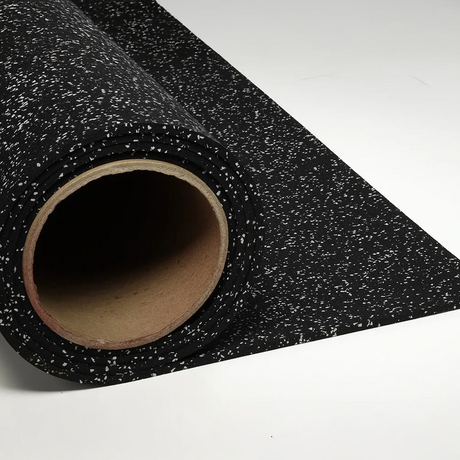
It's also worth clarifying format differences, because the spec alone doesn't tell the full story. Rubber flooring comes in three primary formats: rolls (continuous sheets, typically 4 feet wide and cut to length), poured-in-place rubber (liquid rubber compound applied and cured on-site), and modular tile or paver systems. At 1 inch thickness, the tile/paver format is the most relevant for commercial builds for three practical reasons: individual tile replacement when sections wear, floating installation without permanent adhesive, and manageable logistics on an active job site. You're not unrolling a 200-pound roll of 25mm rubber in a finished space — you're placing 16-pound tiles in sequence. Browsing the full rubber pavers collection gives a clear picture of the format and thickness options available at the commercial tier before you finalize your zone map.
According to Greatmats' specifications for the UltraTile Rubber Weight Floor Premium Colors, a standard 2x2 ft rubber paver tile at 1 inch thickness weighs approximately 16 lbs per tile and carries a Shore A 60 hardness rating. Shore A 60 is worth understanding practically: it's the hardness of a car tire tread. Firm underfoot. It doesn't compress under loaded power racks, benches, or heavy sled bases. Foam alternatives and lower-density rubber tiles at this thickness often measure Shore A 30–45, and that softer compound compresses under static equipment loads — which tilts frames, unlocks adjacent tiles, and creates uneven surfaces that become a safety issue over time.
At Blue Sky, we see contractors and facility managers frequently conflate "thick rubber flooring" with "1-inch pavers" — they're not interchangeable. Shore A 60 hardness at 25mm is a specific performance profile: firm enough to stabilize a power rack, resilient enough to absorb a 400 lb barbell drop without transmitting force to the subfloor. Foam alternatives and thinner tiles simply don't hold up under real commercial load.
The contrast with 12mm tiles is concrete. A 12mm tile is appropriate for most dumbbell areas — it handles the impact of weights being set down, provides adequate subfloor protection for equipment legs, and cushions a training surface. Once you're dropping 300-plus pound barbells from hip or shoulder height repeatedly across training sessions, the 25mm spec is what's engineered for that load. The 12mm tile is not rated for it, regardless of what the product page says about "commercial grade." If you're evaluating the step below the 1-inch tier, the ECORE PaveSafe Rubber Pavers at 1-3/4 inch offer a useful reference point for how density and thickness interact at the lower end of the heavy-duty range.
Zone-mapping flooring thickness to actual use areas is the professional standard for commercial facility buildouts, and it consistently outperforms single-thickness installs in both performance and long-term cost. We'll build the full zone map in the next section.
Where 1 Inch Pavers Belong (and Where They Don't): A Zone-by-Zone Breakdown
This is the section contractors and facility managers should bookmark. The decision of where to spec 1 inch pavers — and where to step down to a thinner tile — has direct consequences for both performance and budget.
When we work with commercial gym buildouts, our standard recommendation is to zone-map before you order a single tile. A 10,000 sq ft facility might only need 1-inch pavers in 1,500 sq ft of that space — the Olympic platform and drop zone. Spending 1-inch budget across the entire cardio floor is a common and expensive mistake.
| Zone Type | Recommended Thickness | Why | Can 1" Pavers Work Here? |
|---|---|---|---|
| Cardio / Treadmill Zone | 8mm | Low impact, equipment vibration absorption only — thicker tile adds cost with no performance gain | Technically yes, but overkill — adds unnecessary cost per sq ft |
| General Group Fitness / Functional Training | 8–10mm | Moderate impact, body weight movements — cushion matters more than subfloor protection | No benefit — surface feels too firm for bodyweight and plyometric work at this density |
| Dumbbell / Free Weight Area (up to ~150 lbs) | 12mm | Handles typical dumbbell drop impact; adequate subfloor protection for most commercial use | Yes, but 12mm is sufficient — 1-inch adds cost without a meaningful performance difference here |
| Heavy Free Weight / Powerlifting | 3/4 inch to 1 inch | Loaded barbells, heavy sled use, repeated high-mass impacts — this is the threshold zone | Yes — appropriate and recommended when loads regularly exceed 200 lbs |
| Olympic Lifting Platform / Barbell Drop Zone | 1 inch (25mm) | Maximum subfloor protection, maximum noise reduction — rated "Very High" in both categories | Yes — this is the correct spec; no thinner tile is adequate |
| Strongman / Specialty Drop Zone | 1 inch (25mm) or thicker | Atlas stones, axle bar drops, yoke carries — extreme point load and lateral drag forces | Yes — minimum spec; some strongman applications warrant 2.5-inch acoustic tile |
According to Assembly and Repair's commercial gym flooring thickness table, 1-inch rubber pavers provide "Very High" concrete protection and "Very High" noise reduction — the top ratings across all commercial flooring thickness categories. No other thickness achieves both ratings simultaneously. Olympic lifting areas specifically require 1 inch or thicker rubber flooring for adequate subfloor protection and athlete safety, and that requirement is based on the physics of a loaded barbell drop, not a product marketing claim.
For plyometric training zones, the spec also points to 1 inch. According to Rubber Surface, 1-inch rubber pavers are engineered for superior impact absorption and resilience, providing a stable surface for the highest-intensity training. The key word is "stable" — the Shore A 60 hardness means the tile recovers immediately after impact rather than deforming gradually like lower-density alternatives.
For dumbbell areas, FlooringInc notes that most commercial gym operators choose 1-inch or thicker rubber tiles — but the practical reality is that 12mm is sufficient for dumbbells up to around 150 lbs. The 1-inch spec for dumbbell areas makes sense when a facility anticipates members dropping heavier dumbbells regularly or when the zone doubles as a general free-weight area with barbell use. What FlooringInc's data also confirms is the modular replacement advantage: individual tiles can be replaced without removing the entire floor as impact degrades support over time. For a facility manager thinking in terms of total cost of ownership, that single feature changes the math on floor longevity significantly.
The single-thickness mistake is expensive. According to U.S. Rubber, commercial facilities that specify one flooring thickness across their entire space consistently underperform in their heaviest zones. The fix — after the fact — involves tearing up installed flooring and respecifying, which costs more than zone-mapping did at the outset. Get the zone map right before the first tile order ships.

1 Inch Pavers: Installation Realities Every Contractor and Facility Manager Should Know
Subfloor assessment is not optional. Before any 1-inch paver lands on a job site, the subfloor needs to be evaluated — and this is the step that gets skipped most often on commercial projects running behind schedule.
According to Freedom Fitness Equipment, rubber flooring can be installed over concrete, wood, or existing vinyl, but a smooth, level subfloor is the baseline requirement for performance and longevity. "Level" in this context has a practical definition: no dips deeper than 3/16 inch over a 10-foot span, no high spots that create contact pressure on tile corners, no slopes that cause water pooling under the floor system.
Older concrete floors in existing gyms or institutional facilities represent the highest-risk subfloor scenario for 1-inch pavers. Uneven concrete — with dips, slopes, or aggregate high spots — causes lifted tile edges, poor adhesion in glue-down applications, and accelerated wear patterns at the tile corners that contact the high spots. Most manufacturer warranties are voided by improper subfloor prep. The concrete assessment step isn't a formality — it's warranty protection.
There's an additional consideration for wood subfloors: recycled rubber can leach oils over time that may stain or discolor the wood beneath the tiles. According to RubberFlooring.store, this is a known characteristic of recycled tire-derived rubber products. On wood subfloors, a vapor barrier underlayment is a reasonable precaution — especially in facilities where the tiles may be installed for five to ten years without being lifted.
Acclimation is another field reality that gets skipped on tight construction timelines. Rubber tiles must acclimate 24–48 hours in the installation environment before they're laid. Temperature differentials between a cold delivery truck and a heated facility cause dimensional changes in the rubber — tiles installed cold will expand slightly after acclimation and push against each other, lifting edges and creating seam gaps. The 24–48 hour window isn't a manufacturer suggestion, it's a physical requirement.
Maintain a 1/4-inch gap between the rubber flooring field and any drywall or baseboard. Rubber expands with temperature changes and needs clearance to do so without buckling against fixed walls. This is a detail that costs nothing to implement during installation and prevents visible floor damage within the first year. Where the paver field meets a transition to another flooring surface, a sloped edge reducer is the correct finishing component — the ECORE Rubber Paver Sloped Edge Reducer at 2.5 inches wide is the standard choice for clean, safe transitions at zone boundaries in commercial installs.
On commercial freight receiving: 1-inch rubber tile orders for large facilities arrive on pallets and are heavy. We always advise clients to confirm loading dock access and coordinate a receiving window with their freight carrier before the order ships. A 2,000 sq ft drop zone install is roughly 500 tiles — that's close to 8,000 lbs of material. Plan accordingly. At 16 lbs per 2x2 tile, a 1,000 sq ft Olympic lift zone requires approximately 250 tiles, which lands around 4,000 lbs. These are not parcel packages. They require a forklift or pallet jack, a loading dock or lift gate, and a clear receiving plan coordinated with the freight carrier before the shipment leaves the warehouse.
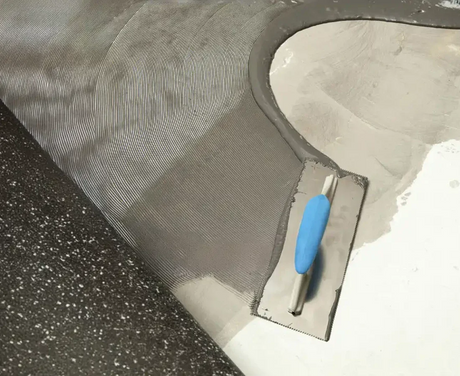
On installation method: interlocking floating systems are the most practical format for commercial builds. They allow zone-by-zone replacement as sections wear, require no adhesive, and can be reconfigured if a facility's layout changes. Glue-down is a permanent installation — it delivers a very stable finished surface but eliminates future flexibility. Poured-in-place rubber always requires professional installation and is the most permanent of the three formats.
Interlocking 1-inch tile pavers are the most accessible heavy-duty format for large-area commercial installs, but commercial builds should still involve a professional subfloor assessment before layout is finalized. The ECORE Quad Blok Connector system is a practical connector option for 1-inch tile installations, providing additional lateral stability in large open zones where tile migration under heavy equipment can be an issue.

Sustainability, Trends, and What's Changing in the 1 Inch Rubber Paver Market
Sustainability is no longer a footnote in commercial flooring procurement. For institutional clients — universities, municipal rec centers, school athletic departments — it's increasingly a line item in the request for proposal.
Most commercial 1-inch pavers manufactured today use recycled tire rubber as their primary raw material. This is both an environmental win and a cost-efficiency driver: recycled tire rubber is abundant, consistent in density, and performs exceptionally well at the Shore A 60 hardness profile required for heavy commercial applications. In 2024, Johnsonite launched a new line of eco-friendly rubber flooring tiles incorporating 100% recycled tire rubber, specifically targeting commercial gyms and institutional clients — a signal that major manufacturers are aligning their product lines with procurement standards that now ask for documented recycled content. Our news and updates blog covers product and market developments in this space as new options become available.
The traceability side of sustainable rubber sourcing got a significant upgrade in January 2025. The Indian Sustainable Natural Rubber (iSNR) initiative launched with zero-cost certification and digital traceability for rubber sourcing. For facility operators and procurement departments trying to verify the sustainability claims on their flooring specs, iSNR provides a documented chain of custody from rubber source to finished product. This matters because "recycled rubber" without documentation is a marketing claim. iSNR certification is a verifiable standard.
We're seeing more institutional clients — schools, rec centers, university athletic departments — include sustainability documentation requirements in their flooring requests for proposals. Being able to point to recycled tire rubber content percentages and iSNR certification is becoming a differentiator in the bidding process, not just a nice-to-have.
At the premium end of the market, Interface introduced a prototype carbon-negative rubber flooring product in 2025, extending its carbon-negative design approach into resilient flooring. This is where the high-end commercial market is heading — not just reduced environmental impact, but net-positive carbon accounting in the product specification itself.
American Biltrite's $50 million investment in a new North American manufacturing facility in 2025 for high-performance impact-resistant rubber flooring is worth noting for commercial specifiers. Expanded domestic production capacity has historically improved lead times and reduced freight costs for large commercial projects — both factors that matter when a facility is on a construction schedule.
On the hygiene side: rubber flooring manufacturers are integrating antimicrobial agents and surface treatments into their products to inhibit bacterial, fungal, and viral growth, a trend that accelerated significantly after 2020. For high-traffic commercial gym environments — where barefoot traffic and heavy sweat contact are constants — antimicrobial surface treatment is increasingly a spec requirement rather than an upgrade option.
Modular rubber flooring systems, including interlocking 1-inch pavers, are gaining adoption among boutique and specialized fitness facilities specifically because they enable quick replacement of worn sections without disrupting the surrounding floor. According to Verified Market Reports, this seamless-section-replacement capability is a primary driver of the modular format's growth in the boutique fitness segment — a facility can swap out a high-wear drop zone tile in under an hour without closing the rest of the gym floor.

Frequently Asked Questions
1. What is a 1 inch rubber paver and how is it different from other rubber flooring tiles?
A 1 inch rubber paver is a 25mm thick interlocking modular tile, typically manufactured in 2x2 foot modules, rated for Olympic lifting and the highest-impact commercial applications. The key difference from thinner rubber tiles is both dimensional and functional: standard 8mm or 12mm rubber tiles are engineered for cardio and general free weight zones but are not rated to absorb repeated barbell drops from height without degrading or transmitting force to the subfloor. According to FlooringInc, the 1-inch (25mm) classification is specifically designated Olympic-rated — a rating based on impact absorption capacity and Shore A 60 hardness, not just thickness alone.
2. How much do 1 inch rubber pavers weigh per tile and per project?
A standard 2x2 ft rubber paver tile at 1 inch thickness weighs approximately 16 lbs per tile. For logistics planning, a 500 sq ft drop zone requires approximately 125 tiles (roughly 2,000 lbs), a 1,000 sq ft zone is approximately 250 tiles (4,000 lbs), and a 2,000 sq ft zone approaches 500 tiles and 8,000 lbs of material. These quantities ship on pallets via freight carrier, not parcel service, so confirming loading dock access and a coordinated receiving window with your freight carrier before the order ships is essential. Failing to plan for pallet delivery on a commercial install is one of the most common and avoidable project delays in this product category.
3. Do I need 1 inch pavers for my entire gym floor?
No — zone-mapping is the correct approach, and applying 1-inch pavers across an entire facility is a significant and unnecessary expense. A properly specified commercial facility uses different thicknesses in different areas: 8mm for cardio and treadmill zones, 9–10mm for functional training areas, 12mm for heavy dumbbell and general free weight zones, and 1-inch (25mm) for Olympic platforms and barbell drop zones. On a 10,000 sq ft facility, the 1-inch spec might apply to only 1,200–2,000 sq ft of that total floor area. Budget those dollars where they actually protect your subfloor and your athletes, not across cardio and group fitness zones where thinner tiles perform equally well.
4. Can 1 inch rubber pavers be installed over concrete?
Yes, but the concrete must be smooth, level, and structurally sound before any 1-inch paver is placed. Older or damaged concrete is the highest-risk subfloor scenario for this product: uneven concrete causes lifted tile edges, accelerated wear at contact points, and adhesion failure in glue-down installs. Most manufacturer warranties require a level subfloor as a condition of coverage, meaning a warranty claim filed after installing over uneven concrete is likely to be denied. Always complete a formal subfloor assessment before finalizing your installation plan — if the concrete needs grinding or self-leveling compound, that is a required pre-install step.
5. How long do 1 inch rubber pavers last in a commercial facility?
Quality commercial-grade 1-inch tiles at Shore A 60 hardness are designed for heavy daily use in high-impact zones, and the modular format is a significant factor in real-world longevity. As FlooringInc notes, individual tiles can be replaced without removing the entire floor as impact degrades support over time, meaning tiles in the primary drop area might be replaced every three to five years under heavy use while tiles outside the primary impact zone last considerably longer. That selective replaceability — a direct advantage of the modular paver format over rolled or poured-in-place installations — extends the effective lifespan of the total floor system and reduces long-term cost per square foot.
6. Are 1 inch rubber pavers slip-resistant?
Shore A 60 hardness provides a firm, non-compressing surface that is inherently stable underfoot, but slip resistance also depends on surface texture, which varies by product. For wet zones, high-traffic areas, or any space where moisture contact is likely, specify a textured top surface with a defined surface profile. A smooth-top 1-inch tile performs well in a dry Olympic lifting zone but may not be appropriate in a facility where the floor gets wet from water bottles, sweat, or cleaning. Review the manufacturer's surface texture options and slip-resistance ratings before finalizing product selection for any wet-condition application.
7. What is the difference between 1 inch rubber pavers and 3/4 inch rubber tiles?
The 1-inch (25mm) spec is Olympic-rated for barbell drops and the highest commercial impact loads, while the 3/4-inch spec is appropriate for heavy dumbbell areas, general powerlifting zones, and most commercial weight rooms that do not involve repeated barbell drops from height. For a mixed-use commercial gym where members are lifting heavy but not performing true Olympic drops, 3/4-inch is often sufficient and more cost-effective per square foot. The 1-inch spec adds both material cost and weight to the project — those trade-offs are fully justified in genuine drop zones but should not be defaulted to across the board without a zone map to support the decision.
8. Do 1 inch rubber pavers need adhesive to stay in place?
Interlocking tile systems can float without adhesive, and for commercial builds, floating installation is typically the preferred method. It allows zone-by-zone tile replacement as sections wear, requires no adhesive cure time before the floor is usable, and leaves the option open to reconfigure or expand the floor layout in the future. A 1/4-inch expansion gap between the flooring field and fixed walls or baseboards is the required installation clearance for floating systems to accommodate natural expansion. Glue-down installation is a permanent alternative that delivers maximum surface stability but trades flexibility for permanence — once glued, individual tile replacement requires adhesive removal, which adds labor cost and risk of subfloor damage.
The Bottom Line on 1 Inch Pavers for Commercial Facilities
1 inch pavers are a precision spec, not a universal flooring answer. The facilities that get the most value from them are those that zone-map their floor first and apply the right thickness in the right areas — Olympic platforms, barbell drop zones, powerlifting areas, and strongman setups. Zone-mapping flooring thickness to actual use areas is the professional standard for commercial facility buildouts, and it consistently outperforms single-thickness installs in both performance and long-term cost of ownership.
For contractors: the non-negotiable pre-install step is subfloor assessment. Uneven concrete, damaged wood subfloors, and improperly prepared surfaces are the leading causes of warranty denial and premature tile failure in commercial rubber flooring installs. Flag this step early in the project schedule — it's harder to fix after the tiles are staged on site.
For facility managers: think in terms of total cost of ownership, not just material cost per square foot. The modular replaceability of 1-inch interlocking pavers means your drop zone floor can be selectively refreshed over time rather than replaced wholesale. Add sustainability documentation — recycled tire rubber content percentages, iSNR certification — to your flooring request for proposal now if your organization has procurement requirements around sustainable sourcing. It's increasingly expected, and suppliers who can't document it are losing bids to those who can.
Blue Sky Fitness Supply carries ECORE Performance UltraTile 1-inch rubber tiles and ECORE Quad Blok Connectors — the right combination for commercial Olympic and drop zone builds. If you're speccing an Olympic lifting zone, powerlifting platform, or high-impact drop zone, the 1-inch paver is the correct tool for the application. Reach out to our team and we'll help you calculate exactly how many tiles you need, confirm freight logistics for your site, and make sure the spec is right before anything ships.
Still in the facility planning phase? Our flooring guide walks through zone-mapping from the ground up — a useful starting point before flooring quantities are finalized.