

Table of Contents:
- What Is LifeTrend? Brand Overview and Product Line Explained
- LifeTrend Pros and Cons: The Commercial Facility Manager's Honest Breakdown
- LifeTrend Model Comparison: Alta vs. Solitude vs. Sierra
- LifeTrend for Commercial Facilities: Where It Fits and Where It Falls Short
- Installation, Electrical, and Operational Realities: What LifeTrend Won't Tell You Upfront
- Frequently Asked Questions
- The Bottom Line: Should Your Facility Add a LifeTrend Unit?
Recovery suites are no longer a luxury add-on. Facility managers across the country are building out dedicated hot and cold therapy spaces because members are asking for them — not vaguely, but by name. "Do you have a cold plunge?" is now a standard touring question at boutique gyms and athletic training facilities alike.
Then LifeTrend showed up at Costco and Sam's Club with integrated hot/cold combo units priced under $3,000, and the Reddit threads and deal forums lit up. Facility managers started asking the same question: is this actually worth it for commercial use?
Honest answer: it depends on what you're building. LifeTrend's pros and cons look very different in a single-user VIP recovery room versus a peak-hour gym floor with 40 members wanting contrast therapy access between 5 and 7 PM. A $2,999 price tag means nothing if the unit creates a bottleneck on your busiest nights.
LifeTrend offers three models: the Alta, a solo 2-in-1 hot/cold unit; the Solitude, the brand's value flagship with integrated cold plunge and hot soak zones; and the Sierra, a dual-zone "fire and ice" combo that fits up to three people total. Each serves a different purpose, and each has a different commercial viability profile. According to a Slickdeals community thread from December 2025, the Solitude was listed at Costco for approximately $2,999 — a price point that positions it well below the $5,000–$10,000+ range typical of comparable chiller-based cold plunge units. And according to Modern Sauna Spa's April 2026 analysis, commercial cold therapy studios can reach break-even within 6–18 months when driven by recurring membership revenue.
By the time you finish this breakdown, you'll know exactly where LifeTrend fits in a commercial wellness facility — and where it falls short. No hedging, no vague "it depends." Real specs, real commercial criteria, real answers.
What Is LifeTrend? Brand Overview and Product Line Explained
LifeTrend is a wellness brand built around hot and cold contrast therapy — specifically the kind of integrated hot/cold plunge experience that used to require two separate equipment purchases and a lot more square footage. What makes LifeTrend unusual isn't the technology. It's the distribution channel. Operators comparing wellness brands in 2026 will find that our Lifesmart Fitness Equipment brand guide covers a similar landscape of consumer-positioned brands now entering the commercial market.
Most cold plunge brands sell direct-to-consumer through their own websites or through specialty fitness equipment retailers. LifeTrend chose warehouse retail — Costco and Sam's Club — which carries real implications for pricing, buyer trust, and post-purchase support. That context matters when you're evaluating this brand for a commercial setting.
The Three Models
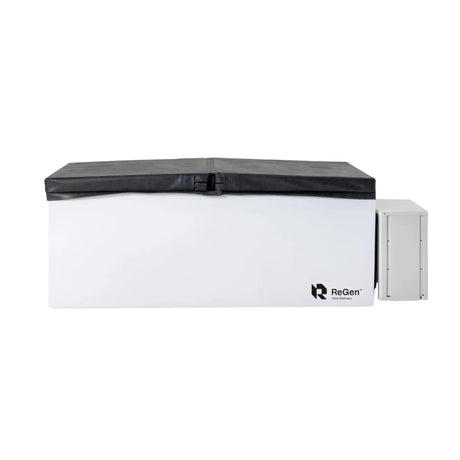
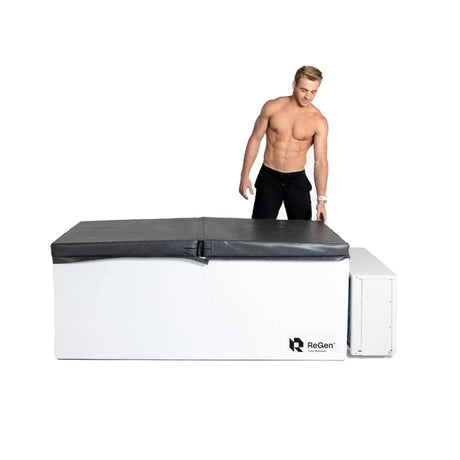
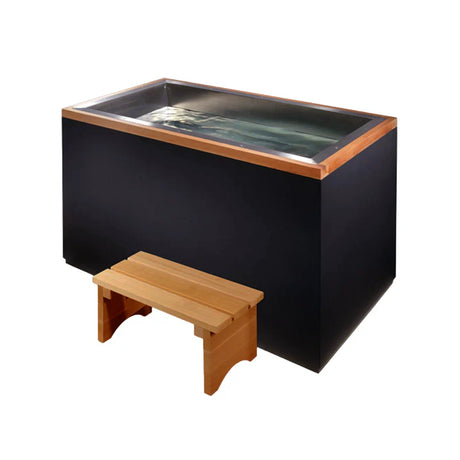
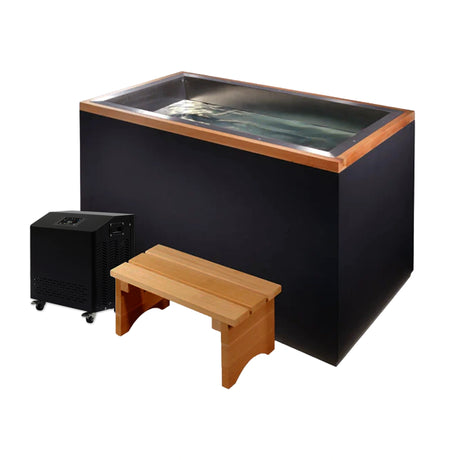
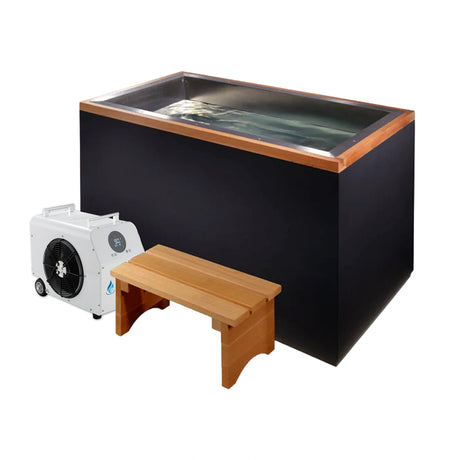
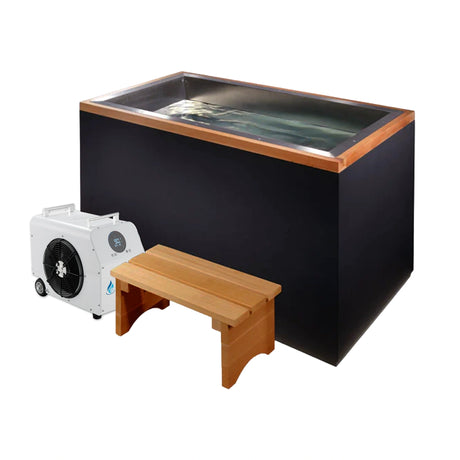
The LifeTrend Alta is the solo workhorse. It's a 2-in-1 hot and cold plunge in a single unit, measuring 77 inches long, 31.5 inches wide, and 30 inches tall. It holds 61 gallons of water and weighs 293 lbs dry. The Balboa chiller and heater system — more on why the Balboa component matters in a moment — cools the water down to 37°F and heats it up to 102°F, covering the full contrast therapy temperature range in a single unit. According to listings on Wayfair and At Home Fitness, the Alta also includes underwater mood lighting and built-in Bluetooth speakers, which may sound like consumer-facing flourishes but actually contribute meaningfully to member experience in a private recovery room setting. Construction is built on a galvanized steel frame with high-density shell insulation, a digital touchscreen control panel, and an ultra-quiet heat exchanger.
The LifeTrend Solitude is the brand's value flagship — the unit most commonly discussed in forum threads and the one listed at Costco for approximately $2,999 as of December 2025. It integrates a cold plunge and hot soak into a single unit and represents the clearest entry point for facilities exploring contrast therapy on a tight budget.
The LifeTrend Sierra is the most commercially relevant model for facilities thinking about throughput. It's a dual-zone "fire and ice" setup — a 2-person hot tub paired with a 1-person cold plunge — in a single combined unit. The Sierra uses a Balboa 1100W chiller for the cold zone and a 4kW heater with a 2HP jet pump for the hot side, with 21 strategically placed hydrotherapy jets. Control runs through a Joyonway touchscreen that manages both zones independently from a single panel. The Sierra also includes an ozonator, insulated cover, and access step. According to The Fitness Outlet and the Sam's Club product listing, it accommodates three people total — two in the hot tub zone and one in the cold plunge.
Why the Balboa Component Matters
Balboa Water Group is not a niche supplier. Their chiller and heater systems are used across a wide range of premium spa and hot tub brands. When LifeTrend puts a Balboa system in the Alta and Sierra, that's a meaningful spec — it means replacement parts exist, technicians know the system, and the core thermal management hardware isn't proprietary. For commercial buyers evaluating long-term serviceability, this is one of LifeTrend's genuinely strong points.
The warehouse retail distribution model is worth flagging for commercial buyers specifically. Unlike niche direct-to-consumer wellness brands where a warranty claim might send you into a customer support black hole, purchasing through Costco or Sam's Club carries institutional consumer protection — generous return windows, established escalation paths, and membership-backed purchase accountability. For a first-time cold plunge investment, that's not a small thing.
LifeTrend Pros and Cons: The Commercial Facility Manager's Honest Breakdown
Consumer reviews focus on unboxing experience and personal satisfaction. This breakdown is different — it's built around what actually matters to operators: throughput, durability, maintenance burden, total cost of ownership, and member experience under real facility conditions.
The Pros
Integrated hot/cold contrast therapy in a single unit. This is the headline advantage. A facility adding contrast therapy typically faces a choice between two separate pieces of equipment (a dedicated cold plunge plus a hot tub or sauna), two maintenance protocols, two footprints, and two purchase prices. LifeTrend consolidates that into one unit. Facilities evaluating a sauna-plus-cold-plunge approach may also find our Golden Designs sauna commercial buyer's guide useful for understanding how heat therapy equipment stacks up across price tiers. For a recovery room or VIP suite with limited square footage, that's a meaningful operational simplification.
Price-to-feature ratio is genuinely strong. At approximately $2,999 for the Solitude through Costco, you're getting chiller-based cold plunge capability — not an ice-based or passive cooling system — at a price point well below the $5,000–$10,000+ range that mid-tier dedicated cold plunge-only units command. That gap matters for facilities testing the recovery amenity market before committing to a larger infrastructure investment.
Balboa components reduce long-term serviceability risk. As noted above, Balboa systems are industry-standard in the spa and hot tub world. A technician familiar with hot tub service will recognize the hardware — which is more than can be said for proprietary chiller systems in some boutique cold plunge brands.
Warehouse retail distribution provides a more trusted warranty and return pathway compared to niche online-only brands. Costco and Sam's Club memberships come with purchase protections that matter when you're making a multi-thousand-dollar equipment decision.
The temperature range covers the full contrast therapy protocol without supplemental equipment. Cooling to 37°F and heating to 102°F handles everything from aggressive cold immersion protocols to therapeutic warm soaks in a single purchase.
The Sierra's dual-zone independent temperature control means staff can set and lock both zones without members adjusting settings mid-session — a practical operational detail that matters in a managed recovery environment.
The Cons
Single-user cold plunge throughput is the largest commercial limitation. Even the Sierra — the most throughput-friendly model — fits only one person in the cold plunge zone at a time. During peak hours at a busy gym, that single slot creates a bottleneck. Members waiting for cold plunge access during a post-workout rush is a member experience problem, and LifeTrend's product line doesn't solve it at scale.
Electrical planning is consistently underestimated. Despite 110V/120V plug-and-play marketing, a dedicated electrical circuit is not optional for commercial installation. According to InHouseWellness's May 2026 review, compressor startup cycles during chilling draw high-amperage spikes that can trip shared breakers in commercial buildings. Budget for a licensed electrician assessment before you order the unit.
Floor load planning is mandatory. A filled 61-gallon Alta weighs approximately 800 lbs — 293 lbs dry plus roughly 509 lbs of water (61 gallons × ~8.34 lbs/gallon). That's significant point-load pressure on standard commercial flooring, and it's an issue that becomes critical on upper floors or in older building stock.
LifeTrend is not a commercial-grade operator's brand. There are no published uptime service-level agreements, no commercial warranty tiers, and no documented multi-unit volume pricing programs. For facilities that need vendor accountability at the operator level, this is a real gap.
Warehouse retail distribution, while a pro for the initial purchase experience, means limited technical support infrastructure compared to commercial fitness equipment distributors who maintain service networks and parts availability for institutional buyers.
Health benefit claims need to stay calibrated. A 2025 systematic review found that cold-water immersion produces time-dependent, heterogeneous effects on inflammation, stress, immunity, sleep quality, and quality of life — not all endpoints improve immediately. A 2024 meta-analysis went further, finding that cold-water immersion used immediately after resistance training likely produces a small reduction in hypertrophy compared to training alone — relevant context for strength-focused member populations. As InHouseWellness noted in their May 2026 review, LifeTrend's health benefits are not unique to the brand and can be achieved by any quality chiller-based cold plunge. Position the amenity as a recovery support tool, not a medical treatment.
At Blue Sky, we evaluate cold plunge equipment against commercial-grade criteria: throughput capacity, warranty terms, service support, and total cost of ownership. By those standards, LifeTrend's strongest commercial case is in low-traffic recovery rooms or VIP wellness suites — not high-volume gym floors where single-user cold plunge throughput becomes a member experience problem during peak hours. For a deeper look at what the science actually supports, see our breakdown of recovery protocols covering percussion, compression, heat, and ice across multiple modalities.

LifeTrend Model Comparison: Alta vs. Solitude vs. Sierra
The three LifeTrend models are not interchangeable — they serve distinct use cases, and choosing the wrong one for your facility layout is an easy mistake to make when you're comparing spec sheets instead of applications. The Alta is the solo all-in-one workhorse, best suited for a single-user private recovery experience. The Solitude is the value flagship — the entry point for integrated hot and cold plunge functionality at the lowest price. The Sierra is the multi-user contrast therapy combo, the only model with dual-zone independent temperature control and the highest practical throughput in the LifeTrend lineup.
| Feature | LifeTrend Alta | LifeTrend Solitude | LifeTrend Sierra |
|---|---|---|---|
| Primary function | 2-in-1 hot & cold plunge, single user | Integrated cold plunge + hot soak, value flagship | Dual-zone fire & ice combo (hot tub + cold plunge) |
| Dimensions | 77″ L × 31.5″ W × 30″ H | Not publicly listed | Not publicly listed |
| Water capacity | 61 gallons | Not publicly listed | Not publicly listed |
| Dry weight | 293 lbs | Not publicly listed | Not publicly listed |
| Temperature range (cold) | Cools to 37°F | Cools to 37°F | Cools to 37°F |
| Temperature range (hot) | Heats to 102°F | Heats to 102°F | Heats to 102°F |
| Chiller system | Balboa chiller | Balboa chiller | Balboa 1100W chiller |
| Heater output | Balboa heater (output not published) | Not publicly listed | 4kW |
| Hydrotherapy jets | None listed | None listed | 21 jets (2HP pump) |
| User capacity (cold zone) | 1 person | 1 person | 1 person |
| User capacity (hot zone) | 1 person (same tub, temperature switched) | 1 person | 2 people |
| Control system | Digital touchscreen | Digital touchscreen | Joyonway dual-zone touchscreen |
| Includes ozonator | Not listed | Not listed | Yes |
| Includes insulated cover | Not listed | Not listed | Yes |
| Notable features | Bluetooth speakers, underwater mood lighting, galvanized steel frame | Value-oriented pricing, warehouse retail availability | Independent dual-zone control, access step, 3-person total capacity |
| Approximate price point | Not publicly confirmed | ~$2,999 (Costco, Dec 2025) | Not publicly confirmed at press time |
| Retail channel | Wayfair, specialty retailers | Costco | Sam's Club, Wayfair, specialty retailers |
| Best commercial use case | VIP/private recovery room, single-user sessions | Budget-conscious entry into contrast therapy | Boutique recovery suite, small group contrast therapy |
Which Model Makes Sense for Commercial Settings?
For facilities building a recovery suite where member experience is the priority and throughput demand is controlled — think scheduled sessions, not open drop-in access — the Sierra is the strongest option in the LifeTrend lineup. The dual-zone independent temperature control, hydrotherapy jets, and three-person total capacity make it the most operationally capable model. Staff can set temperatures in advance, and the ozonator reduces baseline water treatment burden, though it doesn't eliminate it entirely.
The Alta makes the most sense for a VIP or private recovery room where a single user books dedicated time. The Bluetooth speakers and mood lighting actually serve a purpose here — they contribute to a premium, spa-adjacent feel that justifies a higher per-session rate. Neither the Alta nor the Solitude is suited for high-volume, multi-user simultaneous throughput, and no amount of creative scheduling fully solves that constraint.
Facilities planning a dedicated contrast therapy room should also factor in the surrounding environment. Wet zones around any plunge unit require non-slip, water-resistant flooring — standard rubber gym flooring is not the right call here. Rubber pool deck pavers or sealed commercial tile are the appropriate choices, and our guide to ECORE flooring solutions covers how sustainable, high-performance flooring options hold up in wet commercial environments. When facilities ask us to help spec a recovery room, we always frame the conversation around total cost of ownership — the unit price is the starting point, not the finish line. Electrical work, flooring upgrades, water treatment systems, and drainage all need to be budgeted before equipment is ordered.

LifeTrend for Commercial Facilities: Where It Fits and Where It Falls Short
Specs tell you what a unit can do. This section tells you where it actually belongs — and where putting it will cause problems.
Where LifeTrend Works in a Commercial Setting
Low-traffic private recovery rooms are the sweet spot. Boutique gyms, physical therapy clinics, and athletic training facilities that schedule individual recovery sessions — rather than offering open drop-in access — can use LifeTrend effectively. The single cold plunge zone is not a bottleneck when throughput is managed by appointment. A 45-minute contrast therapy session at $25–$35 generates real revenue on a $3,000 unit, and the math closes quickly.
Corporate wellness rooms and hotel fitness centers are another natural fit. The use case in these environments is amenity value, not volume throughput. Staff wellness programs or hotel guests accessing a recovery suite between conference sessions don't generate the kind of peak-hour demand that exposes LifeTrend's throughput limitations.
Small recovery-focused studios where the owner-operator controls session scheduling are also viable. If you're running four to six contrast therapy sessions per day, five days a week at $20–$30 per session, the revenue math on a $3,000 unit gets to break-even within a few months — faster than the 6–18 month window Modern Sauna Spa cited in their April 2026 profitability analysis for cold therapy studios more broadly. That's a strong return on investment case, but only if scheduling discipline holds.
Where LifeTrend Falls Short
High-volume gym floors are the wrong environment. A facility with 300+ active members and an open-access recovery area will create wait times at the cold plunge zone during peak hours, and wait times create member frustration. One cold plunge slot is simply not enough for that demand profile.
Multi-unit recovery rooms that need commercial warranty support, volume pricing, and vendor service-level agreements should look elsewhere. LifeTrend doesn't publish commercial-tier warranty terms or multi-unit pricing programs, which matters when you're ordering multiple units and need accountability from your vendor beyond the initial purchase.
Facilities that need remote monitoring, service call infrastructure, or parts-on-hand programs typical of commercial fitness equipment vendors will find LifeTrend's support structure insufficient. This isn't a criticism — it's a category mismatch. LifeTrend is not positioned as a commercial operator's brand, and expecting that level of support is setting up for disappointment.
Contrast therapy — alternating between hot and cold immersion — is increasingly standard in premium gym recovery suites, and the combo unit approach genuinely reduces operational complexity compared to managing two separate pieces of equipment. That's LifeTrend's strongest commercial argument, and it's a real one. As InHouseWellness noted in their 2026 review, the value here is access to integrated contrast therapy in a single unit — not any claim of unique physiological superiority, since any quality chiller-based cold plunge delivers comparable outcomes.
One final point on floor load: a filled 61-gallon LifeTrend Alta exerts more than 800 lbs of point-load pressure on the surface beneath it. Facility managers must verify structural floor ratings before installation — this assessment cannot happen after the unit arrives.

Installation, Electrical, and Operational Realities: What LifeTrend Won't Tell You Upfront
Product pages describe best-case scenarios. This section covers what operators actually deal with after the unit arrives.
Electrical: The Dedicated Circuit Is Not Optional
LifeTrend markets its units as 110V/120V plug-and-play. That's technically accurate but operationally incomplete. Chiller compressors draw significantly higher amperage during startup cycles than during steady-state operation. In a commercial building where multiple pieces of equipment share electrical circuits — HVAC, lighting, commercial-grade climate control, other gym equipment — those startup spikes can and do trip shared breakers. According to InHouseWellness's May 2026 review, this is a documented issue across chiller-based cold plunge units, not unique to LifeTrend.
A dedicated 20-amp circuit for each unit is the minimum. Budget for a licensed electrician to assess your panel capacity and run dedicated lines before the equipment is ordered — not after it's sitting in your recovery room waiting to be connected.
Floor Load: Do the Math Before Installation
The LifeTrend Alta holds 61 gallons of water and weighs 293 lbs dry. Water weighs approximately 8.34 lbs per gallon, which puts 61 gallons at roughly 509 lbs. Total filled weight: approximately 802 lbs concentrated on the unit's footprint. For upper-floor installations or older commercial building stock, that load requires structural assessment — not an assumption that the floor will handle it.
This calculation applies to any filled plunge unit, but the Alta's specific numbers make it concrete and plannable. Pull your building's floor load rating documentation before ordering. If it's not readily available, a structural engineer's assessment is a reasonable pre-installation expense compared to the alternative.
Wet Zone Flooring: Standard Rubber Won't Do
Any cold plunge or hot/cold combo installation creates a wet zone. Water splashes during entry and exit, condensation forms on the exterior of cold units, and ambient humidity increases in enclosed recovery rooms. Standard commercial rubber flooring — the 8mm rolls rated for weight room use — is not designed for this environment. It can harbor bacteria in wet conditions and doesn't provide adequate slip resistance when consistently wet.
Rubber pool deck pavers or sealed commercial tile are the appropriate flooring choices around any plunge installation. This is a pre-installation expense that needs to be budgeted alongside the unit itself, the electrical work, and everything else.
Water Treatment: Ozone Is a Start, Not a Finish
The Sierra includes an ozonator as standard — and ozone is a meaningful water sanitation tool. But ozone alone is not a complete water treatment protocol for shared commercial use. Ozone breaks down quickly and doesn't provide residual protection between sessions. For any recovery room where multiple users access the same water, you need a complete protocol: regular water testing, pH balancing, supplemental sanitizer, and periodic full drain/refill cycles. Budget for the testing supplies and establish a maintenance schedule before the first member uses the unit.
Space Clearance and Acoustic Reality
The Alta's 77-inch length requires thoughtful space planning — not just for the unit itself, but for safe entry and exit clearance on all sides. A 31.5-inch-wide unit in a narrow recovery room leaves little margin for safe movement when wet. Plan for at least 36 inches of clear space on the exit side.
Noise is also worth flagging. "Ultra-quiet heat exchanger" is a marketing description, and in practice, compressor noise in an enclosed recovery room is noticeable during active chilling cycles. Acoustic treatment — sound-absorbing panels on walls or ceiling — is worth incorporating into the room design, particularly if the recovery room shares a wall with a quiet therapy area or office space.
When Blue Sky works with commercial facilities on recovery room builds, we walk through a pre-installation checklist covering electrical, structural, flooring, drainage, and acoustic factors before any equipment is selected. LifeTrend units can fit into a well-planned recovery room — but the planning always comes first. The unit price is the starting point; the full installation budget is what actually determines whether the project makes financial sense.

Frequently Asked Questions
1. Is LifeTrend a commercial-grade brand?
LifeTrend is not a commercial-grade brand in the institutional sense — it is designed for residential and light-use wellness applications and lacks published commercial warranty tiers, multi-unit volume pricing, and operator service-level agreements typical of dedicated commercial equipment brands. That said, "commercial-grade" is a spectrum. LifeTrend units can operate effectively in low-traffic commercial settings — private recovery rooms, VIP suites, scheduled-session studios — where throughput demands are controlled and the vendor's warranty limitations are understood upfront. Facilities expecting commercial-level support infrastructure should look at brands specifically positioned for institutional use. Knowing this distinction before you buy is more valuable than finding it out afterward.
2. What is the temperature range on LifeTrend cold plunge units?
LifeTrend units cool to 37°F and heat to 102°F across the Alta, Solitude, and Sierra models, according to InHouseWellness and Sam's Club product listings. This range covers the full contrast therapy protocol without supplemental equipment. For context, most clinical cold-water immersion research uses temperatures between 50°F and 59°F — the 37°F lower limit gives operators flexibility to set more aggressive protocols for performance-focused members.
3. Which LifeTrend model is best for a gym recovery room?
For most commercial recovery room applications, the LifeTrend Sierra is the strongest option due to its dual-zone independent temperature control, hydrotherapy jets, and three-person total capacity. The Alta is better suited to a single-user VIP room where the experiential features — Bluetooth speakers, mood lighting — justify a premium session rate. The Solitude makes the most sense as a budget entry point for facilities testing the market. None of the three models is appropriate for high-volume open-access gym floors where multiple members need cold plunge access simultaneously during peak hours.
4. Does LifeTrend work on a standard 110V outlet?
LifeTrend units are marketed as 110V plug-and-play, but a dedicated electrical circuit is strongly recommended because compressor startup draws can trip shared commercial breakers. This is a documented issue with chiller-based cold plunge units broadly, not a LifeTrend-specific defect. A licensed electrician should assess your panel and run a dedicated circuit before installation. Budget approximately $300–$600 for this work depending on your facility's electrical setup and local labor rates. Skipping it creates a real operational risk.
5. How many people can use a LifeTrend Sierra at once?
The LifeTrend Sierra accommodates three people total — two in the hot tub zone and one in the cold plunge zone, per The Fitness Outlet and Sam's Club product descriptions. In a commercial contrast therapy session, this means one member can be in the cold plunge while two others soak in the hot zone — a genuinely useful configuration for small-group recovery sessions. However, the cold plunge zone remains a single-user slot, which limits throughput when cold immersion is the primary demand driver.
6. What is the LifeTrend Solitude price?
The LifeTrend Solitude was listed at Costco for approximately $2,999 as of December 2025, according to a Slickdeals community deal thread from that period. Pricing through warehouse retail channels can fluctuate with membership promotions and inventory availability, so treat this as a reference point rather than a guaranteed current price. For commercial buyers, it's also worth noting that the unit price is not the total cost — electrical work, wet-zone flooring, and water treatment supplies add real dollars to the total installation budget.
7. Does cold water immersion actually help with muscle recovery?
Research supports cold-water immersion for reducing perceived soreness and aiding recovery, with moderate evidence strength — a 2025 systematic review found time-dependent, heterogeneous effects, and facility managers should position it as a recovery support tool, not a medical treatment. The evidence picture is nuanced: that same 2025 systematic review found that outcomes across inflammation, stress, immunity, sleep quality, and quality of life were not uniformly positive, with response depending on timing, protocol, and individual factors. A 2024 meta-analysis adds an important caveat for strength-focused members — cold-water immersion used immediately after resistance training may produce a small reduction in hypertrophy compared to training without cold immersion. Train members on timing: cold plunge is generally better used on rest days or after cardio sessions for hypertrophy-focused athletes.
8. What are the installation requirements for a LifeTrend unit in a commercial facility?
A LifeTrend unit requires a dedicated 20-amp electrical circuit, structural floor load verification, non-slip wet-zone flooring, a complete water treatment protocol, and adequate space clearance on all sides for safe entry and exit. Electrical and structural assessments must happen before the unit is ordered, not after it arrives. The filled Alta weighs approximately 802 lbs, which creates significant point-load pressure that can be a serious issue on upper floors or in older building stock. Budget for licensed electrician fees, flooring upgrades, and water treatment supplies as non-optional line items in the total project cost.
The Bottom Line: Should Your Facility Add a LifeTrend Unit?
Here's the direct verdict: LifeTrend offers genuine value for specific commercial applications — low-traffic recovery rooms, VIP wellness suites, and boutique studios with scheduled contrast therapy sessions. It is not the right fit for high-volume gym floors expecting open-access peak-hour throughput from a cold plunge. That's not a knock on the brand. It's a category reality.
The strongest case for LifeTrend is integrated hot/cold contrast therapy in a single unit at a price point well below comparable separate-equipment setups, backed by Balboa components that the service industry knows and warehouse-retail distribution that provides a more trusted purchase and return experience than niche direct-to-consumer brands. As InHouseWellness concluded in their 2026 review, the value here is access — not unique physiological superiority, since any quality chiller-based cold plunge delivers comparable outcomes.
The key caution is pre-installation planning. Electrical work, floor load assessment, wet-zone flooring, and water treatment are not optional line items — they're non-negotiable requirements that add real cost to the total project budget. Modern Sauna Spa's April 2026 analysis found that commercial cold therapy studios can reach break-even within 6–18 months with recurring membership revenue, but that math only works when the full installation is done correctly from the start.
At Blue Sky Fitness Supply, we help commercial facilities spec and source the full recovery environment — not just individual pieces of equipment. That means evaluating cold plunge units alongside the flooring, electrical requirements, drainage planning, and water treatment protocols that make the room actually function. If you're building out a recovery room or wellness suite and want a conversation grounded in what operators actually encounter, explore our cold plunge and recovery equipment collection or reach out to the team for a commercial facility consultation. We'll tell you where LifeTrend makes sense, where it doesn't, and what the full project actually costs to do right.