

Table of Contents:
- What Is a Weight Stack Upgrade — and When Does It Make Sense?
- The Weight Stack Specs That Actually Matter: Steel Gauge, Plate Tolerance, and Increment Resolution
- Pulley Ratios and Weight Stack Sizing: How to Match Your Stack to Your Member Population
- Commercial-Grade vs Consumer-Grade Weight Stacks: Why Cutting Corners Costs More
- How to Evaluate a Weight Stack Upgrade: A Facility Manager's Pre-Purchase Checklist
- Weight Stack Upgrade Options at a Glance: What to Compare
- Frequently Asked Questions: Weight Stack Upgrades for Commercial Facilities
- The Bottom Line: Smarter Weight Stack Decisions for Commercial Operators
Commercial equipment prices have reached record highs, according to GymPros' 2026 Investor's Guide. Margins are tighter. Members are more demanding. And every piece of equipment on your floor is either earning its keep or quietly bleeding member satisfaction.
Here's the counterintuitive part: most facility managers respond to aging selectorized machines by budgeting for full replacements. But a cable that sticks or a weight stack that tops out at 150 lbs doesn't always mean the machine is done — it often means the stack needs more iron. A $95 upgrade can extend the productive life of a $3,000+ machine and open it up to a broader range of users.
That said, not all weight stack upgrades deliver on that promise. Buying the wrong stack — wrong gauge steel, wrong plate tolerance, wrong increment resolution for your population — creates new problems faster than it solves old ones. This guide exists to cut through the spec confusion so you make the right call the first time.
What follows covers the specifications that separate commercial-grade upgrades from the ones that bind within months: steel gauge, plate tolerance, pulley ratios, increment resolution, compliance certifications, and the diagnostic framework for deciding when an upgrade makes more sense than a full machine replacement. According to NJ Fitness Equipment Repair, gyms that invest in upgraded equipment report up to a 25% increase in memberships within the first year — and that correlation runs directly through equipment uptime and member experience. Every day a selectorized machine underperforms is a cost. The goal here is to stop paying it.
What Is a Weight Stack Upgrade — and When Does It Make Sense?
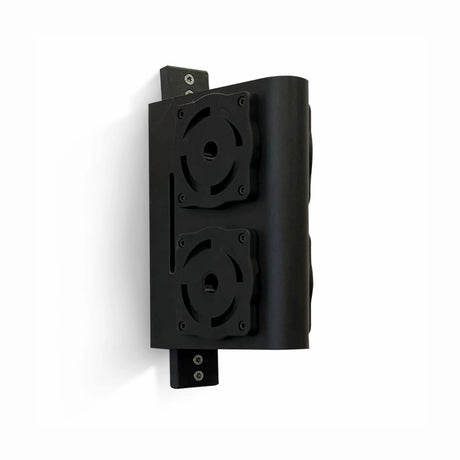
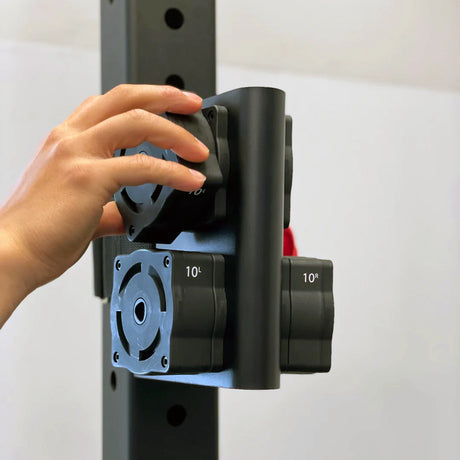
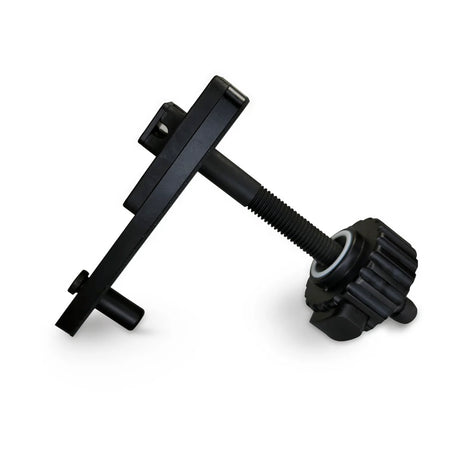
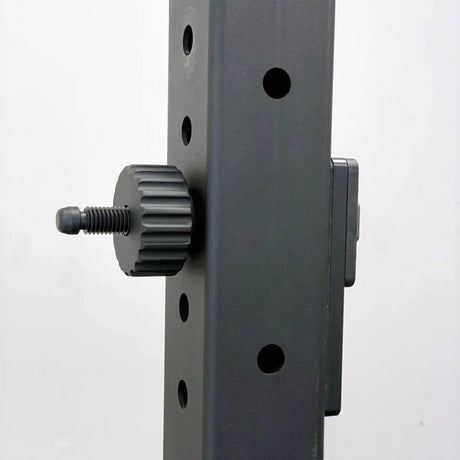
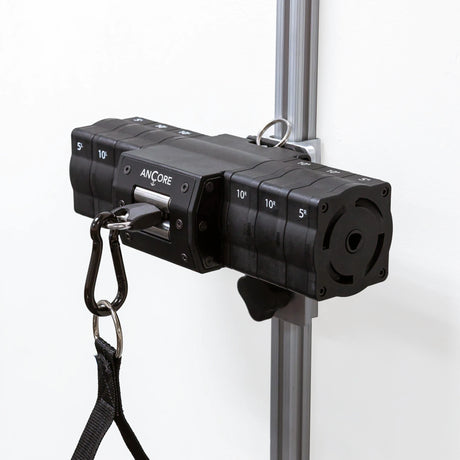
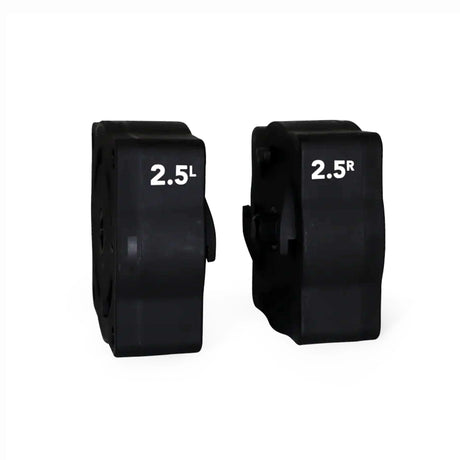
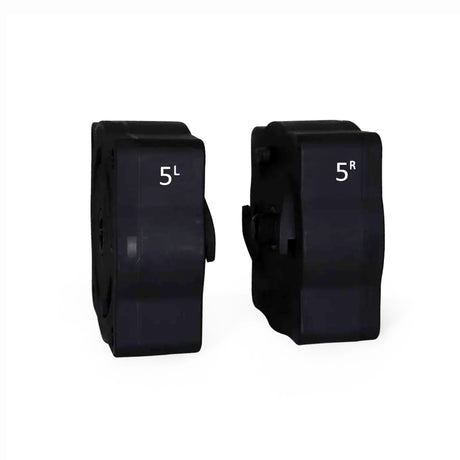
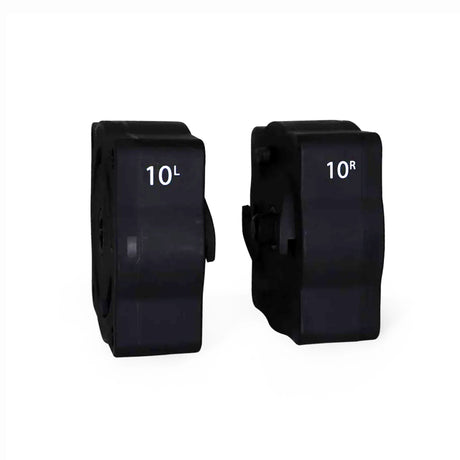
A weight stack upgrade is exactly what it sounds like: additional weight plates designed to bolt onto an existing selectorized machine's guide rod assembly, increasing the machine's maximum resistance without touching the frame, cables, or pulley system. The machine stays. The ceiling goes up.
There are three scenarios where an upgrade beats full replacement every time.
First: your frame and cable system are structurally sound, but members are topping out the stack. This is the most common scenario in facilities that started with lighter selectorized lines and have since attracted a stronger membership base — barbell-trained lifters, competitive athletes, or simply members who have been training consistently for two or three years. The machine isn't failing; the stack is just undersized for who's using it.
Second: you're expanding your member base. If you're bringing in a corporate wellness contract, launching a sports performance program, or marketing to a new demographic, the weight capacity of your selectorized line suddenly matters more. Stronger athletes topping out a stack mid-workout don't come back to that machine.
Third: you need the same machine to serve a wide population range — a 60-year-old recovering from shoulder surgery and a competitive powerlifter shouldn't require two different machines if the upgrade gives you the resolution and range to serve both.
Replacement is the right call in different circumstances. Frame cracks, weld failures, worn guide rods with deep scoring, or proprietary parts that the manufacturer no longer stocks — those are replacement signals, not upgrade signals. According to HARISON Fitness, if more than five members per month report the same equipment issue, assume five to ten more feel the same but stay silent. That volume of complaints on a structural problem means the frame has reached its useful life.
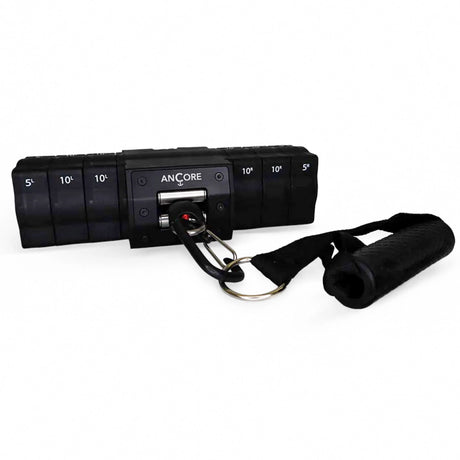
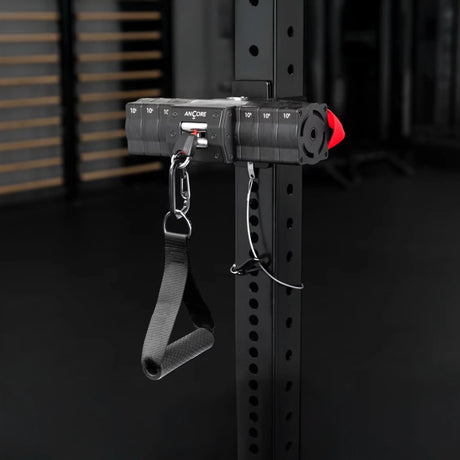
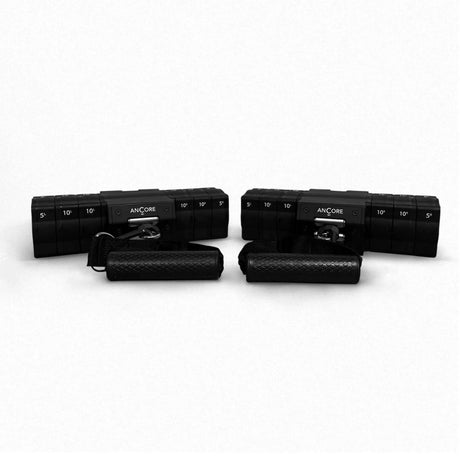
For operators running Legend Fitness selectorized equipment — the 900 series chest press, pec deck, shoulder press, lat pulldown, seated row, and the SelectEDGE 1131 Cable Crossover — the Legend Fitness Weight Stack Upgrade at $95 is the specific product this guide references. It's an OEM-compatible upgrade designed to fit Legend's commercial guide rod assemblies, not a universal-fit plate set sourced from a generic supplier.
Blue Sky has seen facilities buy mismatched weight stack plates from generic suppliers — the dimensional inconsistency causes binding on guide rods within weeks. OEM or OEM-compatible upgrades like the Legend Fitness Weight Stack Upgrade eliminate this risk because they're machined to the same tolerances as the original plates.
The equipment uptime angle matters here too. Every day a selectorized machine is out of service represents lost member satisfaction and potential churn. If the frame is solid and the guide rods are clean, you don't need a new machine — you need more iron on the stack.
Commercial accessories and weight stacks carry a 20–40% price premium upfront compared to consumer-grade alternatives, according to GXMmat — but they deliver a much lower replacement rate over the lifespan of the equipment. For a machine that a commercial facility runs through 100+ users per week, that premium is the difference between a two-year replacement cycle and a seven-year one.
The Weight Stack Specs That Actually Matter: Steel Gauge, Plate Tolerance, and Increment Resolution
Spec sheets for weight stack upgrades look similar across price points. The differences that matter show up under daily commercial load — and by the time you notice them, you're already dealing with binding plates and accelerated cable wear.
Steel Gauge
According to HARISON Fitness, 11-gauge steel — approximately 3mm or ⅛ inch thick — is the commercial industry benchmark for strength equipment. It's what separates plates that hold their geometry under thousands of daily interactions from plates that develop micro-flex. Cheaper "commercial" equipment often uses 14-gauge steel, which measures 0.074 inches or roughly 1.9mm. That 1.1mm difference sounds marginal; it isn't. Under continuous commercial load, 14-gauge plates flex slightly with each selection and release, and that micro-movement accumulates into dimensional drift that causes binding.
When evaluating any weight stack upgrade, ask the supplier to confirm gauge in writing. "Commercial grade" is a marketing claim, not a specification. The gauge number is the specification.
Plate Dimensional Tolerance
Precision-machined plates with consistent tolerances are what allow a weight stack to travel smoothly on a guide rod through thousands of daily adjustments. Plates with poor dimensional consistency — even if the nominal diameter is correct — create micro-friction against the rod surface. That friction increases cable wear, shortens the life of the guide rod coating, and produces the rough, sticky feel that members notice immediately. Request tolerance specs from any supplier before ordering. If they can't provide them, that's your answer.
Pin Spacing and Increment Resolution
Standard commercial pin spacing on weight stacks is 25–30mm, according to the Alibaba Supplier Guide. This dimension determines the smallest weight increment a member can select — the closer the pin holes, the finer the progression. For a facility serving rehab clients, seniors, or beginners, finer increments matter clinically, not just experientially. The difference between a 5 lb jump and a 10 lb jump is the difference between a successful progressive overload session and a frustrating plateau.
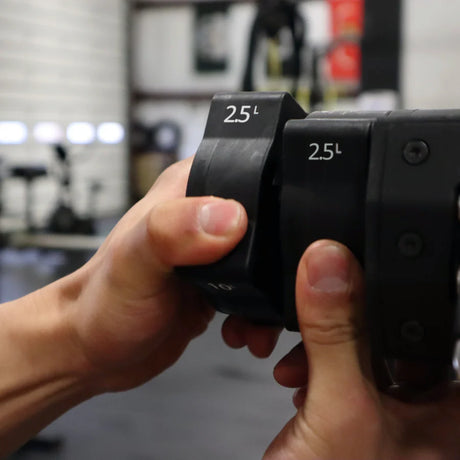
Some stacks support half-plate pin attachments that allow 2.5–5 lb micro-increments. These are particularly valuable in clinical or rehab-adjacent settings where precise progressive overload programming is the therapeutic goal. If your population includes post-surgical rehab clients or older adults, confirm half-plate compatibility before selecting an upgrade.
Guide Rod Compatibility
This is where generic upgrades fail most often. Weight stack plates must match the machine's guide rod diameter and have sufficient rod clearance for the added plate travel. A plate that's 1mm too tight on the rod will bind. A plate that's too loose will rattle and wear the rod surface unevenly. Always verify guide rod diameter and available rod length against the OEM specs before ordering any upgrade plate set.
Compliance Standards
ASTM F2216 is the U.S. standard specifically governing selectorized strength equipment, establishing safety requirements for weight stack components. ISO 20957-2 governs strength training equipment performance under sustained commercial use — covering movement angles, frame durability, and reliable operation, not just static load testing. Ask suppliers for documentation on both. For international facilities, EN957 Class A or B (commercial classification) is the relevant marker — more on that in the next section.
Technological improvements in selectorized machines — smoother pulley systems, precision tube thickness, electronic resistance options — have enhanced user experience without increasing equipment footprint, according to the Alibaba Supplier Guide. But those improvements only hold up when the weight stack components are machined to the same precision standard as the rest of the assembly.
| Spec / Factor | Commercial-Grade (What to Require) | Consumer/Light-Commercial (Red Flags) |
|---|---|---|
| Steel gauge | 11-gauge (~3mm) — documented in writing | 14-gauge (1.9mm) or unspecified "commercial grade" |
| Plate dimensional tolerance | Precision-machined, tolerance specs available on request | Nominal diameter only, no tolerance documentation |
| Pin spacing (increment resolution) | 25–30mm standard; supports half-plate attachments | 40mm+ spacing; no half-plate compatibility |
| Compliance certification | ASTM F2216, ISO 20957-2 — documentation provided | "Meets commercial standards" with no documentation |
| EN957 classification | Class A or B (commercial use) | Class S (home use) — voids warranty in commercial settings |
| Guide rod compatibility | OEM or OEM-compatible — verified by model number | Universal fit claims with no diameter verification |
| Warranty coverage on stack plates | 5-year structural coverage standard | 1 year or less; may void machine manufacturer warranty |
| Replacement parts availability | Individual plates available; not proprietary assemblies only | Full assembly replacement only; parts discontinued quickly |
| Half-plate accessory compatibility | Supported — 2.5–5 lb micro-increments available | Not supported; no accessory ecosystem |
| Upfront cost vs. lifetime cost | 20–40% premium upfront; lower lifetime replacement cost | Lower sticker price; higher replacement frequency and downtime cost |

Pulley Ratios and Weight Stack Sizing: How to Match Your Stack to Your Member Population
Pulley ratio is the most misunderstood specification in weight stack equipment procurement. Most facility managers skip past it entirely — and then wonder why a 200 lb stack on their functional trainer doesn't serve the same population as a 200 lb stack on their lat pulldown.
Here's the plain-language version.
On a 1:1 machine — a dedicated lat pulldown, a seated row, a chest press — every pound of plate weight on the stack equals one pound of resistance at the handle. Straightforward. On a 2:1 dual-stack functional trainer, the cable runs through an additional pulley that doubles the cable travel but halves the effective resistance. So a 200 lb stack on a 2:1 machine delivers 100 lbs of effective resistance at the handle. To match the effective resistance of a 200 lb 1:1 stack, you'd need 400 lbs on a 2:1 machine.
The increment math follows the same logic. According to Get RXd, on a 1:1 pulley ratio, weight progression jumps occur in 10-pound increments per plate. On a 2:1 ratio, each plate produces an effective 5-pound jump at the handle — which is one reason dual-stack functional trainers are preferred for rehab and progressive overload programming, not just for their exercise variety.
The critical buyer mistake: comparing stack sizes across machines without knowing the pulley ratio. A 200 lb stack on a 2:1 machine is not equivalent to a 200 lb stack on a 1:1 machine. Always compare effective resistance at the handle, not total plate weight on the rod.
According to GXMmat, a 2:1 pulley ratio is standard on most dual-stack functional trainers. This mechanical advantage allows for longer cable travel — useful for dynamic, full-range movements like cable flyes, rotational core work, and overhead presses — while single-station machines typically use 1:1 ratios for direct, controlled resistance.
When facility managers are expanding their strength zones and need guidance on how to configure selectorized machines for mixed populations — rehab clients alongside competitive athletes — the Fitness Equipment Buyer's Guide covers the broader selection criteria that sit above the weight stack decision. The weight stack sizing and pulley ratio decisions are the most consequential choices they'll make for per-machine return on investment. A machine that can't serve your strongest members tops out and sits idle; a machine with increments too coarse for your rehab population becomes inaccessible to the people who need it most.
Here's how to audit your floor by population profile. A facility serving primarily beginners, seniors, or rehab clients should prioritize finer increment resolution and lower maximum resistance — the 2:1 ratio plus half-plate attachments becomes a significant clinical asset. A strength-focused facility or athletic training center needs 1:1 ratios and stacks of 200 lbs or more so advanced athletes aren't topping out mid-set.
The practical upgrade calculus differs by machine. Take the Legend Fitness 905 Lat Pulldown at $2,769, which operates on a 1:1 ratio. A weight stack upgrade on that machine adds direct resistance — every pound of plate added is a pound more at the handle. On the SelectEDGE 1131 Cable Crossover at $5,739, which runs dual stacks on a 2:1 ratio, adding the same plate weight produces half the effective resistance gain. Neither is better in absolute terms; the right answer depends on which members you're trying to serve.
Verve Fitness notes that weight stack size directly determines the member base a machine can serve — heavier stacks accommodate a broader user range, and a 2:1 ratio gives smoother resistance curves for dynamic movements. Dual-stack functional trainers support hundreds of exercise variations from a single footprint, which makes the weight stack sizing decision particularly consequential for these units. Undersizing the stack on a functional trainer limits the machine's utility for your strongest members; oversizing it without fine-enough increments limits its utility for your most deconditioned ones.

Commercial-Grade vs Consumer-Grade Weight Stacks: Why Cutting Corners Costs More
The false economy is real and it's common. Consumer or light-commercial weight stacks look indistinguishable from commercial-grade options in product photos. The difference shows up six to twelve months into daily commercial traffic — and by then, you're replacing plates, resurfacing guide rods, or pulling a machine from the floor entirely.
The certification classification issue is worth understanding clearly. According to HARISON Fitness, placing an EN957 Class S (Home Use) certified machine — or stack upgrade — in a commercial gym with eight to twelve hours of daily traffic voids the warranty and can cause rapid degradation, sometimes within months. Class S equipment is rated for one to two hours of daily residential use. Commercial selectorized machines operate under load for eight to twelve times that duration. The stress accumulation isn't linear — it's exponential relative to the certification threshold.
For safety compliance, Ganas Gym's production standards guide notes that weight stack components require locking mechanisms, stack guards, and clear warning labels as baseline safety requirements in commercial settings. These aren't optional features on a commercial upgrade — they're non-negotiable. Verify they're included with any plate set before purchase.
The total cost of ownership math is straightforward once you run it. Commercial-grade weight stacks carry a 20–40% price premium upfront, according to GXMmat. In a facility where a single machine serves 100+ users weekly with weight adjustments multiple times per session — per Verve Fitness's data — the inferior stack reaches its wear threshold in a fraction of the time. A machine out of service is a member experience liability, not just a maintenance line item. Facility operators who think carefully about floor layout and surface materials alongside equipment decisions — the kind of operators who research eco-friendly rubber flooring options for their strength zones — tend to approach equipment component specs with the same discipline.
One thing most facility managers underestimate: the guide rod and pulley assembly — not the weight plates — are the longest-term cost drivers in a selectorized machine. Poorly machined plates with inconsistent tolerances accelerate guide rod wear by creating friction that the rod coating absorbs over thousands of daily cycles. Protecting the guide rod means specifying precise plates — not just heavy ones.
Standard commercial cable machine warranties, according to Verve Fitness, cover five years on weight stacks and rack welding but only one year on bearings, pulleys, and guide rods — the components with the highest wear exposure. That asymmetry matters: the components most likely to fail are the ones with the shortest warranty coverage. Protecting them through correct plate specification is the best maintenance strategy available.
Blue Sky sources weight stack upgrades from commercial-certified manufacturers. The Legend Fitness Weight Stack Upgrade is designed to OEM tolerances for Legend machines — it is not a universal-fit product that may or may not work with your guide rod assembly. That distinction matters when you're making a procurement decision that affects the longevity of a $3,000 machine.
According to RDX Wholesale, heavy-duty commercial gym equipment has higher upfront cost but lower long-term replacement expense. The math is simple when you price in downtime, technician time, and the member churn that follows a persistent equipment complaint.

How to Evaluate a Weight Stack Upgrade: A Facility Manager's Pre-Purchase Checklist
Print this. Put it in your equipment files. Use it every time a weight stack upgrade enters the procurement conversation.
According to Verve Fitness, commercial gym equipment operates under entirely different stress conditions than home fitness equipment — member safety, operational longevity, and bottom-line return on investment are the key differentiators, not aesthetics. This checklist exists to enforce that distinction before a purchase order goes out.
1. Compatibility verification. Confirm guide rod diameter, rod length, and plate hole diameter against your machine's OEM specifications. Do not assume universal fit. A plate that's 1mm off on the bore diameter will bind. Request the spec sheet from your distributor and cross-reference it against your machine's documentation.
2. Steel gauge confirmation. Require 11-gauge (3mm) minimum for any commercial environment. Get it in writing — not in marketing language, in a documented specification sheet. 14-gauge is not acceptable for high-traffic facilities.
3. Plate tolerance documentation. Ask the supplier for dimensional tolerance specifications on the plates. Consistent tolerances prevent binding and protect guide rod life. If the supplier can't produce this documentation, treat it as a disqualifying red flag.
4. Certification check. Confirm ASTM F2216 and ISO 20957-2 compliance. For facilities outside the U.S., verify EN957 Class A or B — commercial classification, not Class S. Ask for the actual compliance documentation, not a verbal assurance.
5. Pulley ratio mapping. Document your machine's pulley ratio before calculating how much effective resistance the upgrade adds. A 50 lb plate addition means 50 lbs more on a 1:1 machine and 25 lbs more on a 2:1 machine. Record this in your equipment log for future purchasing decisions.
6. Increment resolution assessment. Evaluate whether your member population needs fine increments. If you serve rehab clients, seniors, or beginners, confirm half-plate accessory compatibility with the upgrade before ordering. According to Advantage Fitness, commercial weight stack machines require precision machining and consistent tolerances, plus adjustment points rated for thousands of daily interactions — half-plate compatibility is part of that precision ecosystem.
7. Warranty and parts availability. Confirm the upgrade won't void your machine manufacturer's warranty. Verify that replacement plates are available as individual units — not as proprietary assemblies that require purchasing a full stack. Orphan parts are a procurement risk that compounds over time. The Legend Fitness Weight Stack Upgrade is stocked specifically because it avoids this parts-availability trap for operators running Legend's commercial selectorized line.
8. Serviceability review. Determine whether your maintenance team or a local service tech can swap plates without full machine disassembly. Sealed pulley bearing systems versus pressed-fit assemblies make a significant difference in service labor time and cost. The guide rod and pulley assembly are the longest-term cost drivers — accessibility to service them is a procurement criterion, not an afterthought.
The Legend Fitness Weight Stack Upgrade at $95 was designed to pass this checklist for Legend's commercial selectorized line. Blue Sky can help facility managers verify compatibility between the upgrade and specific Legend machine models by model number — contact the team before ordering if you have any doubt about guide rod specs.

Weight Stack Upgrade Options at a Glance: What to Compare
Not all weight stack upgrades are documented with the same spec transparency. Some suppliers list nominal weight and price; others provide full compliance documentation, tolerance specs, and guide rod compatibility data. Use the table above as your evaluation template when assessing any option — the columns reflect the procurement criteria that separate a reliable upgrade from one that creates new problems.
According to the Alibaba Supplier Guide, technological improvements such as smoother pulley systems, precision tube thickness, and refined resistance control have raised the baseline expectation for selectorized machine components — and that baseline applies equally to upgrade plates, not just original equipment. A stack upgrade that doesn't meet modern commercial spec tolerances undermines the performance improvements that made the original machine worth keeping.
The Legend Fitness Weight Stack Upgrade is the option Blue Sky has vetted and stocks specifically for commercial selectorized machine operators. It reflects the spec requirements outlined in the table: 11-gauge construction, OEM-compatible tolerances, and designed for the guide rod assemblies used across the Legend 900 series and SelectEDGE line.
Frequently Asked Questions: Weight Stack Upgrades for Commercial Facilities
1. What is a weight stack upgrade and how does it work?
A weight stack upgrade adds additional weight plates to an existing selectorized machine's guide rod assembly, increasing maximum resistance without replacing the frame, cables, or pulley system. The plates bolt onto the existing rod assembly, raising the machine's resistance ceiling for stronger members. Compatibility with the machine's guide rod diameter, rod length, and pin spacing must be verified before any upgrade purchase.
2. How do I know if my selectorized machine's weight stack can be upgraded?
Confirm three things before ordering: sufficient remaining guide rod travel, matching guide rod diameter between the upgrade plates and your machine, and a frame weight rating that accommodates the increased total stack. Contact the machine manufacturer or your equipment distributor with your model number — for Legend Fitness machines, Blue Sky's team can verify compatibility against specific model specs before any order is placed.
3. Will adding weight stack plates void my machine's warranty?
OEM-compatible upgrades from the same brand typically do not void the machine warranty because they are machined to the same tolerances as the original plates. Third-party universal-fit plates carry a higher warranty risk, particularly if binding or guide rod damage results from dimensional inconsistency. Always confirm the warranty implications with the machine manufacturer before purchasing any aftermarket upgrade.
4. What steel gauge should a commercial weight stack upgrade use?
11-gauge steel, approximately 3mm thick, is the commercial industry benchmark for weight stack components. 14-gauge steel, measuring roughly 1.9mm, is not acceptable for high-traffic commercial environments because it develops micro-flex under continuous daily load, causing dimensional drift and guide rod binding over time. Require gauge documentation in writing from any supplier — "commercial grade" is a marketing claim, not a specification.
5. How does pulley ratio affect how much resistance a weight stack upgrade actually adds?
On a 1:1 pulley ratio machine, every pound of plate added equals one pound of additional resistance at the handle. On a 2:1 dual-stack functional trainer, adding 50 lbs of plate weight produces only 25 lbs of additional effective resistance at the handle. Always calculate effective resistance at the handle — not total plate weight on the rod — when sizing an upgrade for your specific machine configuration.
6. What compliance certifications should a commercial weight stack upgrade have?
Look for ASTM F2216, the U.S. standard specifically governing selectorized strength equipment, and ISO 20957-2, which covers commercial strength training equipment performance under sustained use. For EN957 classification, require Class A or B for commercial environments — Class S is a home-use rating and should never appear in a commercial procurement decision. Request actual compliance documentation, not verbal assurance, from any supplier.
7. When does a weight stack upgrade make more sense than replacing the entire machine?
An upgrade is the right call when the frame is structurally sound with no cracks or weld failures, the guide rods are clean and unscored, members are topping out the stack rather than reporting mechanical issues, and OEM-compatible plates are available for the specific model. Replacement is warranted when frame damage exists, guide rods are deeply worn, or more than five monthly complaints signal the same structural problem on a machine where proprietary parts are no longer stocked.
8. Are weight stack upgrades suitable for facilities serving rehab clients or older adults?
Yes, provided the upgrade supports fine increment resolution — specifically, pin spacing of 25 to 30mm and compatibility with half-plate attachments that allow 2.5 to 5 lb micro-increments. For rehab and senior populations, increment precision matters clinically — the difference between a 5 lb and a 10 lb jump can determine whether a progressive overload session succeeds or plateaus. Confirm half-plate compatibility with any upgrade before ordering for these settings.
The Bottom Line: Smarter Weight Stack Decisions for Commercial Operators
The decision framework is straightforward once you know the sequence. Compatibility first — guide rod diameter, rod length, plate hole dimensions. Steel spec second — 11-gauge minimum, documented. Increment resolution third — matched to the population the machine actually serves. Get those three right and the upgrade delivers on its return on investment promise. Skip one and you're back to the problem you started with, plus a new one.
The case for upgrading is clear. A $95 upgrade that extends the productive life of a $3,000+ machine and expands the range of members it can serve — from beginners who need fine increments to athletes who need more ceiling — is difficult to argue against when the frame is structurally sound. According to NJ Fitness Equipment Repair, gyms that invest in equipment upgrades report up to a 25% increase in memberships within the first year. That correlation runs through member experience, and member experience runs through whether the machines on your floor work right for the people using them.
Not every machine is a candidate. Some frames have reached their useful life, and this guide has given you the diagnostic framework to know the difference — complaint volume thresholds, frame inspection criteria, guide rod condition, parts availability. The upgrade conversation only applies when the underlying machine passes that diagnostic.
For operators running Legend Fitness selectorized equipment, the Legend Fitness Weight Stack Upgrade is stocked and ready at Blue Sky Fitness Supply. Browse the full Legend Fitness selectorized lineup — including the 900 series (chest press, pec deck, shoulder press, lat pulldown, lever lat pulldown, and vertical row) and the SelectEDGE Four Stack Cube — to assess where an upgrade fits your floor relative to full machine replacement. According to RDX Wholesale, heavy-duty commercial equipment has higher upfront cost but lower long-term replacement expense. The same logic applies at the component level.
Your members notice when machines work right. Your books notice when machines stay running. That's the case for getting the spec right the first time.