

Table of Contents:
- Why Traditional Barn Aisle Flooring Falls Short for Horse Safety
- Rubber Pavers for Horse Barns: The Modern Safety Solution
- Understanding Rubber Paver Thickness Options for Horse Barn Applications
- Installation Guide: Proper Base Preparation and Slip Resistant Barn Flooring Setup
- Beyond Aisles: Rubber Flooring for Horses in Wash Bays and High-Traffic Areas
- Frequently Asked Questions
- Transform Your Horse Barn with Professional-Grade Rubber Flooring
A single slip in your barn aisle can result in thousands of dollars in veterinary bills and potentially career-ending injuries for your horses. According to research from Cornell University College of Veterinary Medicine, leg joints, ligaments and tendons are the main tissues damaged when animals slip and fall onto hard surfaces. The financial impact extends beyond medical costs — a injured horse means lost training time, missed competitions, and diminished performance value.
But here's what most barn owners don't realize: the traditional approach to barn aisle flooring actually increases these risks rather than preventing them. Concrete may seem like the obvious choice for durability, yet it creates a dangerous environment where even minor moisture can turn walkways into hazard zones. The rigid surface offers zero shock absorption, transferring every impact directly to your horse's joints and hooves.
Rubber pavers for horse barns represent a fundamental shift in how we think about equestrian facility safety. These specialized flooring systems address the core issues that plague traditional barn floors: slip hazards, joint stress, and long-term durability concerns. Rather than forcing horses to adapt to unsuitable surfaces, rubber pavers create an environment that supports natural movement patterns while protecting against the injuries that can devastate both horse and owner.
Why Traditional Barn Aisle Flooring Falls Short for Horse Safety
Concrete dominates barn construction for one simple reason: it appears indestructible. Most facility planners focus on the 30-year lifespan and low upfront costs without considering the hidden dangers lurking beneath that seemingly solid surface.

The primary issue with concrete barn aisle flooring becomes apparent the moment any moisture enters the equation. Whether from wash water, urine, or simple condensation, wet concrete transforms into a skating rink. Horses naturally move with confidence and speed through familiar spaces, making sudden loss of traction particularly devastating. A 1,200-pound animal moving at even walking speed generates tremendous force — when that force meets an immovable surface during an unexpected slip, something has to give. Unfortunately, it's usually tendons, ligaments, or bones.
Beyond the immediate slip risks, concrete's rigid nature creates chronic stress on horse joints and hooves. Every step transmits full impact force directly through the animal's skeletal system. While horses evolved to handle varied terrain, they didn't develop on perfectly flat, unforgiving surfaces. The constant jarring from concrete contributes to joint inflammation, hoof sensitivity, and premature wear on crucial support structures.
The acoustic properties of concrete present another often-overlooked problem. Hard surfaces amplify every sound — from hoof strikes to dropped equipment — creating an environment of constant noise stress. This is where understanding proper flooring options for high-performance applications becomes crucial. Research shows that rubber surfaces significantly reduce barn noise compared to concrete, creating a calmer environment for horses. This isn't just about comfort; stressed animals are more prone to injury and behavioral issues.
From a practical maintenance standpoint, concrete requires minimum 3000 to 4000 PSI strength for high traffic barn areas where farm equipment will be used, according to industry standards. Even properly specified concrete develops cracks, chips, and uneven surfaces over time. These imperfections create new hazards while making thorough cleaning nearly impossible. Bacteria and organic matter settle into surface irregularities, creating persistent odor and hygiene challenges.
Traditional horse barn flooring options also struggle with the unique demands of equestrian facilities. Wood planking rots and splinters. Brick and stone create uneven surfaces with dangerous gaps. Packed earth becomes muddy and uneven. Each material represents a compromise between durability and safety — except none actually deliver adequate performance in either category.
As a distributor working with equestrian facilities nationwide, we've seen how proper rubber flooring selection can dramatically reduce insurance claims related to horse injuries in barn aisles. The pattern is consistent: facilities that prioritize initial cost savings on flooring inevitably face higher long-term expenses through injury claims, increased veterinary bills, and accelerated facility wear.
Rubber Pavers for Horse Barns: The Modern Safety Solution
Equestrian rubber pavers represent engineered flooring specifically designed for the unique demands of horse facilities. Unlike generic rubber flooring, these specialized pavers incorporate features that address every major concern with traditional barn surfaces while delivering superior long-term performance.

The foundation of rubber paver design centers on the interlocking "dog-bone" shape that provides both aesthetic appeal and structural stability. This distinctive profile allows individual pavers to lock together without requiring adhesives or mechanical fasteners, creating a unified surface that moves as a single unit while maintaining flexibility at connection points. The result is a flooring system that accommodates natural expansion and contraction without developing dangerous gaps or raised edges.
Shock absorption represents the most critical safety feature of rubber pavers. These surfaces provide crucial shock absorption that reduces stress on horse joints and ligaments, fundamentally changing how impact forces travel through an animal's body. Rather than transferring full force directly to bones and connective tissue, rubber pavers absorb and distribute energy across the entire surface area. This cushioning effect becomes particularly important for horses recovering from injuries or those with existing joint sensitivities.
The slip-resistance properties of rubber pavers for horse barns address the primary cause of barn aisle injuries. The textured surface maintains traction even when wet, providing confident footing regardless of conditions. This isn't achieved through aggressive textures that could damage hooves, but through engineered surface patterns that channel water while maintaining optimal contact between hoof and floor.
Durability concerns often drive initial flooring decisions, making the pressure load capacity of rubber pavers particularly relevant. Quality pavers can withstand pressure loads of 8000+ PSI, exceeding the requirements for heavy farm equipment while maintaining their protective characteristics. This strength comes from the vulcanization process that creates molecular bonds within the rubber compound, resulting in a material that resists compression, tearing, and surface wear.
The hygienic properties of rubber pavers address long-term facility management concerns that plague traditional surfaces. A University of Colorado study at Shadwell Farms found specialized rubber flooring surfaces to be 99.9% bacteria-free after a year of use, demonstrating the material's resistance to microbial growth. This isn't just about cleanliness — it's about maintaining air quality and reducing disease transmission risks in enclosed barn environments.
| Feature | 1 Inch Pavers | 1-3/4 Inch Pavers |
|---|---|---|
| Installation Method | Adhesive over concrete | Loose-laid over prepared base |
| Base Requirements | Existing concrete slab | 9" compacted crushed stone |
| Best Applications | Retrofit projects, wash bays | New construction, high-traffic areas |
| Drainage Considerations | Surface drainage only | Requires proper sub-drainage |
| Equipment Load Capacity | Light to moderate traffic | Heavy equipment compatible |
| Installation Difficulty | Moderate - requires adhesive | Lower - interlocking design |
Understanding Rubber Paver Thickness Options for Horse Barn Applications
Choosing the correct thickness for equestrian rubber pavers determines both installation requirements and long-term performance characteristics. The decision between available options should align with your facility's existing infrastructure, traffic patterns, and maintenance capabilities.
The 1 inch thickness option serves primarily as a retrofit solution for facilities with existing concrete surfaces. These thinner pavers are available in two main thicknesses: 1 inch for concrete installation with adhesive, and 1-3/4 inch for loose-laid applications over concrete or crushed stone bases. The thinner profile requires adhesive installation directly over properly prepared concrete, making it ideal for upgrading existing barn aisles without major reconstruction.
Installation of 1 inch pavers demands careful surface preparation to ensure proper adhesion. The existing concrete must be thoroughly cleaned, with any oils, sealers, or surface contaminants removed through mechanical preparation. Surface irregularities require filling and leveling to prevent hollow spots that could lead to premature failure. The adhesive creates a permanent bond, meaning future modifications or repairs become more complex than loose-laid alternatives.
The 1-3/4 inch thickness represents the preferred choice for new construction and comprehensive renovations. This heavier profile provides enhanced shock absorption and can be installed as a loose-laid system over properly prepared crushed stone bases. The additional thickness translates to superior impact resistance and longer service life, particularly important in high-traffic areas or facilities housing larger horses.
From our experience supplying barn flooring projects, the thickness choice often comes down to existing infrastructure — facilities with good drainage can benefit from thicker pavers, while older barns may need the thinner option for easier retrofitting. However, drainage considerations become critical with thicker installations. Proper drainage is essential because thick pavers can float if water accumulates underneath, creating dangerous surface irregularities and compromising the installation's integrity.
For wash bay flooring applications, thickness selection depends on drainage design and water management systems. Thinner pavers work well in wash bays with adequate floor drains and positive surface drainage, as they're easier to clean and push water across when washing. The reduced profile minimizes water pooling while maintaining the slip-resistance properties crucial in wet environments.
Long aisle installations present specific considerations that favor thinner pavers. For aisles 50 feet or longer, thinner pavers are recommended because they're easier to clean and push water across when washing. The logistics of maintaining extensive surface areas make the lighter weight and easier handling of thinner pavers particularly valuable for daily operations.
Traffic load requirements influence thickness decisions beyond simple durability concerns. While both thickness options can handle typical horse traffic, facilities with regular heavy equipment use benefit from the distributed load capacity of thicker pavers. The additional material provides enhanced resistance to point loads from forklifts, tractors, and other maintenance equipment.
Temperature cycling affects different thicknesses in distinct ways. Thicker pavers provide better thermal mass, maintaining more consistent surface temperatures throughout daily and seasonal variations. This characteristic becomes particularly relevant in extreme climate regions where surface temperature fluctuations could affect horse comfort and safety.
Installation Guide: Proper Base Preparation and Slip Resistant Barn Flooring Setup
Successful rubber paver installation begins long before the first paver is placed. Proper base preparation determines whether your slip resistant barn flooring will deliver decades of reliable performance or require costly repairs within the first few years.

For loose-laid thick paver installations, excavation represents the most critical phase. Proper installation of thick pavers requires excavating approximately 12 inches of soil and replacing with 9 inches of compacted crushed rock. This depth ensures adequate support while accommodating the paver thickness and maintaining proper elevation relationships with surrounding structures.
The excavation process demands attention to drainage considerations that extend beyond the immediate flooring area. Water management begins with establishing proper slope and identifying where surface water will flow during cleaning and weather events. Natural drainage patterns should be preserved or redirected to prevent water accumulation beneath the paver system.
Crushed stone base preparation follows specific gradation requirements to ensure proper compaction and drainage. The base material should consist of well-graded crushed stone ranging from dust to 1-inch particles, creating a stable foundation that locks together under compaction. Angular crushed stone provides superior performance compared to rounded gravel, which tends to shift under load.
Compaction occurs in lifts of no more than 4 inches, with each layer achieving 95% standard proctor density before the next lift is placed. This methodical approach prevents settlement that could create uneven surfaces or compromise drainage. Mechanical compaction equipment appropriate for the space constraints of barn aisles ensures consistent results across the entire installation area.
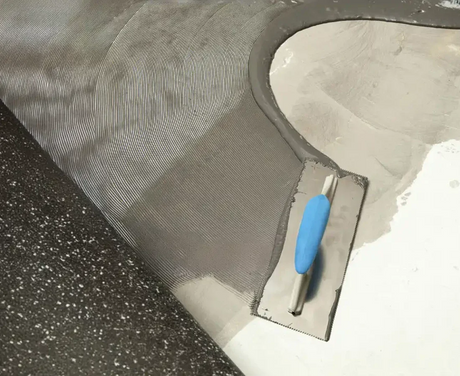
For adhesive installations over existing concrete, surface preparation becomes the foundation of long-term performance. The concrete surface requires mechanical preparation to remove any existing sealers, paints, or contaminants that could interfere with adhesive bonding. Shot blasting or diamond grinding creates the surface profile necessary for optimal adhesive adhesion.
Moisture content testing of existing concrete prevents adhesive failure that could compromise the entire installation. Concrete surfaces must achieve moisture levels below manufacturer specifications before adhesive application. This requirement often necessitates extended drying periods in humid conditions or recently poured concrete slabs.
Adhesive selection and application techniques directly impact installation success and long-term performance. Polyurethane adhesives provide superior flexibility and bonding strength for rubber paver applications, accommodating the natural expansion and contraction of both rubber and concrete substrates. Application rate and coverage patterns follow manufacturer specifications to ensure complete coverage without excess adhesive squeeze-out.
We always recommend ordering 10% extra material rather than just 5% for first-time installers, as the learning curve on paver cutting and fitting typically results in more waste than expected. This additional allowance accounts for cutting errors, fit adjustments around obstacles, and the natural learning process involved in working with interlocking paver systems.
Paver installation follows specific patterns that optimize the interlocking design while minimizing cutting requirements. Starting from the longest straight edge and working toward irregular areas reduces the number of custom cuts needed. The dog-bone shape requires attention to orientation and alignment to ensure proper interlocking engagement.
Edge restraints prevent paver migration and maintain installation integrity over time. Proper edge treatment involves either mechanical restraints or careful fitting against existing structures to prevent movement under traffic loads. The perimeter represents the most vulnerable area of any paver installation, making quality edge work essential for long-term performance.
Quality control during installation involves checking surface uniformity, joint consistency, and proper drainage function. Any irregularities discovered during installation are far easier to correct than addressing problems after completion. Final inspection should include water testing to verify drainage performance and surface uniformity under simulated traffic conditions.

Beyond Aisles: Rubber Flooring for Horses in Wash Bays and High-Traffic Areas
Wash bay flooring presents unique challenges that make rubber pavers particularly valuable in these specialized areas. The combination of water exposure, cleaning chemicals, and concentrated horse traffic creates demands that exceed typical barn aisle requirements.
Water management in wash bays requires surfaces that maintain traction while efficiently channeling water toward drainage systems. Traditional concrete becomes treacherous when wet, creating liability concerns for both horses and handlers. Rubber pavers maintain their slip-resistance properties regardless of moisture conditions, providing confident footing throughout the washing process.
Chemical resistance becomes crucial in wash bays where detergents, disinfectants, and specialized grooming products are regularly used. Quality rubber pavers resist degradation from common barn chemicals, maintaining their protective characteristics and appearance over extended exposure periods. This chemical stability prevents the surface breakdown that can create rough textures harmful to horse hooves and skin.
Cross-tie areas and grooming spaces benefit from the noise-dampening properties of rubber flooring for horses. These spaces often house multiple animals simultaneously, making stress reduction through acoustic control particularly valuable. The sound absorption provided by rubber surfaces creates a calmer environment that reduces anxiety-related behaviors and improves overall handling safety.
Temperature considerations in grooming areas affect both horse comfort and handler productivity. Rubber pavers remain comfortable underfoot across seasonal temperature variations, unlike concrete that becomes uncomfortably cold in winter and hot in summer. This temperature stability reduces stress on horses during extended grooming sessions while improving working conditions for barn staff.
Feed rooms and tack storage areas require flooring that resists moisture damage while providing easy cleaning and maintenance. Veterinary schools at Cornell, University of Pennsylvania, and University of Tennessee use specialized rubber flooring systems in their teaching facilities, demonstrating the material's suitability for areas requiring the highest hygiene standards.
The hygienic properties of rubber pavers address the specific contamination risks present in feed storage areas. The non-porous surface prevents absorption of spilled liquids and organic matter that could attract pests or support bacterial growth. Regular cleaning protocols maintain the 99.9% bacteria-free performance documented in university studies, ensuring food safety standards are maintained.
Trailer loading areas represent high-stress environments where confident footing becomes critical for both safety and successful loading. The transition from barn flooring to trailer surfaces often creates hesitation in horses, making consistent traction properties particularly important.
Equipment zones within barn facilities require flooring that can handle both horse traffic and mechanical loads from tractors, forklifts, and maintenance equipment. The 8000+ PSI load capacity of quality rubber pavers accommodates this dual-use requirement without compromising the safety features essential for horse areas.
Maintenance protocols for different areas should account for the specific contamination and wear patterns present in each space. Wash bays require daily cleaning and disinfection, while cross-tie areas may need weekly deep cleaning. The ease of maintenance provided by rubber surfaces reduces labor requirements while ensuring consistently hygienic conditions across all facility areas.

Frequently Asked Questions
1. How do rubber pavers compare in cost to traditional concrete flooring?
While the initial material cost of rubber pavers for horse barns exceeds concrete, the total cost of ownership often favors rubber over the facility's lifespan. When factoring in reduced injury claims, lower veterinary bills, decreased maintenance requirements, and extended service life, rubber pavers frequently provide superior value. Most installations recover their premium cost within 3-5 years through reduced operating expenses and liability exposure.
2. What warranty coverage can I expect, and how long do rubber pavers last?
Quality rubber pavers typically include 10-year warranties against manufacturing defects, with expected service lives of 20-30 years under normal barn conditions. The key to longevity lies in proper installation and base preparation, which directly affect long-term performance. Facilities that invest in correct installation procedures often exceed manufacturer projections for service life.
3. How do rubber pavers perform in cold weather conditions?
Rubber pavers maintain their flexibility and traction properties across a wide temperature range, typically from -40°F to 180°F. Unlike concrete that can become brittle and develop cracks in freeze-thaw cycles, rubber accommodates thermal expansion and contraction without structural damage. The material remains slip-resistant even when frost forms, providing consistent safety performance year-round.
4. What cleaning and maintenance requirements should I expect?
Daily maintenance involves basic sweeping and spot cleaning as needed. Weekly washing with standard barn cleaning products maintains hygiene standards without special equipment or procedures. The non-porous surface prevents deep contamination, making thorough cleaning more efficient than with traditional materials. Pressure washing is acceptable but not typically necessary for routine maintenance.
5. Can farm equipment safely operate on rubber pavers?
Yes, rubber pavers can withstand pressure loads of 8000+ PSI, exceeding requirements for typical farm equipment including tractors, forklifts, and feed delivery vehicles. The flexible surface actually helps distribute point loads better than rigid concrete, reducing stress concentration that could cause surface damage. However, sharp implements or excessive point loads should still be avoided to prevent punctures.
6. Are there fire safety concerns with rubber flooring?
Modern rubber pavers meet strict fire resistance standards required for commercial applications. The vulcanized rubber compound resists ignition and doesn't support combustion like organic materials. However, local fire codes may have specific requirements for barn facilities, so checking with authorities having jurisdiction is recommended before installation.
7. What happens if individual pavers become damaged?
Individual horse stall aisle pavers can be replaced without disturbing the surrounding installation, a major advantage over monolithic systems like concrete. The interlocking design allows damaged pavers to be removed and replaced with minimal tools and disruption. Installation of rubber pavers typically requires 5% waste allowance when calculating total square footage requirements, providing spare pavers for future repairs.
8. How do I determine the right thickness for my specific application?
Thickness selection depends on your installation method, existing infrastructure, and traffic requirements. Facilities with good drainage and heavy equipment use benefit from 1-3/4 inch pavers, while retrofit projects over existing concrete work well with 1 inch options. Consulting with experienced distributors helps ensure proper specification for your specific conditions and requirements.
Transform Your Horse Barn with Professional-Grade Rubber Flooring
The evidence overwhelmingly supports rubber flooring for horses as the superior choice for facilities prioritizing animal welfare, safety, and long-term value. From the shock absorption that protects joints and ligaments to the slip-resistance that prevents devastating injuries, rubber pavers address every major concern with traditional barn flooring while delivering decades of reliable performance.
The investment in quality flooring extends beyond immediate safety benefits. Reduced insurance claims, lower veterinary expenses, and improved animal performance create tangible returns that justify the initial premium. Facilities that prioritize proper flooring consistently report fewer injuries, calmer animals, and reduced long-term maintenance costs.
Your horses deserve flooring that supports their natural movement patterns while protecting against the risks inherent in barn environments. The technology exists to create safer, more durable surfaces that enhance rather than compromise animal welfare. For guidance on selecting the right solution, the ultimate guide to ECORE high-performance flooring provides comprehensive insights into sustainable, innovative options built to perform. The question isn't whether rubber pavers represent better flooring — it's whether you're ready to make the investment in your horses' long-term health and your facility's future.
Blue Sky Fitness Supply has extensive experience helping equestrian facilities select and source the right rubber flooring solutions for their specific needs. Our team understands the unique demands of horse facilities and can guide you through the specification process to ensure optimal performance and value. Contact us to explore how professional-grade rubber flooring can transform your barn into the safe, durable facility your horses deserve.