

Table of Contents:
- Why Recovery Zone Design Is Now a Core Business Decision, Not an Amenity Add-On
- Recovery Zone Design: Space Planning, Layout, and Flow Requirements
- Commercial Cold Plunge Selection: Specs, Costs, and Operating Requirements
- Gym Sauna Installation: Choosing the Right Type, Sizing It Correctly, and Meeting Commercial Standards
- Recovery Zone Revenue Models: Turning Your Investment into a Measurable ROI
- Frequently Asked Questions
- Build a Recovery Zone That Pays for Itself
Recovery zone design has moved from a differentiator to a baseline expectation in commercial fitness. The global fitness recovery market hit $8.3 billion in 2025 and is projected to reach $26.8 billion by 2035 — a 12.4% compound annual growth rate that reflects a fundamental shift in how members define value, not a passing wellness fad. According to Men's Fitness reporting on the recovery market boom, North America is leading this adoption wave, with high-end offerings no longer confined to boutique studios. Corporate gyms, university rec centers, and mid-market clubs are now all competing on recovery.
But here's what stops most facility operators cold: Smart Health Clubs' 2025 retention research found that 78% of gym members say access to recovery services matters more to them than lower membership fees. Sixty-three percent of millennials say they'd pay more for a gym that includes wellness programs. Life Time opened 10 new luxury athletic clubs in December 2025 with full recovery suites — cold plunge, infrared sauna, compression therapy — and reported record membership growth. These aren't outlier data points. They're the market telling you exactly what it values.
Here's the twist most operators miss: the facilities failing at this aren't failing because they lack a cold plunge. They're failing because they dropped a tub in a corner, called it a recovery zone, and moved on. The facilities winning on gym member retention are treating recovery zones as engineered revenue lines — purposefully designed, operationally planned, multi-modal spaces where the experience is as deliberate as the equipment list.
This post is a spec-first, practical guide to recovery zone design for facility managers, architects, and corporate wellness buyers. We'll cover space allocation, equipment specs, installation requirements, ADA compliance, throughput planning, and the revenue models that make the capital investment justify itself. No aspirational marketing copy — just the decisions you actually need to make and the numbers behind them.
Why Recovery Zone Design Is Now a Core Business Decision, Not an Amenity Add-On
The ROI case looks different depending on which seat you're sitting in — but it's compelling from every chair.
For facility managers, the math starts with churn. According to the Utopia Valley Saunas Commercial Pricing Guide, facilities that add saunas report a 15–20% reduction in member churn and can command premium membership tier upsells of $20–$40 per month. Run that against a 1,000-member club averaging $60/month: a 15% improvement in retention preserves $108,000 in annual revenue. Against a $15,000–$20,000 sauna installation, that's a Year 1 payback that most equipment purchases can't touch. Recovery zone ROI isn't theoretical — it's documented, and the mechanism is straightforward: members who use recovery amenities visit more frequently, build stronger facility habits, and churn at lower rates.
Clubs that track recovery usage data by member cohort consistently see higher retention among recovery zone users versus non-users — recovery zones function as a retention engine, not just an amenity, as Daxko CMO Wendy White highlighted in Athletech News coverage of member engagement trends. Blue Sky Fitness Supply works with facilities at the planning stage to help align equipment selection with this retention architecture, not just the aesthetics of the finished zone.
For architects and interior designers speccing a build, the headline number is the space allocation shift. Leading wellness designers now dedicate 20–30% of total gym floor space to recovery and regeneration areas — up from the traditional 5–10%. That's not a minor renovation; it's a fundamental re-prioritization of how square footage earns its keep. The implication for new builds is significant: recovery zone design must be factored into schematic design, not carved out of remaining square footage after the weight floor and cardio deck are placed.
For corporate wellness buyers, the angle is differentiation. Only 20% of gym members currently use specialized recovery amenities like cryotherapy, saunas, and massage chairs. That sounds like low adoption — but it actually signals enormous upside. Members who do engage with recovery show statistically higher lifetime value and premium tier conversion rates. For an employer-sponsored wellness program, a facility with a well-designed recovery zone isn't just a gym membership — it's a demonstrably more effective employee health investment with a built-in recruiting angle.
The industry trend has moved decisively away from single-modality setups. WellnessSpace Brands President Kevin Conaway, speaking to Athletech News, framed it precisely: members walk into a coordinated zone and see multiple recovery modalities addressing different needs — not an isolated cold plunge with a laminated instruction sheet taped to the wall. Contrast therapy (sauna paired with cold plunge), compression, and red light therapy in a single coordinated space is the benchmark configuration that leading commercial facilities are building toward. Blue Sky's role as a distributor of cold plunges, saunas, rubber flooring, and recovery gear makes it possible to spec an entire zone from a single supplier — which simplifies the procurement process considerably for both architects and facility operators.
There's also the CapEx offset angle. Opening a new full-size gym typically requires $1–3 million in capital investment. Recovery zones, when structured as a distinct revenue line through premium memberships or per-session fees, generate recurring revenue that standard equipment areas simply cannot. A rack of dumbbells doesn't upsell a member. A well-designed contrast therapy suite does.
Recovery-focused amenities have shifted from niche offerings to core features driving memberships, visit frequency, and churn reduction, as Haven of Heat's February 2026 Commercial Sauna Buyer's Guide documents. The operators who recognized this three years ago are now sitting on retention advantages that are difficult for competitors to close quickly. The window to build that advantage is still open — but the cost of waiting is rising as member expectations catch up to the market data.
Recovery Zone Design: Space Planning, Layout, and Flow Requirements
Start with user flow. Equipment selection comes second.
This is the architect's mindset that facility managers need to internalize before they purchase anything. A cold plunge and sauna in a poorly planned space will generate friction — members who intend to use the zone regularly will stop when the experience feels inconvenient, cramped, or separate from their workout rhythm. The physical design of how a member moves from workout floor to recovery zone and back out determines how often they actually use it.
Proximity to locker rooms simplifies that flow significantly. Members can transition directly from workout to recovery to shower without backtracking through the facility. The trade-off: locker room adjacency requires serious moisture and ventilation management — waterproof flooring rated for wet environments, floor drains with adequate capacity, and HVAC engineering that keeps humidity from migrating into adjacent spaces. These are buildout costs that must be budgeted at the design phase, not discovered during a renovation.
High-visibility placement from the workout floor runs the other direction as a strategy. When members can see the recovery zone while they train, organic usage discovery increases — the visual reminder drives action. This placement works well for facilities that want to build recovery zone awareness without heavy marketing spend. The constraint: the exterior-facing design must be attractive enough to function as a feature, not an afterthought. If the visible side of a sauna looks like a utility room, it won't inspire anyone.
The benchmark configuration in leading commercial facilities is the contrast bathing zone. Biofit Gym Designers documents this as a large-format sauna accommodating 8–12 people, paired with one or more adjacent cold plunge units at temperatures ranging from 39–59°F, with a rest and transition area between them. The transition space is not optional — members need somewhere to sit between a sauna session and a cold immersion, and that 5–10 minute window of controlled breathing and mental preparation is part of the contrast therapy protocol itself.
Space sizing gets specific here. A commercial sauna for 8–12 people typically measures 8 feet by 10 feet with an 8-foot ceiling. Cold plunge units must sit on a flat, level, solid surface capable of supporting a filled weight of 1,500–3,000 lbs — floor loading must be verified during the structural phase of the design, not assumed. Both units together, with transition seating and the minimum clear floor space for safe movement, realistically require 300–500 square feet, depending on configuration. That number grows fast if you're adding compression loungers or red light panels.
For architects, sauna ADA compliance requirements must be incorporated at the design phase. According to Superior Saunas' Commercial ADA Kit documentation, sauna doors must swing outward, a 60-inch diameter turnaround space is required inside the room, and at least one bench must be a minimum of 42 inches long and between 20–24 inches deep. Retrofitting ADA compliance into a finished sauna installation is expensive and often structurally disruptive — these specs need to live on the construction drawings from day one.
The recovery zone floor itself is a spec decision that's easy to under-engineer. It must handle constant moisture, the structural load of filled cold plunge units, and heavy foot traffic — often barefoot, which means surface texture and slip resistance matter as much as durability. Rubber flooring with drainage-compatible design is the commercial standard for this environment. If you're speccing the flooring for a recovery zone and haven't looked at ECORE rubber tiles, that's worth a separate read — the shock absorption and eco-conscious construction profile make them well-suited for this application.
For throughput planning: cold plunge scheduling in commercial settings works best in 15-minute booking slots with 5-minute buffers between users. The buffer allows surface cleaning, a quick water quality check, and equipment inspection between sessions. Sauna sessions typically run 10–20 minutes, and the sauna's capacity (8–12 people) means it operates more like a group amenity with natural throughput built in. The most successful recovery zones blur the line between fitness facility and hospitality venue — members start visiting on rest days specifically for contrast therapy, which increases facility stickiness in a way that workout-only facilities cannot replicate. If you're in the early stages of planning your installation, the Cold Plunge Installation & Setup Guide 2026 is a practical next read that covers the mechanical and logistical decisions in depth.
Recovery Zone Layout Configurations: Which Setup Fits Your Facility?
Layout configuration depends on three variables: available square footage, total budget, and projected daily member volume. There's no single right answer, but there are clear trade-offs at each tier that facility operators and architects should evaluate honestly before committing to a configuration.
| Feature | Entry-Level (~200–300 sq ft) | Mid-Tier (~400–600 sq ft) | Premium Suite (800+ sq ft) |
|---|---|---|---|
| Sauna type and capacity | Single infrared or small traditional sauna, 2–4 person capacity | Multi-person traditional or hybrid sauna, 6–10 person capacity | Multi-person traditional sauna + separate infrared cabin, 8–12+ combined capacity |
| Cold plunge units | Single commercial cold plunge | 2 cold plunge units (stagger temperatures for variety) | 3+ cold plunge units with dedicated chiller systems |
| Additional modalities | None; contrast therapy only | Rest seating, possibly 1–2 compression chairs | Red light therapy panels, compression lounge, dedicated rest zone |
| Estimated equipment investment | $25,000–$50,000 | $60,000–$100,000 | $120,000–$200,000+ |
| Estimated installation complexity | Low-moderate; standard electrical and drainage work | Moderate; ventilation engineering required | High; full mechanical, electrical, and structural design required |
| ADA compliance feasibility | Challenging in tight footprint; requires careful planning | Achievable with proper design | Fully achievable; space allows for all ADA requirements |
| Revenue model fit | Per-session fees or modest premium tier add-on | Premium membership tier; per-session for non-members | Full premium tier; corporate wellness packages; day pass revenue |
| Best for (facility type) | Boutique studios, corporate wellness rooms, smaller rec centers | Mid-size commercial gyms, university rec centers | Large commercial gyms, luxury athletic clubs, resort facilities |

Commercial Cold Plunge Selection: Specs, Costs, and Operating Requirements
A commercial cold plunge is not a residential unit running more sessions. The duty cycle is fundamentally different, and speccing decisions must reflect that from the start.
Consumer-grade cold plunges are designed for one or two users per day, with extended recovery time between uses. A commercial installation in a busy gym may see 30–50 users across a 12-hour operating day. The chiller, filtration system, and structural materials must be rated for that volume — continuously, every day, year-round. A unit that meets residential specs but not commercial duty cycle specs will fail, and it will fail faster than almost any other piece of equipment in your facility.
Cold plunge temperature commercial operating range sits between 39–59°F. According to Cold Immersion Life's Commercial Cold Plunge Expert Guide, most commercial operators set 42–45°F as their general operating target. This range is challenging enough to trigger the documented physiological responses — including norepinephrine increases of up to 300% and metabolic rate boosts of 10–15% with repeated exposure, per a 2024 Cell Metabolism meta-analysis cited by Mito Health — while remaining accessible to members who are new to cold immersion. Setting the temperature below 42°F doesn't proportionally increase benefits for most non-athlete users, and it does increase the barrier to adoption significantly.
The full cost picture for a commercial inground fiberglass cold plunge unit: the unit itself ranges from $15,000–$30,000; installation adds $10,000–$20,000; equipment and accessories (chiller, filtration, UV/ozone sanitation, plumbing) add another $5,000–$10,000. According to Immerspa's 2025 Commercial Cold Plunge Pool Cost Guide, total investment lands at $35,000–$60,000 or more. For facility managers evaluating this against the membership retention data, that number looks different: at $15–$30/month in ongoing energy costs and a unit lifespan of 10–15 years, the total cost of ownership over a decade is modest relative to the retained revenue a well-used cold plunge generates. The ReGen Total Wellness Cold Plunge Commercial Blast Model is an example of a unit built explicitly for this operating environment — at 84 inches by 42 inches, it's engineered for the duty cycle demands of a busy commercial facility rather than scaled-up residential use.
Filtration and sanitation are the most under-specified aspects of commercial cold plunge installations. Without continuous filtration, UV or ozone sanitation, and regular pH monitoring, cold plunge water becomes a bacterial breeding ground within days at high usage volumes. These are not optional accessories — they're the operating infrastructure that keeps the unit safe and functional. Build them into the spec from the beginning, not as an afterthought after the unit is installed and the problems start.
One operational detail that meaningfully affects energy costs: start the chiller 60 minutes before the facility opens using an automated timer. Reaching target temperature from ambient takes significantly more energy than maintaining temperature. Pre-cooling with timers reduces daily energy consumption without affecting member experience.
Structural placement requirements are non-negotiable. As Bakersfield Hot Tubs Plus documents in their Cold Plunge FAQ, units must sit on a flat, level, solid surface capable of supporting a filled weight of 1,500–3,000 lbs. Indoor installations require waterproof flooring and a floor drain with sufficient capacity to handle a full drain-and-refill cycle — which must happen regularly as part of the maintenance protocol. Verify floor loading capacity with a structural engineer before speccing the installation location.
From a distributor standpoint, the most common and expensive mistake facilities make when speccing a commercial cold plunge is selecting a unit based on purchase price rather than duty cycle rating. Blue Sky Fitness Supply helps facilities match unit capacity to projected daily user volume — that spec decision is the difference between a $20,000 unit that lasts 15 years and one that fails in three. A 2025 systematic review published in PLOS One analyzing 11 studies with 3,177 participants confirmed that cold-water immersion delivers measurable benefits across inflammation, stress, immunity, sleep quality, and quality of life — the science justifying the capital spend is solid. The variable that determines whether the investment pays off is whether you've bought equipment that can handle the commercial operating environment.

Gym Sauna Installation: Choosing the Right Type, Sizing It Correctly, and Meeting Commercial Standards
Here's the single most expensive mistake facilities make with gym sauna installation: buying a residential-labeled unit marketed as "commercial-grade."
According to SaunaCloud's Ultimate Guide to Commercial Infrared Saunas, most residential-labeled "commercial" infrared saunas fail within 12–18 months under the stress of 8–12 daily sessions in a true commercial setting. Warranties on these units frequently exclude commercial use entirely — meaning the facility absorbs 100% of the replacement cost when the unit fails ahead of schedule. A commercial sauna operates on the heaviest duty cycle in the industry: back-to-back sessions for 12 hours a day, year-round. The engineering inside the walls — insulation, heater grade, wood species, vapor barrier — must be over-built against that exact failure mode, not just the cabinet exterior. Blue Sky only sources sauna equipment with explicit commercial-use warranty coverage because the alternative is a short-term cost saving that becomes a long-term budget problem.
There are three sauna types relevant to commercial gym installations, each with distinct electrical, ventilation, and user experience profiles.
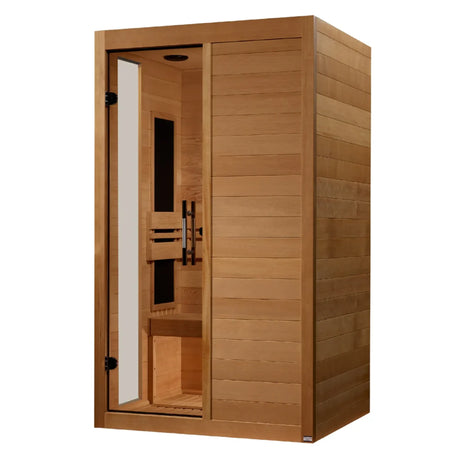
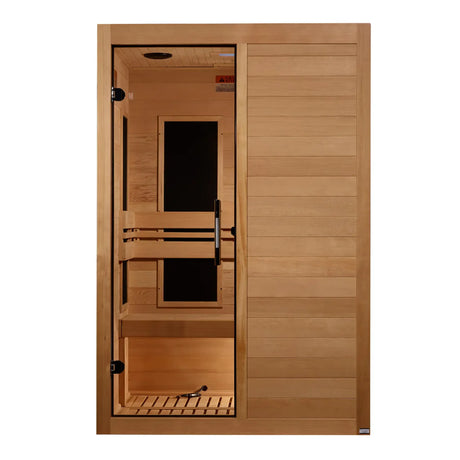
Traditional Finnish electric saunas operate at 150–195°F and represent the highest-throughput option for busy commercial environments. The user experience is intense and heat-forward, which many members specifically seek. The trade-off: significant electrical infrastructure is required. An 8x10 foot sauna with 8-foot ceilings needs a 12–13 kW heater, per Finnish Sauna Builders' Commercial Sauna Installation Guide. Ventilation requirements are substantial and must be engineered into the build. For facilities that can support the electrical and mechanical infrastructure, traditional electric saunas are the most durable and highest-capacity option.
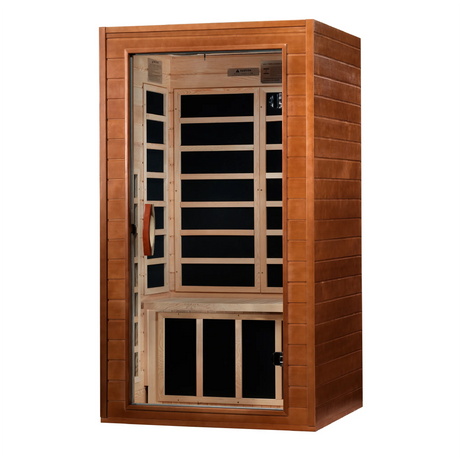
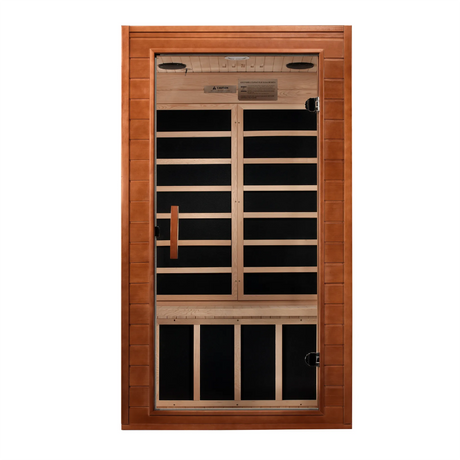
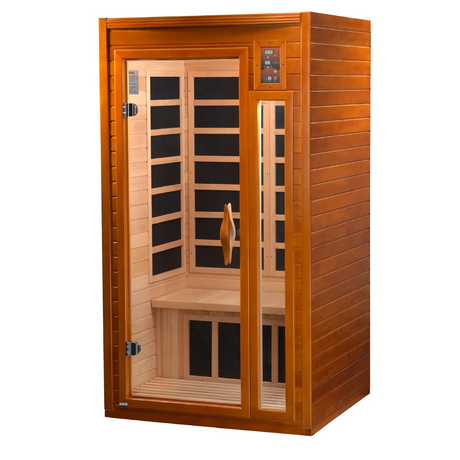
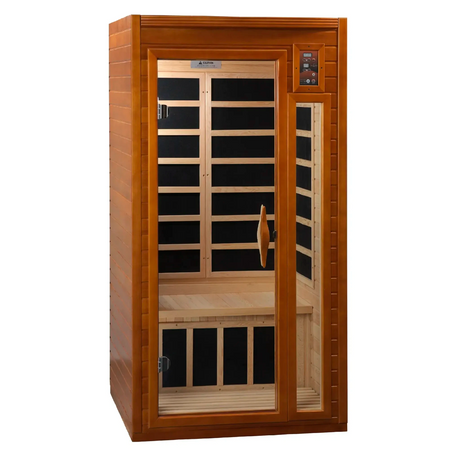
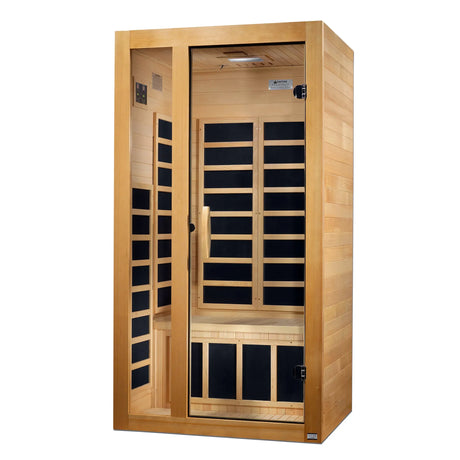
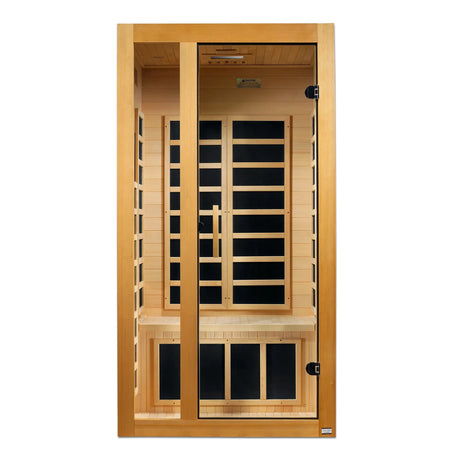
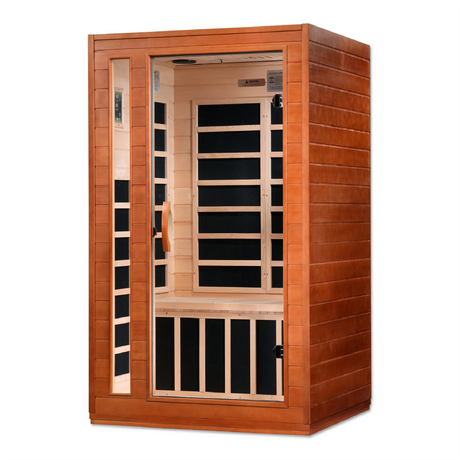
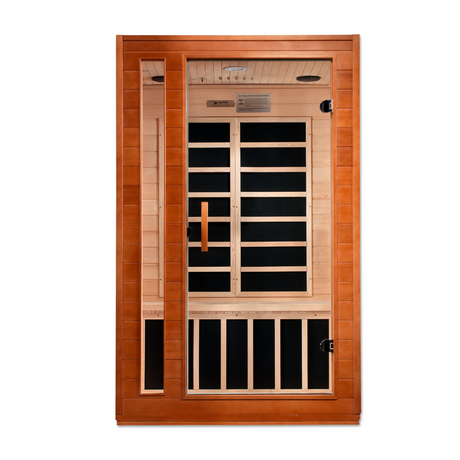
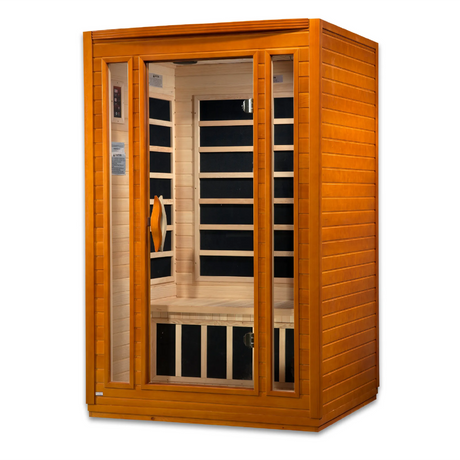
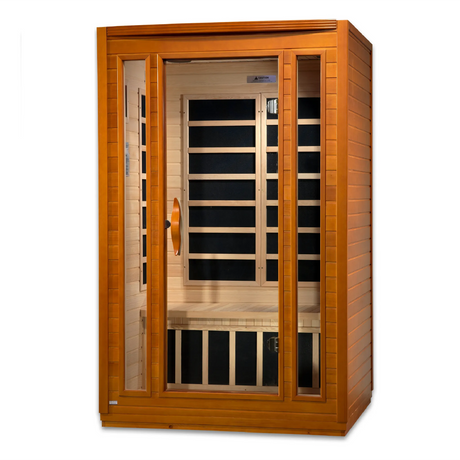
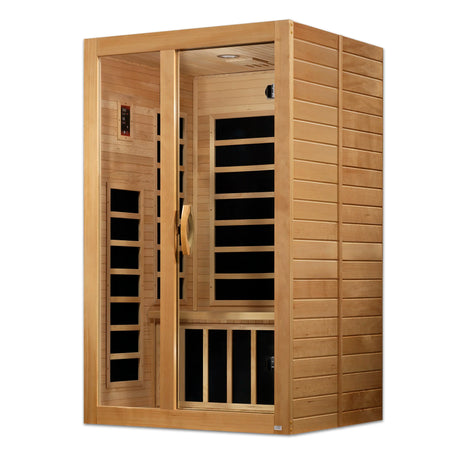
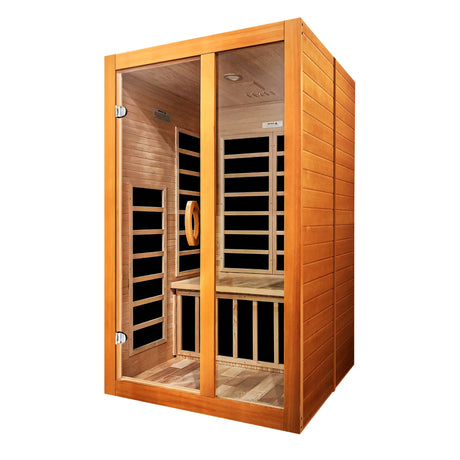
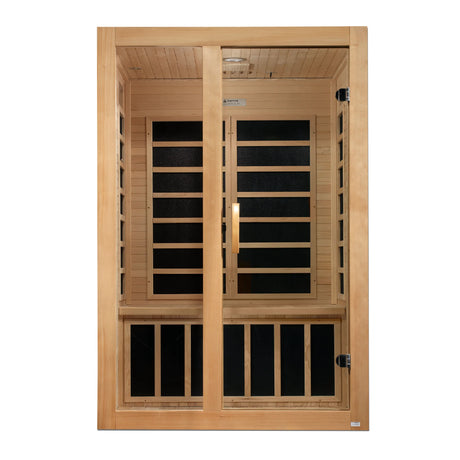
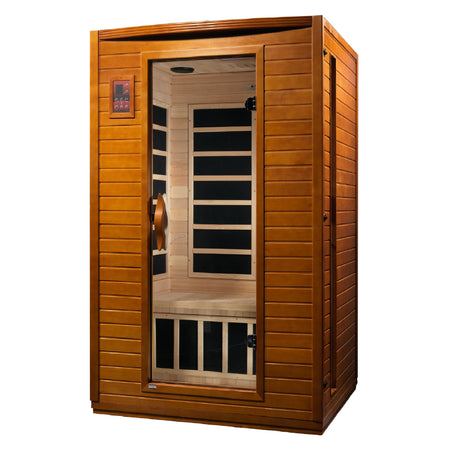
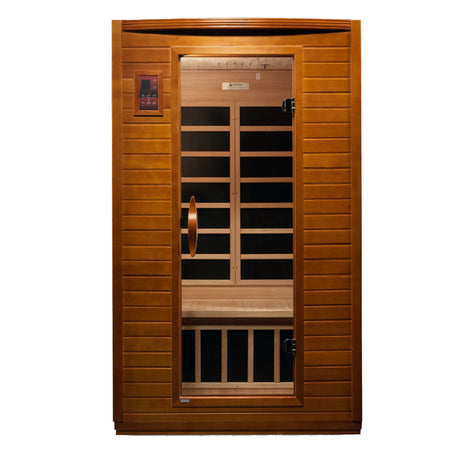
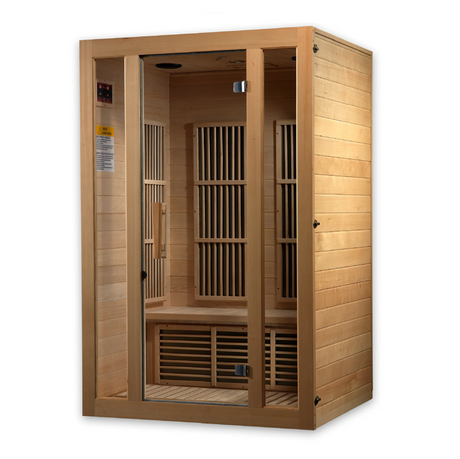
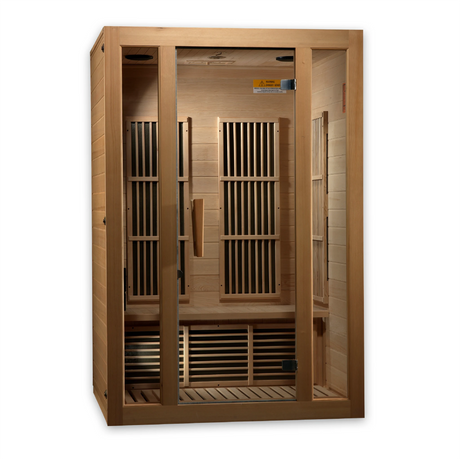
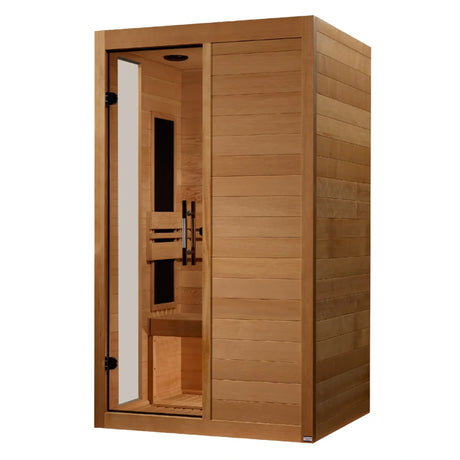
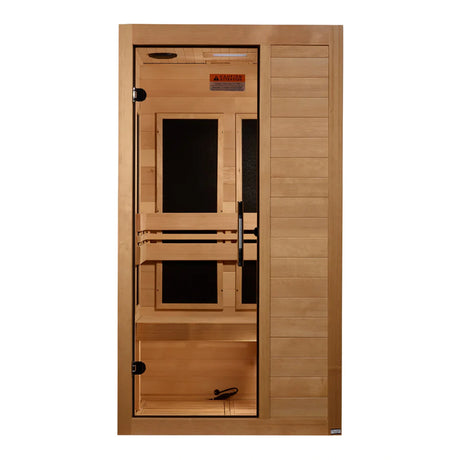
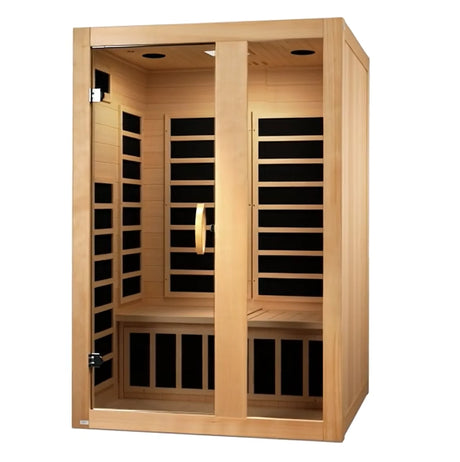
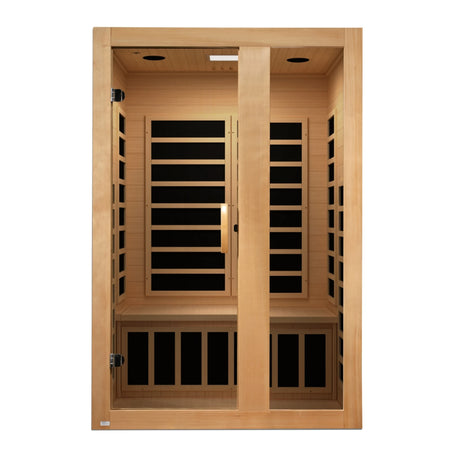
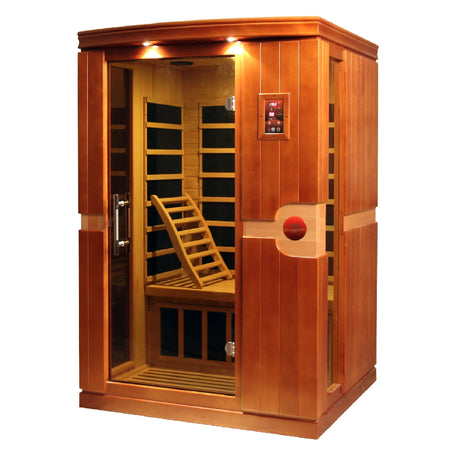
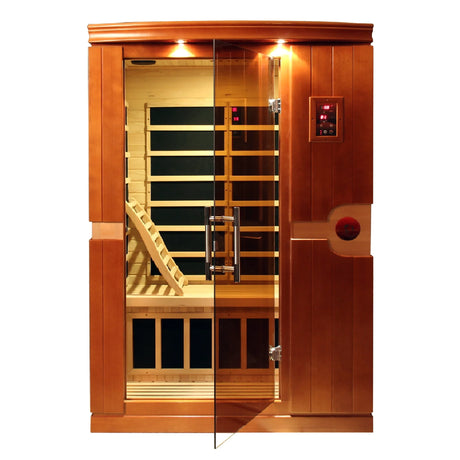
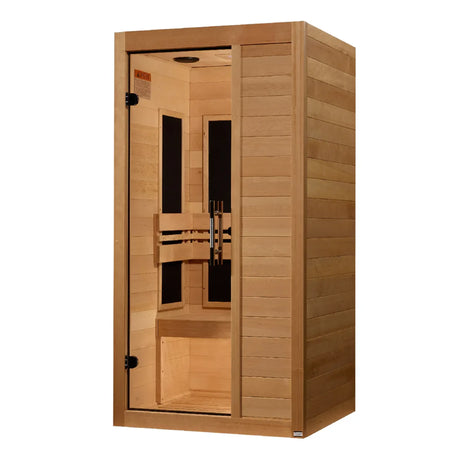
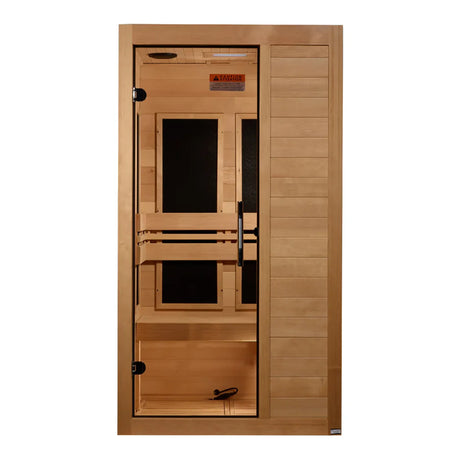
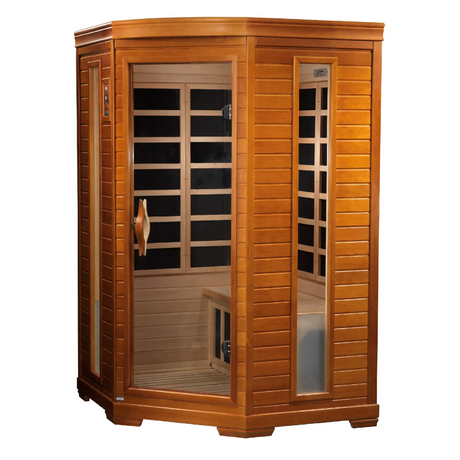
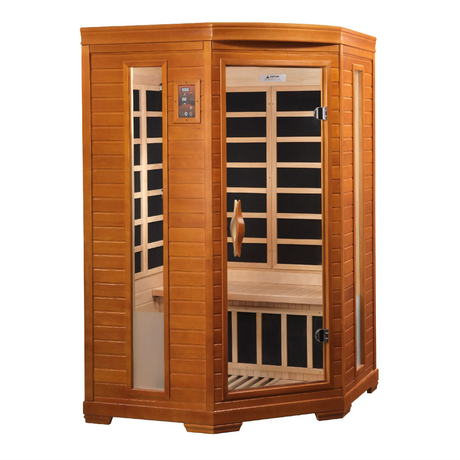
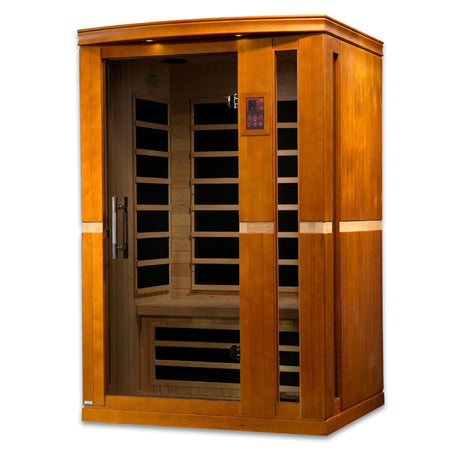
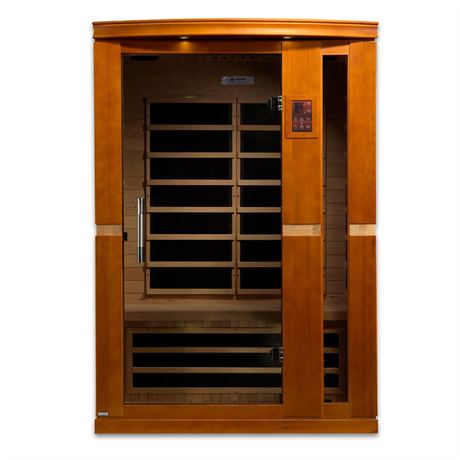
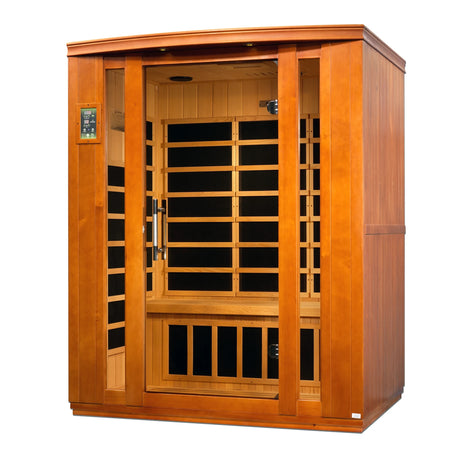
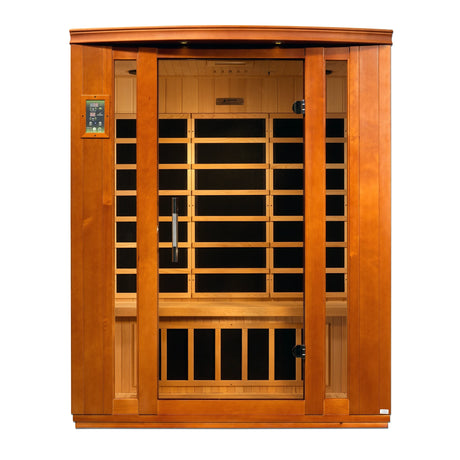
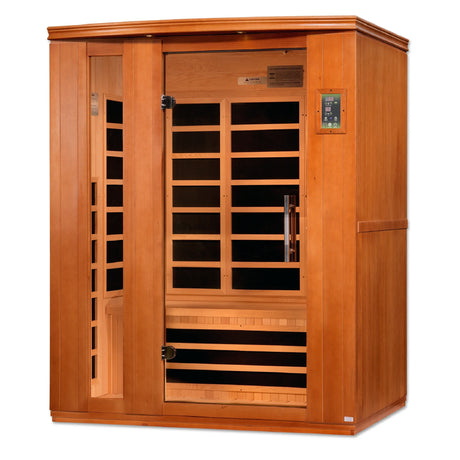
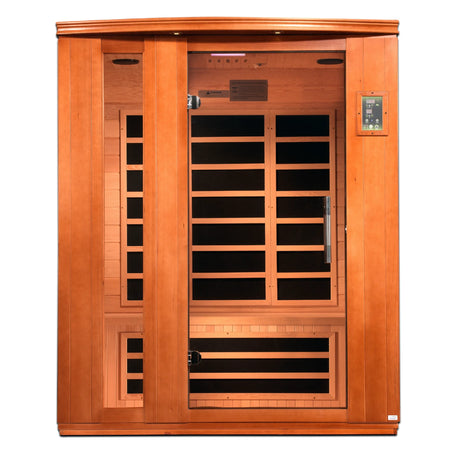
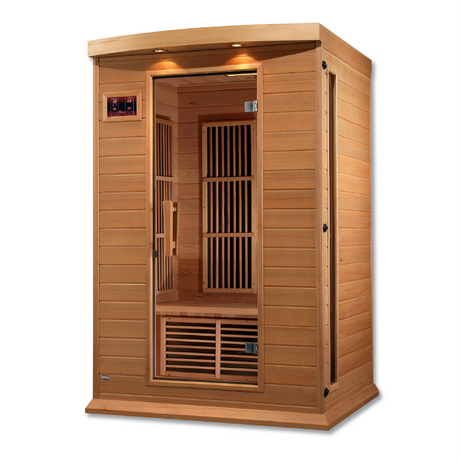
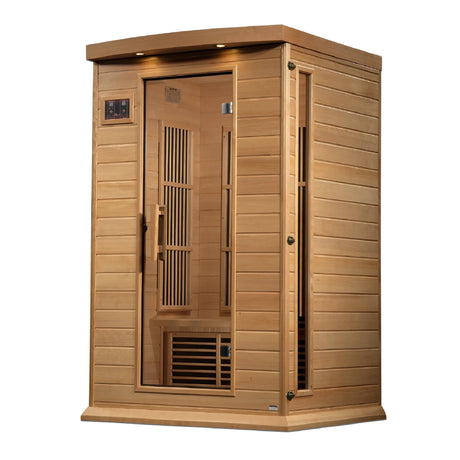
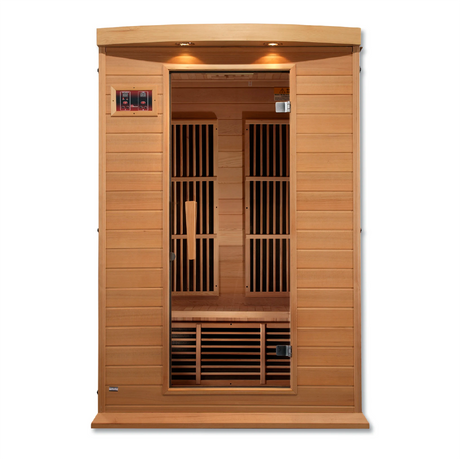
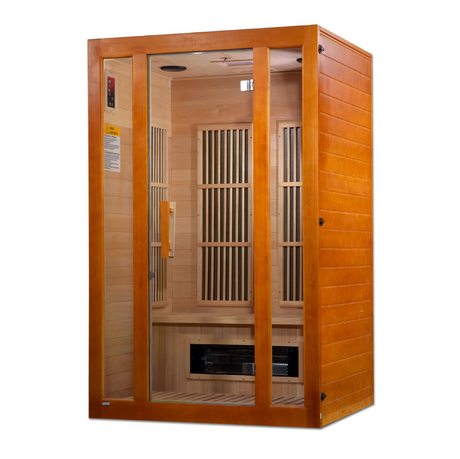
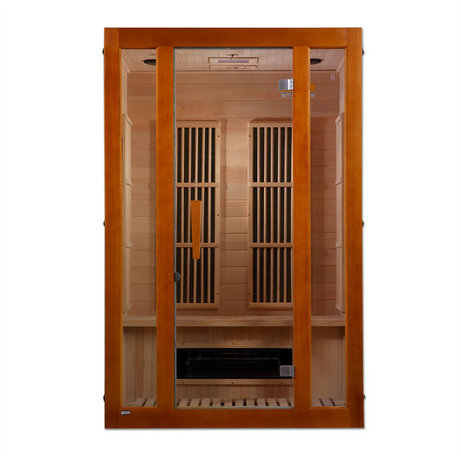
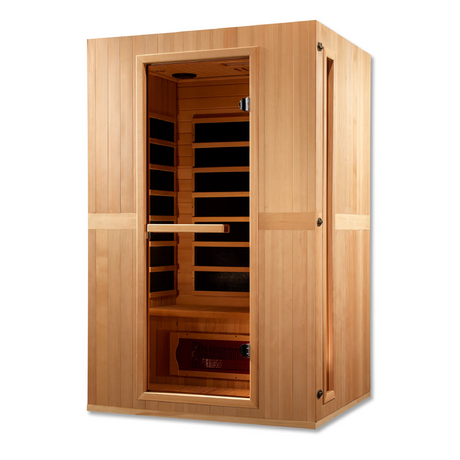
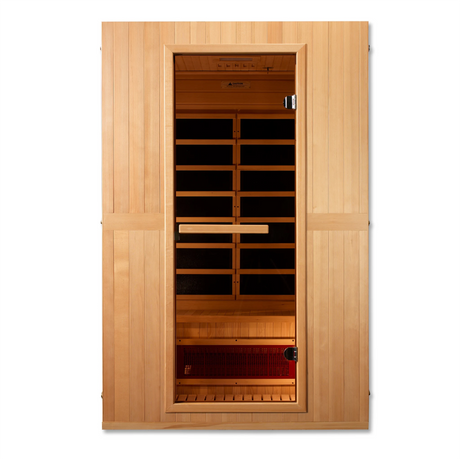
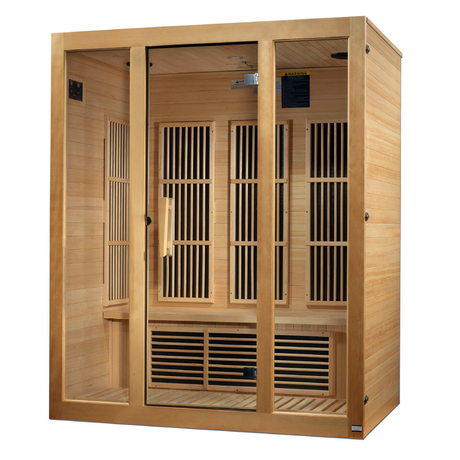
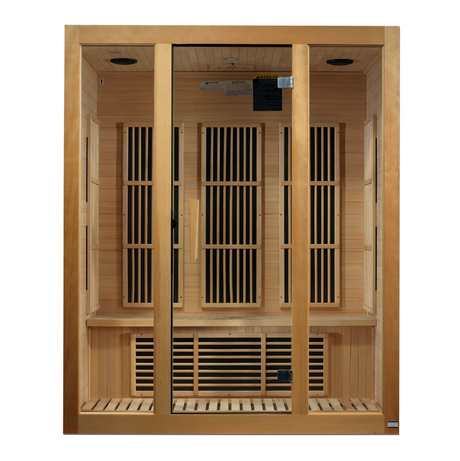
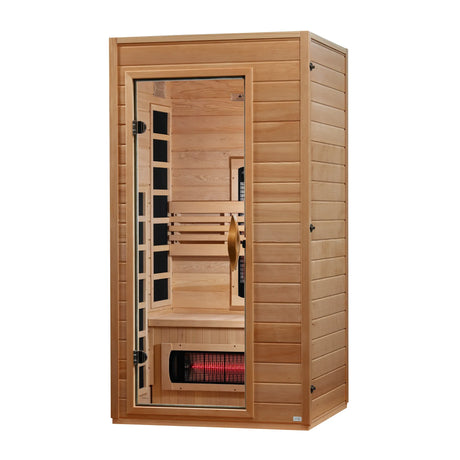
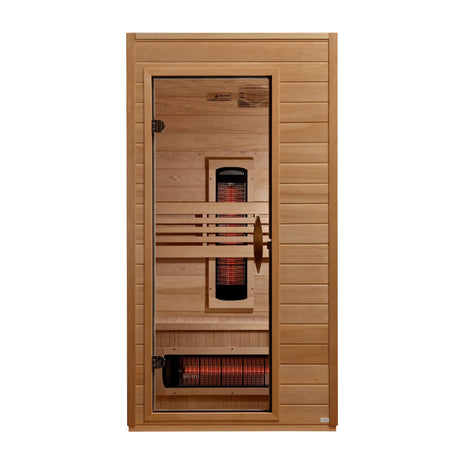
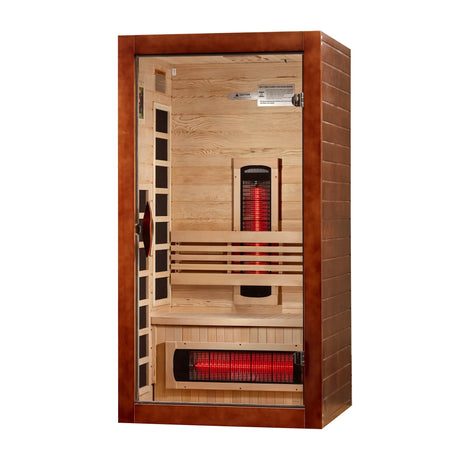
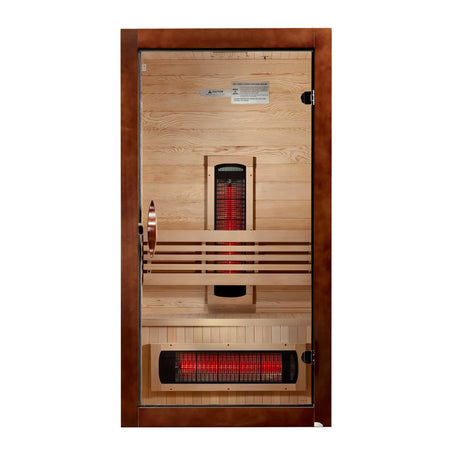
Infrared saunas operate at 120–150°F, penetrating tissue at lower ambient temperatures — a profile many users prefer, particularly those who find traditional sauna heat overwhelming. According to Haven of Heat's February 2026 Commercial Sauna Buyer's Guide, smaller infrared units may run on 120V standard outlets, while larger commercial units require dedicated 240V circuits. The lower installation disruption makes infrared attractive for facilities retrofitting a space not originally designed for a sauna. The critical caveat: operators must verify that the unit carries an explicit commercial warranty covering 8–12 daily sessions. Many infrared units marketed to gyms do not.
Hybrid sauna models combine traditional electric heat with infrared panels and red light therapy in a single unit. This configuration allows one piece of commercial equipment to deliver three distinct wellness modalities — dramatically increasing member value per square foot without requiring separate installations for each modality. For facilities with space constraints, this is a configuration Blue Sky specifically recommends. The member experience in a hybrid unit is genuinely differentiated: the same session delivers radiant heat, deep-tissue infrared penetration, and red light therapy simultaneously. For a broader look at how cold therapy fits alongside these heat-based modalities in a complete recovery program, Discover Hyperice and Its Role in the Growing Cold Therapy Trend provides useful context on how the market has evolved around multi-modal recovery.
Sauna heater sizing follows a documented rule: 1 kW of heating power per 50 cubic feet of interior space, per Finnish Sauna Builders' commercial installation specifications. High-traffic facilities must go 20–25% above that baseline to maintain temperature during the frequent door openings that come with back-to-back commercial sessions. Undersizing the heater is the second most common installation error after buying underspecced equipment — a heater that can't maintain temperature under heavy use turns a premium amenity into a member complaint.
Commercial sauna cost benchmarks for 8–12 person units designed for heavy athletic use run $15,000–$20,000, according to the Utopia Valley Saunas Commercial Pricing Guide. Budget additional costs for ventilation engineering, electrical work, ADA compliance features, and the wood species selection — Canadian hemlock is the standard for quality commercial installations because it's hypoallergenic, resists warping under heat cycling, and doesn't off-gas at operating temperatures.
For architects, the sauna ADA compliance checklist bears repeating in the context of the build spec: doors swing out, 60-inch interior diameter turnaround space, one bench measuring at least 42 inches long and 20–24 inches deep. These dimensions affect room size, door placement, and bench configuration — all decisions that are straightforward to accommodate in a new design and costly to correct after construction.

Recovery Zone Revenue Models: Turning Your Investment into a Measurable ROI
A recovery zone is a revenue architecture decision. The operators who treat it as a cost center are leaving significant money on the table.
There are three primary monetization models that work in commercial gym environments, each suited to different facility types and member demographics.
The premium membership tier model is the most common and typically the most financially impactful. Facilities package recovery zone access into an upgraded tier — giving base-tier members a clear path to upgrade while simultaneously exposing them to the recovery zone through in-facility visibility. Men's Fitness reports that gyms are successfully building this upgrade architecture around recovery amenities, converting budget-conscious members through ambient exposure rather than hard selling. The sauna addition alone supports $20–$40/month premium tier pricing, and members who use recovery amenities regularly are significantly more likely to maintain that premium tier month over month.
The per-session fee model suits facilities that want to test demand before full membership integration, or those serving a high non-member guest volume. Cold plunge 15-minute slots priced at $15–$25 per session generate meaningful revenue at scale and create a low-barrier entry point for prospective members. A facility running 40 cold plunge sessions per day at $20 per session generates $800/day — $24,000/month — from a single piece of equipment with $15–$30/month operating costs.
The corporate wellness model is where the opportunity for commercial facility managers is most underdeveloped. Positioning a recovery zone as a business-to-business offering — selling corporate wellness memberships to nearby employers with recovery zone access as the headline differentiator — taps into a distinct buyer persona with different decision criteria than individual members. Corporate buyers care about employee utilization data, liability management, and the recruiting angle. A recovery zone makes that case in a way that a standard gym membership cannot.
The churn math deserves its own calculation. If a sauna reduces member churn by 15–20% in a 1,000-member club averaging $60/month, a 15% retention improvement preserves $108,000 in annual revenue. The $15,000–$20,000 installation cost pays back in less than three months of preserved revenue — before accounting for the premium tier upsell revenue running in parallel. This is the recovery zone ROI calculation that should live in every facility manager's capital expenditure justification document.
Total cost of ownership reinforces the case over a longer horizon. Cold plunge units at $15–$30/month in operating costs over a 10–15 year lifespan represent minimal ongoing expense relative to the revenue they support. A commercial sauna built to spec can last 20+ years with proper maintenance. Against annual retained membership revenue, the 10-year total cost of ownership calculation is overwhelmingly favorable.
Twenty percent of current gym members use specialized recovery amenities. Every member who starts using the recovery zone has statistically higher lifetime value and premium tier conversion likelihood than members who never engage with it. The recovery zone doesn't just retain members — it upgrades them. For architects and corporate wellness buyers reading this in the context of a broader facility buildout, the weight room layout and recovery zone are increasingly designed as complementary retention systems, not separate amenity categories. For a ground-level look at how facilities have transformed their wellness programs around these installations, How to Install a Cold Plunge Tub and Transform Your Wellness Routine walks through the practical setup decisions that determine whether the investment delivers on its promise.

Frequently Asked Questions
1. How much space do I need for a commercial recovery zone with both a sauna and cold plunge?
Plan for a minimum of 300–500 square feet to fit a commercial 8–12 person sauna (approximately 8x10 feet), one or two commercial cold plunge units, and a rest and transition area between them. This footprint assumes a contrast bathing configuration without additional modalities. Higher-tier multi-modality suites that add compression loungers and red light therapy panels require 800 or more square feet to operate comfortably and meet all ADA clearance requirements without sacrificing the transition space that contrast therapy protocols depend on.
2. What does a commercial gym sauna installation cost?
Commercial gym sauna installations for 8–12 person units designed for heavy daily use typically cost $15,000–$20,000 for the unit itself. That figure does not include ventilation engineering, electrical infrastructure upgrades, ADA compliance features, or finish work — all of which must be budgeted separately. Total installed cost for a properly specced commercial sauna is commonly 30–50% above the unit price alone, meaning facilities should plan for $20,000–$30,000 or more in total project cost depending on the complexity of the space.
3. What is the total investment required for a commercial cold plunge?
A commercial inground fiberglass cold plunge unit typically costs $15,000–$30,000 for the unit itself, with installation adding $10,000–$20,000 and chiller, filtration, and sanitation systems adding another $5,000–$10,000, for a total investment of $35,000–$60,000 or more. Budget toward the top of that range rather than the floor — under-speccing filtration and sanitation to reduce upfront cost creates significantly higher ongoing maintenance expenses and introduces liability exposure that a properly equipped unit avoids from day one.
4. What temperature should a commercial cold plunge be set to?
Most commercial operators set cold plunge temperature at 42–45°F as a general operating target within the documented commercial window of 39–59°F. This range is challenging enough to trigger meaningful physiological responses — including norepinephrine increases of up to 300% and metabolic rate improvements confirmed in peer-reviewed research — while remaining accessible to members who are new to cold water immersion. Setting temperature below 42°F increases risk without proportional benefit for non-athlete populations and meaningfully reduces general member adoption rates.
5. What are the ADA requirements for a commercial sauna in a gym?
ADA-compliant commercial saunas require doors that swing outward, a 60-inch diameter turnaround space inside the room, and at least one bench measuring a minimum of 42 inches long and between 20–24 inches deep. These requirements must be incorporated at the design phase, not retrofitted into a finished installation. A sauna room that falls even slightly short of the interior turnaround diameter requires structural correction after the fact — a costly and disruptive problem that accurate upfront design eliminates entirely.
6. Should I choose an infrared or traditional sauna for my commercial gym?
Traditional electric saunas operating at 150–195°F are better suited for high-throughput commercial environments due to their higher session capacity and familiar user experience, though they require significant electrical and ventilation infrastructure. Infrared saunas operating at 120–150°F are faster to install and lower in electrical demand, making them practical for retrofitting spaces not originally designed for a sauna, but operators must confirm the unit carries an explicit commercial warranty covering 8–12 daily sessions. Hybrid units combining both modalities with red light therapy deliver the strongest value-per-square-foot profile for space-constrained facilities and are worth serious consideration when the installation footprint is limited.
7. How do recovery zones generate revenue for commercial gyms?
Recovery zones generate revenue through three primary models: premium membership tiers that package recovery zone access as an upgrade path priced at $20–$40 per month above base membership, per-session fees of $15–$25 for cold plunge and sauna slots that serve both members and non-member guests, and corporate wellness packages sold to nearby employers with recovery access as the headline differentiator. The most durable revenue contribution, however, comes from churn reduction — a 15% improvement in member retention at a 1,000-member club averaging $60 per month preserves $108,000 in annual revenue, which alone justifies the installation cost in under three months.
8. How do I maximize throughput in a commercial cold plunge?
Schedule cold plunge sessions in 15-minute booking slots with 5-minute buffers between users to allow surface cleaning, water quality inspection, and equipment checks before the next member enters. Use automated chiller timers to begin pre-cooling 60 minutes before the facility opens, since reaching target temperature from ambient consumes significantly more energy than maintaining it and delays readiness if left to run without a timer. Facilities operating two cold plunge units staggered at slightly different temperatures can increase effective capacity while giving members the option to progress between immersion levels, which improves the overall experience and drives repeat usage.
Build a Recovery Zone That Pays for Itself
The case is clear. Recovery zone design is no longer an amenity decision — it's a documented retention driver, a measurable premium revenue lever, and an increasingly non-negotiable member experience feature for competitive commercial facilities.
The key specs and numbers to carry forward: plan for 300–500 square feet minimum for a functional contrast therapy setup, 800+ square feet for a full multi-modality suite. Budget $35,000–$60,000+ for a commercial cold plunge installation and $15,000–$20,000 for a commercial sauna unit, with additional costs for ventilation, electrical, ADA compliance, and flooring. Size the sauna heater at 1 kW per 50 cubic feet plus 20–25% for high-traffic duty cycle. Verify ADA compliance specs at the design phase. Confirm commercial-use warranty coverage before purchasing any sauna or cold plunge unit. Plan filtration and sanitation infrastructure as a first-class spec requirement, not an accessory.
For facility managers, the recovery zone ROI case closes quickly: preserved membership revenue from reduced churn outpaces the installation cost in under a year at most facility sizes, and premium tier upsell revenue runs in parallel indefinitely. For architects, the spec benchmarks above give you the dimensional, structural, electrical, and ADA requirements to design it right the first time. For corporate wellness buyers, a well-designed recovery zone is a differentiated employee benefit with measurable retention value and a compelling recruiting angle in a competitive talent market.
Recovery-focused amenities have shifted from niche to core features driving memberships, visit frequency, and churn reduction — and the global fitness recovery market is on track to nearly triple from $8.3 billion to $26.8 billion by 2035. The operators building recovery zones now are positioning ahead of that demand curve, not chasing it.
Blue Sky Fitness Supply works with commercial facilities, design teams, and corporate wellness programs to spec and supply commercial-grade cold plunges, saunas, and recovery equipment — not residential units misrepresented as commercial-grade. If you're planning a recovery zone build or retrofit, visit Blue Sky Fitness Supply to explore commercial cold plunge and sauna options, or contact the team directly for a facility-specific consultation based on your projected user volume, available footprint, and budget parameters.